Community Corner
Coventry Roots: Rice City
The eleventh village in this series of the villages of Coventry is Rice City, located in the northwestern part of the town along Plainfield Pike.

Rice City was originally founded along the Great North Road around 1736 by two men named Adam and Gabriel Love. This section of Coventry was known as the Seven Mens Land in the original Shawmut Purchase.
In 1711 Providence needed a road to Connecticut for trading but it did not come to fruition until 1714 when Rhode Island workers began constructing a road at the Weybosset Bridge in Providence to the colony line. This road, which became known as the Great North Road, passed through the lands of Adam Cason, John Burlingame, Randall Rice, Captain John Waterman, Thomas Havens, and Captain Richard Rice (). The road was completed in 1716 at 60 miles long and was used to transport goods and people from Providence to Norwich.
Because the road was heavily traveled it was in constant need of repair. The demand of maintaining the road became too great for all the towns along the road so in 1794 it was decided to turn it into a toll road. In October 1795 the Providence Norwich Turnpike Society was incorporated and a toll was charged for the use of this road, making it the second toll road in Rhode Island.
Find out what's happening in Coventryfor free with the latest updates from Patch.
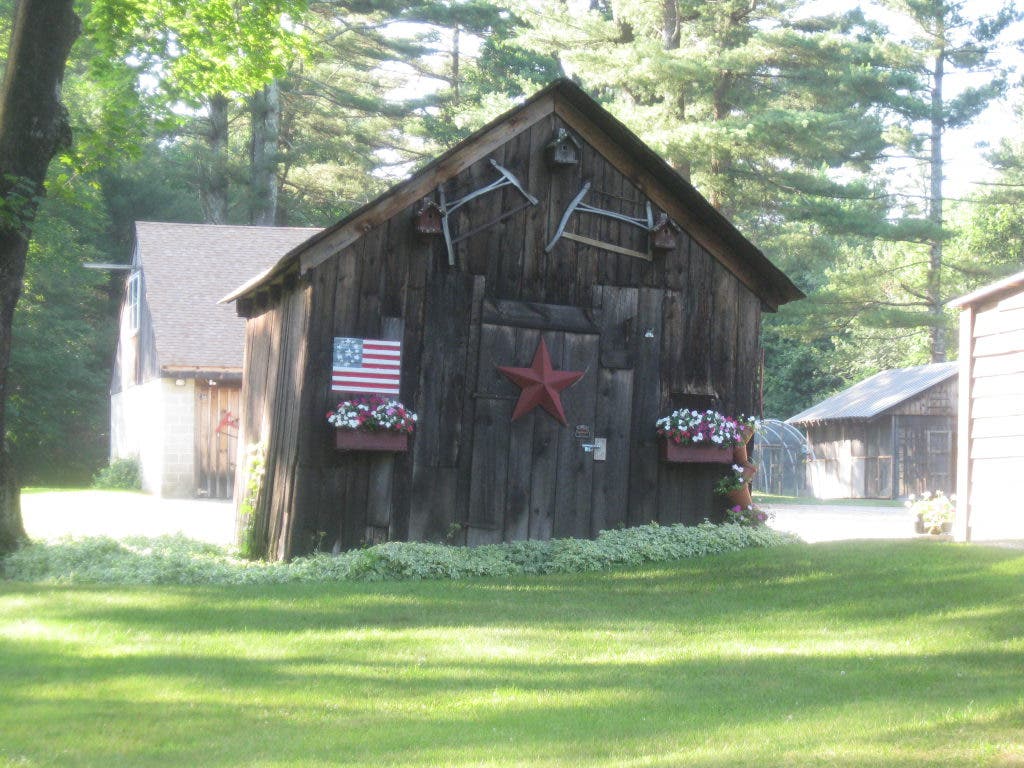
In 1747 Caleb Greene, bought 200 acres of his father’s (John Greene) land complete with a homestead located along the north side of the Great North Road. In 1795 Caleb sold one acre of this property to Benjamin Clarke. In February 1805 a toll gate was constructed on this property on the north side of the turnpike within five miles of the Connecticut border. The toll booth was a one story wooden building that sat in the road with a small window and a door. The date of construction of the toll booth is not known but is believed to be mid-18th century.
The toll for use of this road was 12 and a half cents for four-wheeled vehicles drawn by more than two horses, 10 cents for four-wheeled vehicles drawn by two horses, and eight cents for pleasure carriages drawn by one horse. The toll was waved if the person was traveling by foot, horseback or on town business.
Find out what's happening in Coventryfor free with the latest updates from Patch.
Benjamin Clarke sold the one acre to Stephen M. Pierce in 1808. In 1819 it was sold again, this time to Stephen Walker and Pardon Tillinghast. This property included a dwelling house, barn, tannery and building which was mostly likely the toll booth that became known as Walkers Toll. The Turnpike operated until December 1865 when the company deeded all the rights and title to the land to the Town of Coventry.
Rice City was named after the Rice Family that resided and operated a Tavern along Plainfield Pike. Today, Rice City lies between Flat River Road and Sisson Road. Other roads making up Rice City are Vaughn Hollow Road, Potter Road and Plainfield Pike. The building that was originally the toll booth can still be seen today on the property of 732 Plainfield Pike.