Community Corner
Do You Know Where Bats Are Living in RI?
The Rhode Island Department of Environmental Management is asking property owners to assist with surveys for summer bat colonies.


The following is a press release issued by the Rhode Island Department of Environmental Management:
The Department of Environmental Management (DEM) is seeking information from the public about locations where summer colonies of bats may be located. Wildlife biologists in DEM’s Division of Fish and Wildlife would like to hear from property owners and others who know of a barn or other structure that has bats so they can monitor and conduct exit counts at these bat roosting sites. Technical assistance is available for interested property owners.
Find out what's happening in Coventryfor free with the latest updates from Patch.
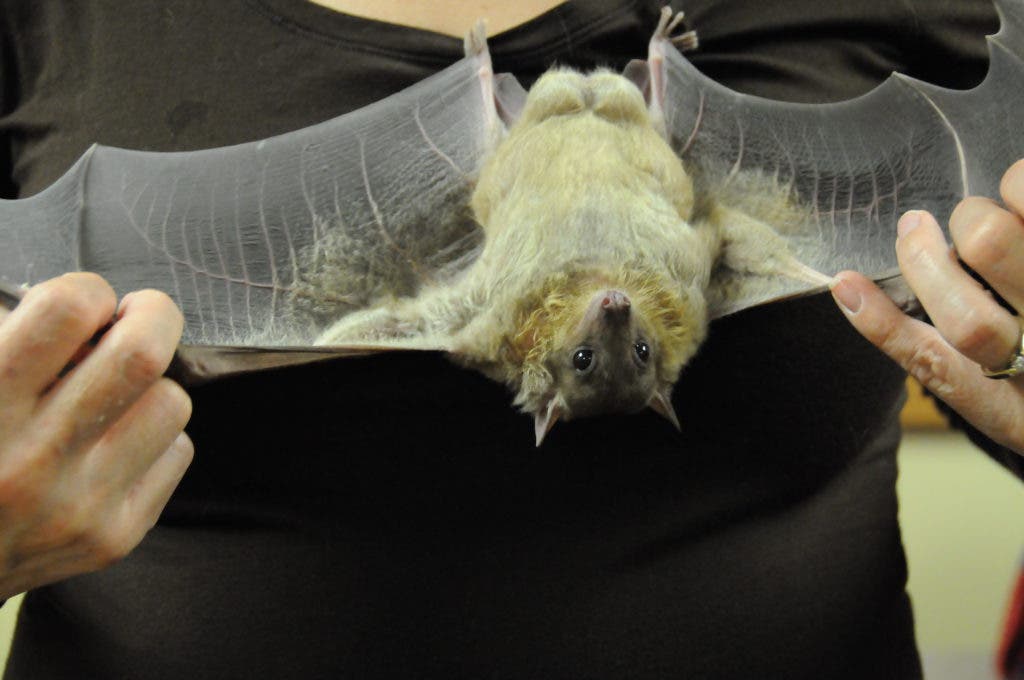
Several bat species in the eastern United States and Canada are experiencing dramatic population declines due to disease and other issues. The Little Brown Bat (Myotis lucifugus), once one of the most common bat species in our area, has experienced a severe population decline in the eastern part of its range during the last several years. This is due primarily to White-nose syndrome (WNS), a disease that affects bats while they are in hibernation. It is estimated that more than five and a half million Little Brown Bats and bats of other species have already died from WNS. The disease is associated with a cold-loving fungus, Geomyces destructans, that occurs in the cool, damp conditions found in the caves and mines in which some bats hibernate during the winter. There are no known caves or mine hibernacula — places where bats hibernate – in Rhode Island. Most bats that occur here during the summer months migrate to other areas in the fall to hibernate. White-nose syndrome is not known to affect humans or other animals.
Rhode Island’s other most common bat species, the Big Brown Bat (Eptesicus fuscus), will hibernate in attics and other man-made structures in our state. Big Brown Bats have not been affected by WNS to the extent that Little Brown Bats have.
Find out what's happening in Coventryfor free with the latest updates from Patch.
During summer months, female Little Brown and Big Brown Bats will congregate in nursery or “maternal colonies” to have their young pups. Each adult female Little Brown Bat has just one pup a year. These maternal colonies are often located in man-made structures such as barns or house attics that have the hot and dry conditions necessary for raising their young. These maternal colonies may consist of a few bats or, in some cases, hundreds of female bats. By early August young bats are able to fly, and both mother and young leave for other roosting areas before entering their hibernacula, often hundreds of miles away. Male bats do not roost with the females during the summer, and instead roost alone or with several other males in a different location.
In an effort to learn more about the status of Little Brown Bats and Big Brown Bats, wildlife biologists from the DEM’s Division of Fish and Wildlife have been conducting surveys for maternal colonies. Bats can be counted at dusk as they leave their roost sites to feed. Last summer, exit counts were conducted at 12 different sites with the permission and cooperation of the property owners. Typically, at least two counts are conducted at each site between late May and early August. Biologists would like to locate additional sites to monitor throughout the state. The DEM will not remove or disturb the bats, but can provide technical assistance to property owners.
If you own or know of a barn or other structure that has bats and would like to participate in the monitoring program, contact Charlie Brown, wildlife biologist with the Division of Fish and Wildlife at the Great Swamp Field Headquarters at charles.brown@dem.ri.gov or at 789-0281.
Get more local news delivered straight to your inbox. Sign up for free Patch newsletters and alerts.