Community Corner
Fire Safety: What Changed After The Station Nightclub Fire
The Feb. 20, 2003 fire claimed the lives of 100 people.


WEST WARWICK, R.I. -- 16 years ago Wednesday, a deadly fire broke out in the Station nightclub in West Warwick. By the time the smoke cleared, 100 people had lost their lives.
Hundreds of people were crowded into the small club that night to see the band Great White. Just after 11 p.m., barely into the start of the set, the band's tour manager Daniel Biechele, set off pyrotechnics that hit foam sound insulation on the club's walls, igniting it. Within minutes, the building filled with smoke as people rushed to exit. More than 200 people were injured in the blaze along and 100 people were killed.
In 2005, the National Institute of Standards and Technology concluded in its final report of the incident that "strict adherence" to fire codes would help prevent similar tragedies from happening in the future. The organization also released a list of 10 recommendations for improvements to fire codes, seven of which were based off of actions taken by the State of Rhode Island in the wake of the tragedy.
Find out what's happening in Cranstonfor free with the latest updates from Patch.
Recommendation One: The first item calls for state and local governments to update improve fire codes for nightclubs and inspections by "implement[ing] aggressive and effective fire inspection and enforcement programs" of all fire codes as well as increasing staff to ensure there are enough to do so.
Recommendations Two and Three: To decrease the severity of fires and prevent them in the first place, the NIST encouraged the requirement of automatic sprinklers, as well as requiring nonflammable "finish" materials such as the insulation used in the station nightclub. The lack of sprinklers and the presence of flammable materials in the sound insulation allowed the flames to quickly erupt and spread in The Station.
Find out what's happening in Cranstonfor free with the latest updates from Patch.
Recommendation Four: Pyrotechnics should be regulated based on the size of the venue and the presence of sprinklers. This includes rules based on the distance between the pyrotechnics and potentially flammable materials surrounding and above them.
Recommendation Five: Item five called for changes to the national model code in determining occupancy limits in all nightclubs, both new and existing, including setting a maximum evacuation time. For clubs the size of or smaller than The Station, evacuation should tkae no more than 90 seconds. In addition, NIST called for increasing the number of required exits, and improving evacuation plans and staff training on fire protocols.
Recommendation Six: Increase the number of easily accessible portable fire extinguishers, and train staff on proper use in the event of a fire.
Recommendation Seven: State and local governments should adopt the national standard of emergency staffing and communications to ensure fast and effective emergency response, including mutual aid and structure of command.
Recommendations Eight Through 10: The final three recommendations called for further research to better update fire codes in the future. These include looking into how people react in emergency situations and how to avoid panic and crowd rush, increasing understanding of how fires spread and how to suppress them and better computer models and decision tools that "communities can use to make cost-effective choices about code changes, fire safety technologies and emergency resource allocations."
Today, the parcel of land that the club once occupied at 211 Cowesett Ave. is home to a memorial to the 100 victims. The Station Fire Memorial Foundation was founded by survivors and family of those who were lost. The foundation's president, Gina Russo, is a survivor who lost her fiance in the fire.
After acquiring the land, the foundation worked for years to construct a permanent memorial park. For years, handmade memorials and crosses filled the empty lot as a way to remember the lives lost.
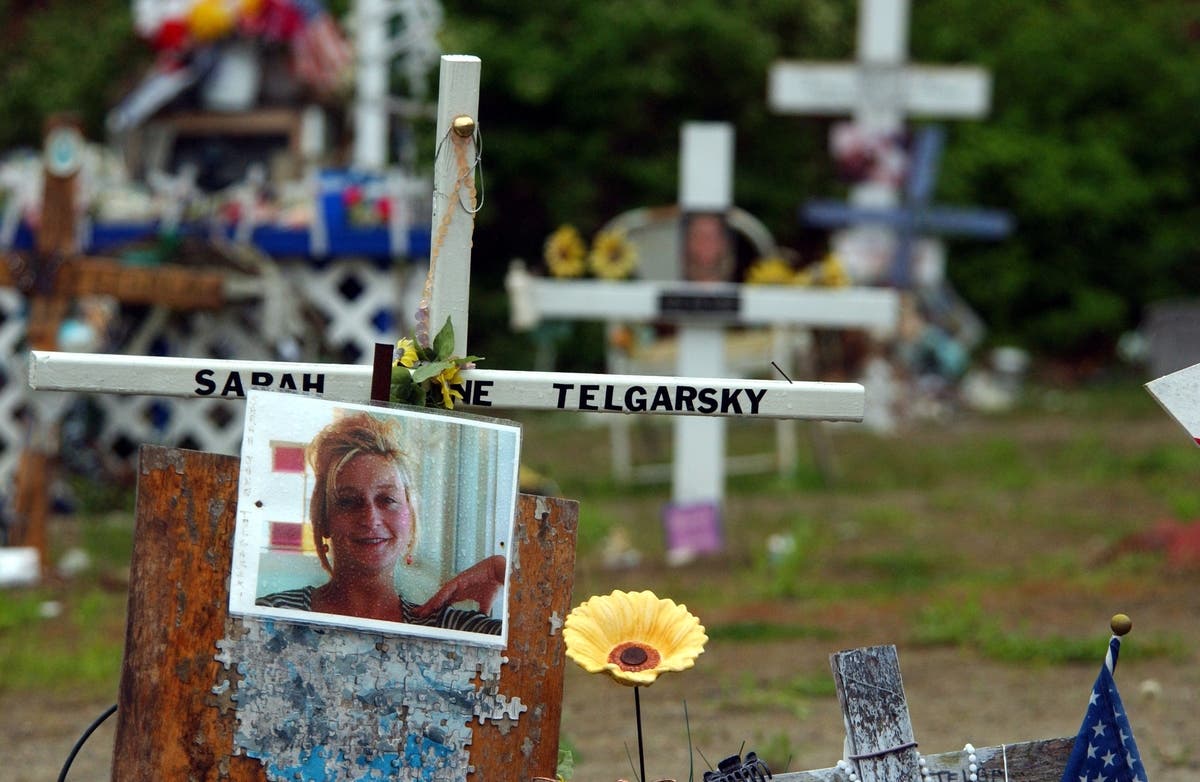
Today, we honor the 100 souls who perished in the Station Nightclub Fire 16 years ago. pic.twitter.com/hIDvx1Vppx
— Rhode Island EMA (@RhodeIslandEMA) February 20, 2019
While the foundation has not scheduled an official memorial ceremony for the 16th anniversary, the board has encouraged survivors and family members to gather and plan their own memorials. The board is planning to hold another official memorial on the 20th anniversary.
"Family and friends are beyond more than welcome to gather and remember," Russo wrote on Facebook. "No matter if it’s one person or 100. At the park opening and at the 15th memorial I again announced that we would not be hosting again until the 20th."
The Station was the country's fourth-deadliest nightclub fire in U.S. history. On November 28, 1942, nearly 500 people were killed in a massive fire in the Cocoanut Grove Nightclub in Boston.
Photo: The burned remnants of 'The Station' nightclub litters the scene February 23, 2003 in West Warwick, Rhode Island. Photo Credit: Douglas McFadd/Getty Images
Get more local news delivered straight to your inbox. Sign up for free Patch newsletters and alerts.