Politics & Government
RI Lawmakers Approve Supplementary Budget
The House and Senate will reconvene later this summer to discuss the fiscal year 2021 budget.


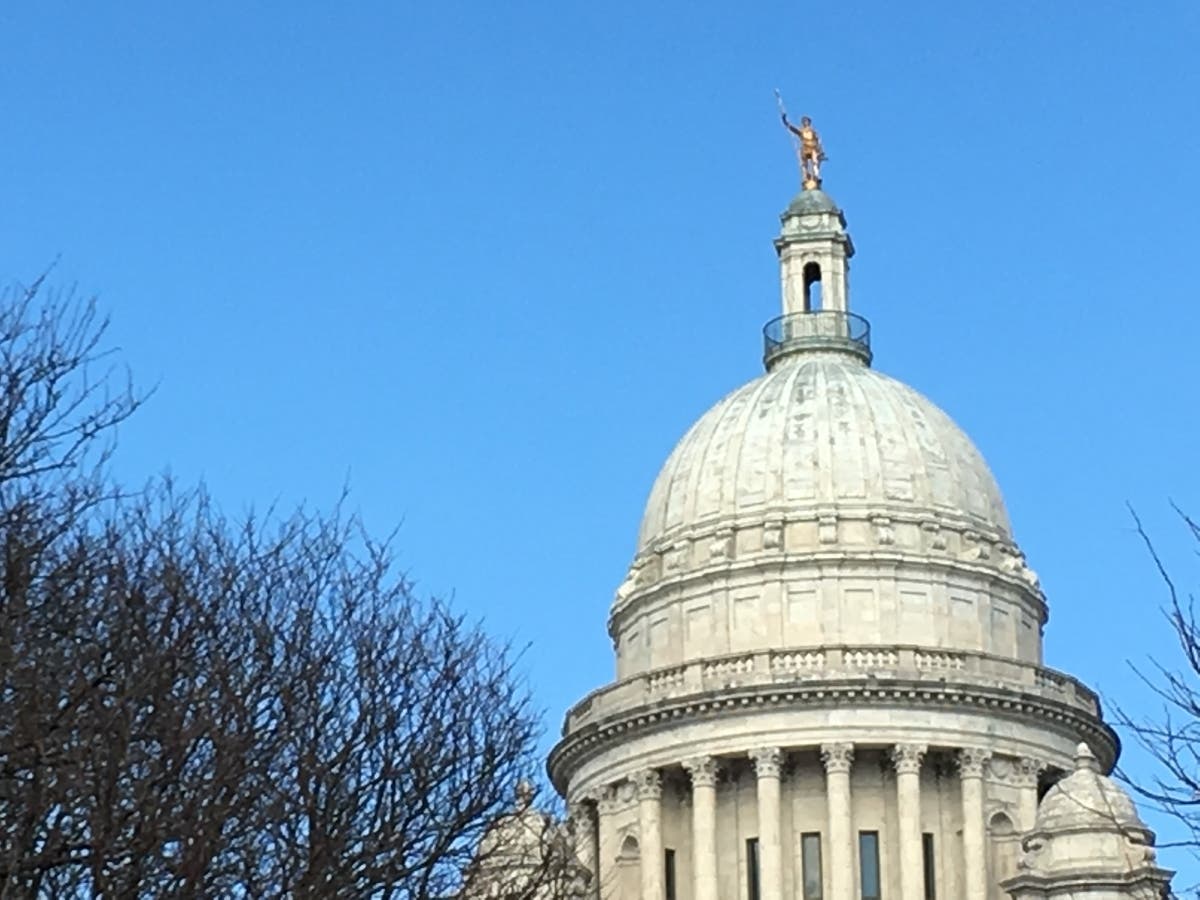
PROVIDENCE, RI — Rhode Island lawmakers approved a supplemental budget for the state Thursday, using the state's rainy day fund and extra money from state agencies to help address the approximately $250 million budget deficit created by the coronavirus pandemic this fiscal year.
The supplemental budget only addresses the current fiscal year, which ends June 30. Along with closing the gap, it acknowledges $1.4 billion in unemployment claims filed during the pandemic, much of which was covered by the federal government.
"The COVID crisis devastated our economy and the lost revenues placed tremendous stress on the current year budget, forcing us to make many tough choices in order to balance our books by June 30," House Speaker Nicholas Mattiello said. "Despite these difficult times, however, we reconfirmed our commitment to education, ensuring local schools have nearly $10 million more in resources than they were expecting. Once we receive further guidance on additional federal assistance to all states, we will work to enact a responsible budget for the next fiscal year with the appropriate investments in education aid, municipal assistance and programs to strengthen our economy."
Find out what's happening in Cranstonfor free with the latest updates from Patch.
The bill also distributes $50 million of Rhode Island's $1.25 billion in federal stimulus funding to the state's school districts, with more going towards communities with high numbers of low-income students. This funding is in addition to $41.7 million to schools from Congress as part of the Coronavirus Aid, Relief, and Economic Security Act, which the budget used to cover part of the state's annual funding to schools.
"This supplemental budget memorializes the spending of the $1.25 billion in federal CARES Act funds, as well as the state’s response to help Rhode Islanders weather this pandemic," Senate President Dominick Ruggerio said. "We are eagerly awaiting decisions from Congress on our federal assistance for the next fiscal year, and are optimistic that it will enable Rhode Island to maintain the progress we have made on taxation and continue investing in fundamentals like education, roads and bridges and a strong safety net while we work on fully reopening, rebuilding and strengthening our economy."
Find out what's happening in Cranstonfor free with the latest updates from Patch.
The state relied on CARES Act funding to cover around $35 million in state employee costs for those whose jobs centered around the pandemic response, as well as $29.5 million for higher education institutions, which saved the state $15 million.
In addition, unused money from some state agencies, including $17.8 million from the Rhode Island Infrastructure Bank, $300,000 in unspent funds from Department of Environmental Management bond issues, $500,000 from forfeited assets collected by the Department of Behavioral Healthcare, Developmental Disabilities and Hospitals and $15 million from the Rebuild RI tax credit program to help address the deficit.
Part of the deficit was attributed to Eleanor Slater Hospital, which from February to April was not in compliance with federal Medicaid billing rules. Gov. Gina Raimondo said the facility is one-of-a-kind in the country, and state officials are working to correct the issue, which led to the loss of $50.1 million in revenue loss, as well as $14.6 million in billing issues. If the problems are not addressed by Executive Office of Health and Human Services before June 30, the state could face an additional $12.2 million in costs.
Later this summer, lawmakers are slated to reconvene to discuss the fiscal year 2021 budget. This discussion was delayed as the state awaits further information about a second round of coronavirus stimulus funding from the federal government, which could help close the deficit.
Get more local news delivered straight to your inbox. Sign up for free Patch newsletters and alerts.