Neighbor News
Students speak better Spanish with Emilia Peña-Disla
At Moses Brown School, new measures ensure proficiency and improve student experience
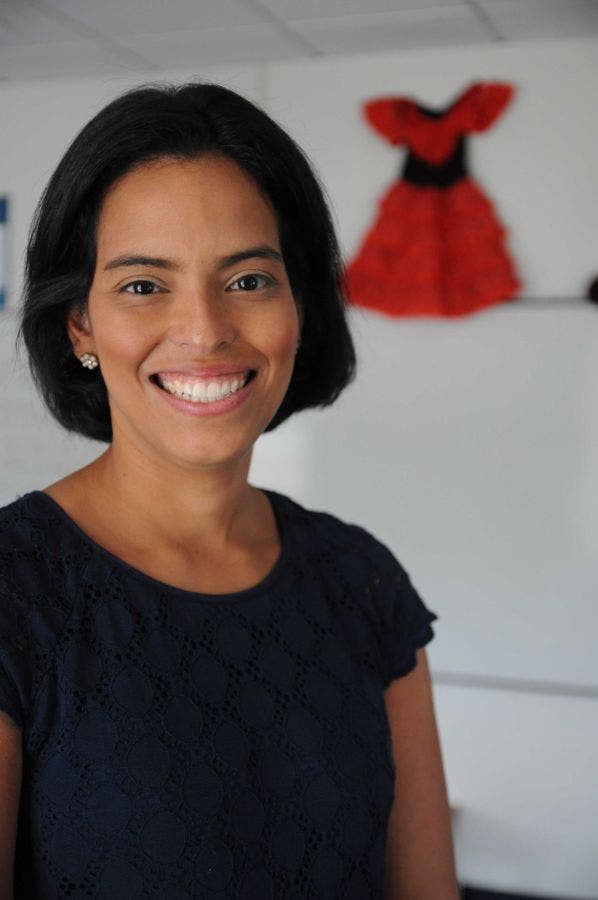
In our rapidly changing world, schools train students towards fluency in foreign languages. Moses Brown School’s “north star” principle of global awareness encourages students to engage actively with their community, both around the world and as citizens of Rhode Island, where the Latino and Spanish-speaking population is growing rapidly. Spanish teacher Emilia Peña-Disla is a Providence native who graduated from Hope High School in 2002, and now lives in Cranston. She is evaluating Moses Brown’s progress in preparing students to speak, read, write and understand Spanish.
“I’ve always wondered how proficient our students are at the end of their foreign language journey, since many of them begin our Spanish program in lower school,” Emilia says. Most MB students study language through all four years of upper school, after three years in middle school. She continues: “The American Council of Teaching Foreign Language (ACTFL) defines proficiency as ‘the ability to use language in real-world situations in a spontaneous interaction and non-rehearsed context, and in a manner acceptable and appropriate to native speakers of the language.’” According to the ACTFL, students in a K-12 language program should graduate at an Intermediate, High or Advanced level. “Is our students’ success in Spanish consistent with their time and effort?” Emilia asks. “Are our students on track to reach the ACFTL’s expected level of performance? What are the strengths and weaknesses of our program, measured with national standards?”
Emilia will survey a sample of Spanish students in middle and upper school, with baseline questionnaires is September, January, and May. “I’ll track our students’ growth in reading, writing, listening and speaking,” she says, “and find the strengths and weakness of our curriculum using ACTFL’s performance and proficiency standards.” After four years teaching Spanish at MB, she has a good idea of what she’ll discover. “I believe MB’s approach of total language immersion helps our students a great deal in reading, writing and listening comprehension,” she says, “but they lack the opportunity to use the language in meaningful ways outside the classroom, which sets them back in oral proficiency. I’d love to offer our kids more frequent, organic encounters with native speakers.”
Find out what's happening in Cranstonfor free with the latest updates from Patch.
Moses Brown’s world languages department chair Ignacio Perez welcomes Emilia’s work. Plans are underway to personalize incoming student placement in Spanish classes, as well. These initiatives will help improve student experience and outcomes, with more meaningful Spanish conversations for all.