Community Corner
Blue Green Algae Found in Paradise Pond in Middletown
People are advised to avoid contact, though it is a public drinking supply and recreational activity is normally prohibited.


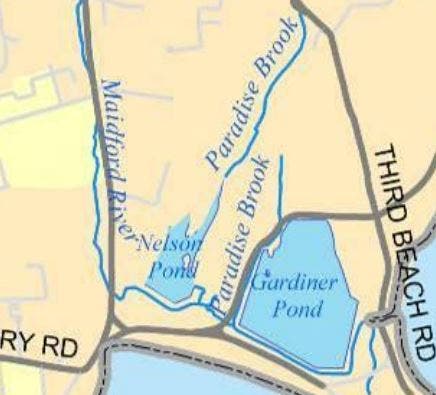
The state Departments of Health and Environmental Management are advising people to avoid contact with the water in Paradise Pond in Middletown due to a blue-green algae bloom.
Blue-green algae produces toxins that are harmful to humans and animals.
The town’s water supply is not at risk and the pond “is not currently used for drinking water due to a construction project,” according to a release.
Find out what's happening in Middletownfor free with the latest updates from Patch.
Paradise Pond is a drinking water supply and recreational activities are never allowed, the DEM said.
Don’t drink from the pond or eat fish, nor should pets be exposed.
Find out what's happening in Middletownfor free with the latest updates from Patch.
It is likely the advisory will remain in effect until November at which time the bloom will have subsided.
Paradise, also known as Nelson Pond, along with Gardiner Pond, both supply the Newport Water District.
Paradise Pond is fed water via Paradise Brook, a 2.5 mile stream that begins south of Fayal Lane and flows along Third Beach Road before veering into land owned by the Norman Bird Sanctuary.
The construction project entails the relocation of a raw water main. An old 30-inch cross country raw water main between the two ponds had outgrown its useful life and was operating at a reduced capacity.
C. B. Utility Company Inc., of Bristol, was awarded the construction contract to replace it with new lines and work began in September of 2014.
From the state Health Department:
Irritation of the skin, nose, eyes, and or throat are common side effects that result from skin contact with water containing algal toxins. If water containing algal toxins is ingested, health effects include stomach ache, diarrhea, vomiting, and nausea. Young children and pets are more at-risk to algal toxins than adults, since they are more likely to drink contaminated water. Other health effects, which are rarer, include dizziness, headache, fever, liver damage, and nervous system damage. People who have been swimming in or otherwise in contact with Paradise Pond and experience those symptoms should contact their healthcare provider.
If you come into contact with the water, rinse your skin with clean water as soon as possible, and when you get home, take a shower and wash your clothes. Similarly, if your pet comes in contact with the water, immediately wash your pet off with clean water. Do not let the animal lick algae off of its fur. Call a veterinarian if your animal shows any symptoms of blue-green algae poisoning, which include loss of energy, loss of appetite, vomiting, diarrhea, or any unexplained sickness that occurs within a day or so after being in contact with water. People are cautioned that toxins may persist in the water after the blue-green algae bloom is no longer visible.
It is possible that blue-green algae blooms may be affecting other areas of Rhode Island. People are advised to avoid contact with waters that exhibit the following conditions: bright green coloration in the water or at the water surface and/or dense floating algal mats that form on the water’s surface. The water may look like green paint, thick pea soup, or green cottage cheese. To report suspected blue-green algae blooms, contact Brian Zalewsky in DEM’s Office of Water Resources at 222-4700 ext. 7145 or by e-mail at brian.zalewsky@dem.ri.gov and if possible, send a photograph of the reported algae bloom.
Get more local news delivered straight to your inbox. Sign up for free Patch newsletters and alerts.