Politics & Government
Council Looks Toward SK's Future
Council members brainstormed for South Kingstown's future in a goal-setting session on Tuesday at the Town Hall.

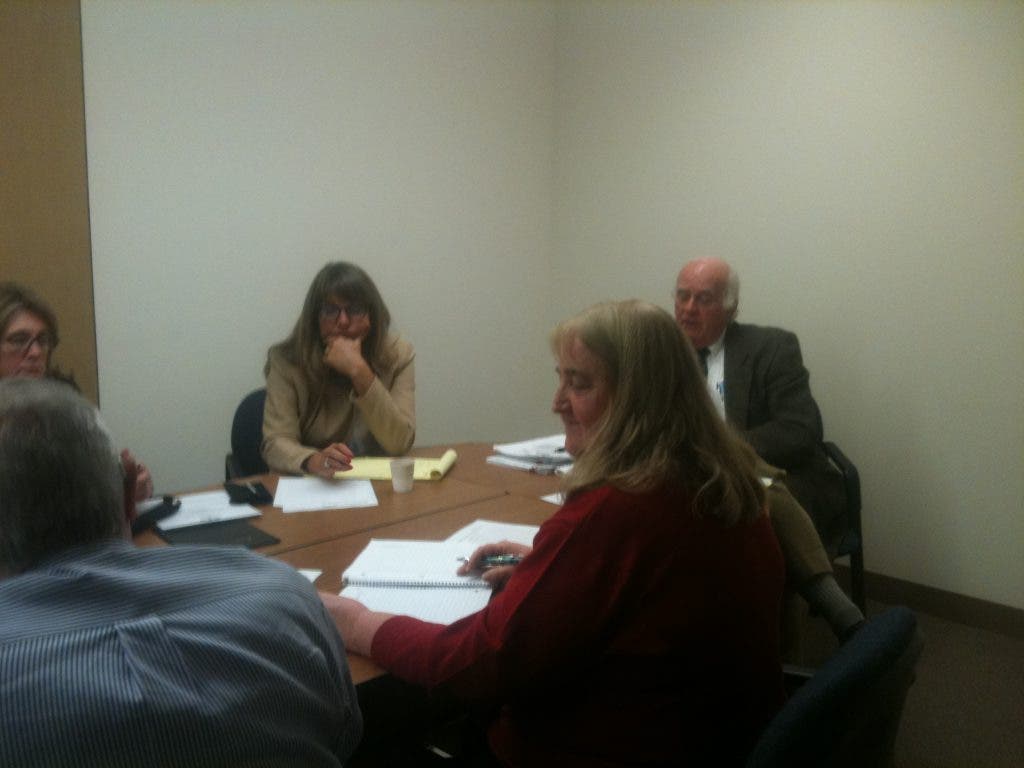
Town Council members laid out ideas to make South Kingstown a more “business-friendly” community during a goal-setting session on Tuesday night.
A round table discussion generated 13 long-term goals that Town Council members hope will hope them protect residents and lay the groundwork to stimulate the local economy and start attracting businesses.
Find out what's happening in Narragansett-South Kingstownfor free with the latest updates from Patch.
“Sometimes people tell me that as a town we’re looked at as business unfriendly,” said Ella Whaley, council president.
Council members rebuked the local months-long permitting process, calling it a deterrent for commercial ventures.
Find out what's happening in Narragansett-South Kingstownfor free with the latest updates from Patch.
“We need to plan in advance to make this a more business-friendly place because this is one of the things that we are always accused of – that we’re not business friendly,” said Carol Hagan-McEntee, council vice president. “If we could plan for properties, we could be more business friendly and ready.”
During a presentation earlier that evening by Nathan Kelly, of the Horsley Witten Group, the council heard ideas on planned versus unplanned growth in communities – think South County Commons versus the Dale Carlia Shopping Center and surrounding area.
Kelly said planned development allows for denser capacity because of its more efficient use of land.
Kelly told the council about a trend in community planning that allows communities to preserve habitat and scenic areas without forcing landowners to sacrifice their development rights: Transfer development rights.
The idea behind the transfer development rights programs is to pull development away from areas the town wants to see preserved – South Kingstown’s agricultural, forested, and coastal areas – and selling the available development rights for those parcels to property owners in the villages, which allows for denser and more efficient development in those central areas.
North Kingstown started one of these programs in 2008, but has not seen any activity yet, said Kelly, because of the downturn in economy and accompanying lack of commercial growth.
Committeeman James O’Neill, a realtor, asked Kelly for more information on the rights’ exchanges before moving forward with any plans in South Kingstown, but all council members agreed something needed to change to make the community preferable for business.
“Let’s get is ready now so that when somebody does knock on our door, we’re ready,” said O’Neill. “It is so important to have this ready. Let’s not be surprised here. Let’s be able to work with our developers and folks who invest a lot of money.”
Councilwoman Kathleen S. Fogarty said it was important to stay focused on South Kingstown’s rural areas as the council pursued economic development.
“Not that I think we have a problem with sprawl, but what are we going to do to preserve the rural character of our area,” asked Kathleen A. Fogarty, councilwoman. “If we lose our rural character and the natural treasures of Rhode Island, then we lose one of our best business development assets.”
Fogarty spoke of cookie cutter towns she sees all across New England, full of supermarkets, drug stores and LED-type signs.
“That’s something I think we need to be wary of because it’s all starting to look alike,” she added.
Fogarty said investing in South Kingstown’s unique resources could offer another plane of development opportunities for farm and aquaculture industries.
McEntee and O’Neill suggested focusing development in the South County Commons, a planned, preexisting development.
“When dealing with the Commons, it is probably the most regulated piece of property we have,” said Stephen Alfred, town manager. “If we make changes now based on the infrastructure that is there, it may be difficult to do.”
Alfred explained the council restricted retail space to 9 percent of the development at its inception because the council at the time was worried about the impact on Main Street businesses.
“I’m willing to change and I was the one who really battled a lot of the retail up there,” said O’Neill, illustrating the shift in priorities in the decade since the Commons was built.
“We need something to be able to bring more people in to do a multitude of shopping – like in Garden City” said Carol Hagan-McEntee, council vice president.
Get more local news delivered straight to your inbox. Sign up for free Patch newsletters and alerts.