Schools
Schools To Receive More In State Aid
South Kingstown Schools are expecting a bigger check from the state Department of Education than originally projected, which will lower its need for more tax dollars from the town and help the district hire two positions.

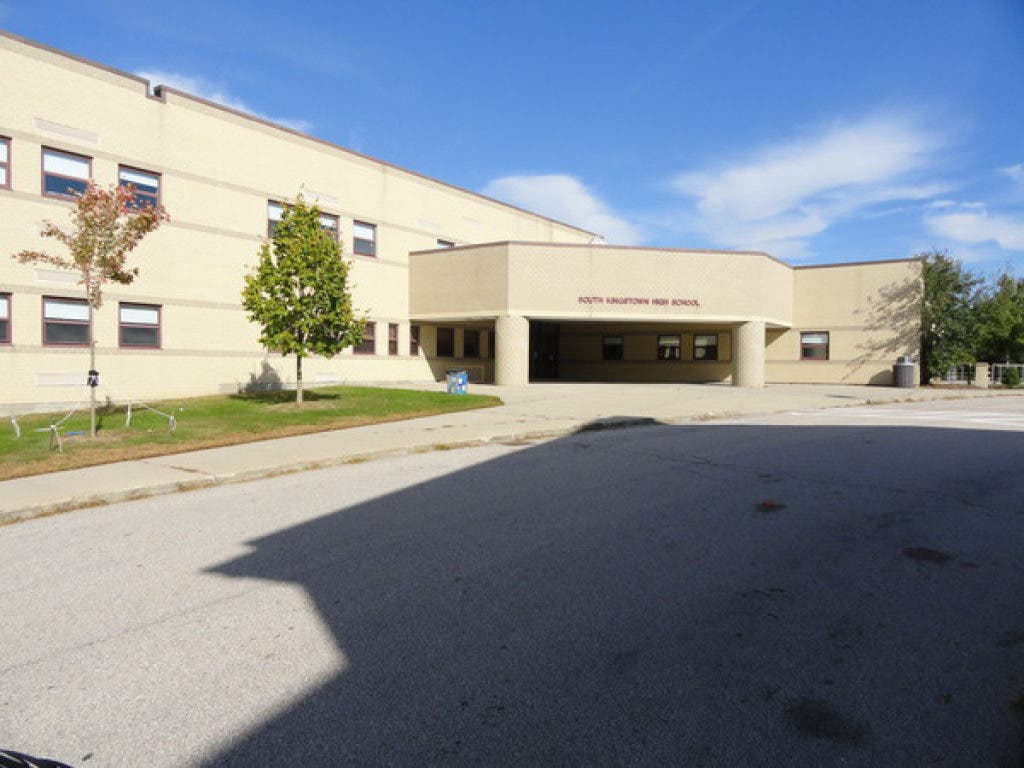
The School Committee gave taxpayers good news on Tuesday when it announced it would need a smaller increase in the tax levy transfer than projected to fund its $58.8 million budget.
Schools will need 1.6 percent or $747,519 more tax dollars to level fund programs and services next year. In total, schools will ask the town for a $48,963,855 transfer to help balance its expenditures in 2012-13. During a joint work session with the Town Council on Jan. 11, school officials said South Kingstown schools would need a 2 percent increase in the tax levy transfer.
“I received an update from the [state Department of Education (RIDE)] on our state aid,” said Supt. Kristen Stringfellow during the meeting at the high school library. “We are now projected to receive $216,768 more in state aid than originally expected because of a change in the formula base amount.”
According to John Ritchotte, director of administrative services, state aid to cities and towns is based on a percentage of what RIDE determines as the core amount per pupil. That figure increased to $86.79 per pupil, up $3.46 from the current year. South Kingstown’s share of that cost also increased to 16.8 from 16.4.
The School Committee also approved the superintendent’s $58,810,596 budget on Tuesday.
“That is largely rolling over the existing budget,” said Stringfellow.
The increase, however would allocate about 25 percent or about $235,000 to be spent on two new positions: a behavioral specialist and an administrative position that would coordinate science, technology, engineering and math curriculum across grade levels, called the STEM director.
Stringfellow said teachers, school psychologists, and social workers were struggling to work with a new breed of behavioral problems bubbling up in elementary students. She explained that students without special-education designations were increasingly acting out in classrooms and that without proper in-house resources would cost the district money through third-party services.
“We need to add an additional level of proactive behavioral support,” she said.
“What I’m hearing is that we’re at the doorstep of out-of-district placement,” said Stephen “Scott” Mueller, committeeman. “That [behavioral specialist position] is going to save us money and the kid is going to be better off because it stays in district.”
The STEM director would help rewrite curriculum to match RIDE’s Common Core Standards as well as assist with teacher evaluations – Stringfellow said the school currently has a deficit of math and science experts on its administrative team.
“It feels to me that we are at an early part of the [teacher evaluation] process and it’s as if RIDE is now leaning on us to evaluate teachers immediately rather than doing it really well.”
Mueller worried that too much emphasis for hiring a STEM director was put on the positions role in assisting with implementing and executing the new teacher evaluation system – a system he believes is piecemeal and will change as RIDE enters the full implementation phase next year.
“I haven’t heard why it’s imperative to hire this person this year if next year might be different,” said Keith Forhaven, resident, during the public commentary section of the meeting.
The committee shot down a motion by Mueller in a 2-5 vote where Mueller and Mega voted yes to eliminate the funding for the STEM director for the 2012-13 budget.
Kevin Jackson, committeeman, said he did not necessarity support both positions, but wanted more time to discuss the implications of the hires.
"To me this is a little less about the bottom line and more about the timeline," said Jackson. "If we don't put it in [the budget], we aren't getting it... and I don't want to be in a situation where we educationally like this and cut it because maybe we need some more details on it."
He also warned the committee not to spend the additional state aid award until the governor’s budget is cemented. He said the state General Assembly would likely not accept all of Gov. Lincoln Chafee’s tax hike proposals and money could come out of education funds.
Find out what's happening in Narragansett-South Kingstownfor free with the latest updates from Patch.
"I would like to empower [Stringfellow] to look and for her to have that flexibility because we have been here before in April or May and had to make some really tough calls," said Jackson.
Mueller suggested funneling the extra aid dollars into a designated fund account to supplement state grant programs that could dry up if the governor’s budget and tax programs change this year or in future years.
Find out what's happening in Narragansett-South Kingstownfor free with the latest updates from Patch.
Anthony Mega, vice chairman, entertained an idea of investing the money into a preschool expansion project.
"One of my future hopes for the town would be to expand opportunities for early education, especially to families who don’t have the resources to provide young children that proven benefit of an early start,” said Mega. “With that objective in mind, is it feasible to think of an early education expansion and take not all, but a portion of that money?”
Stringfellow said any reconfiguration plans to expand either the preschool or the alternative learning school at The Hazard School should be vetted by staff before the committee makes its decision.
The committee decided not to discuss school reconfiguration plans on Tuesday, but will discuss Plan 29 - which was adopted by the committee last year - and other configuration options during its Feb. 14 meeting at 7 p.m. at the high school, 215 Columbia St., South Kingstown.
Get more local news delivered straight to your inbox. Sign up for free Patch newsletters and alerts.