Weather
Farmers' Almanac Predicts Cold, Snowy Winter In Rhode Island
The almanac called for a late-season blizzard that could bring 1 to 2 feet of snow to the Northeast.


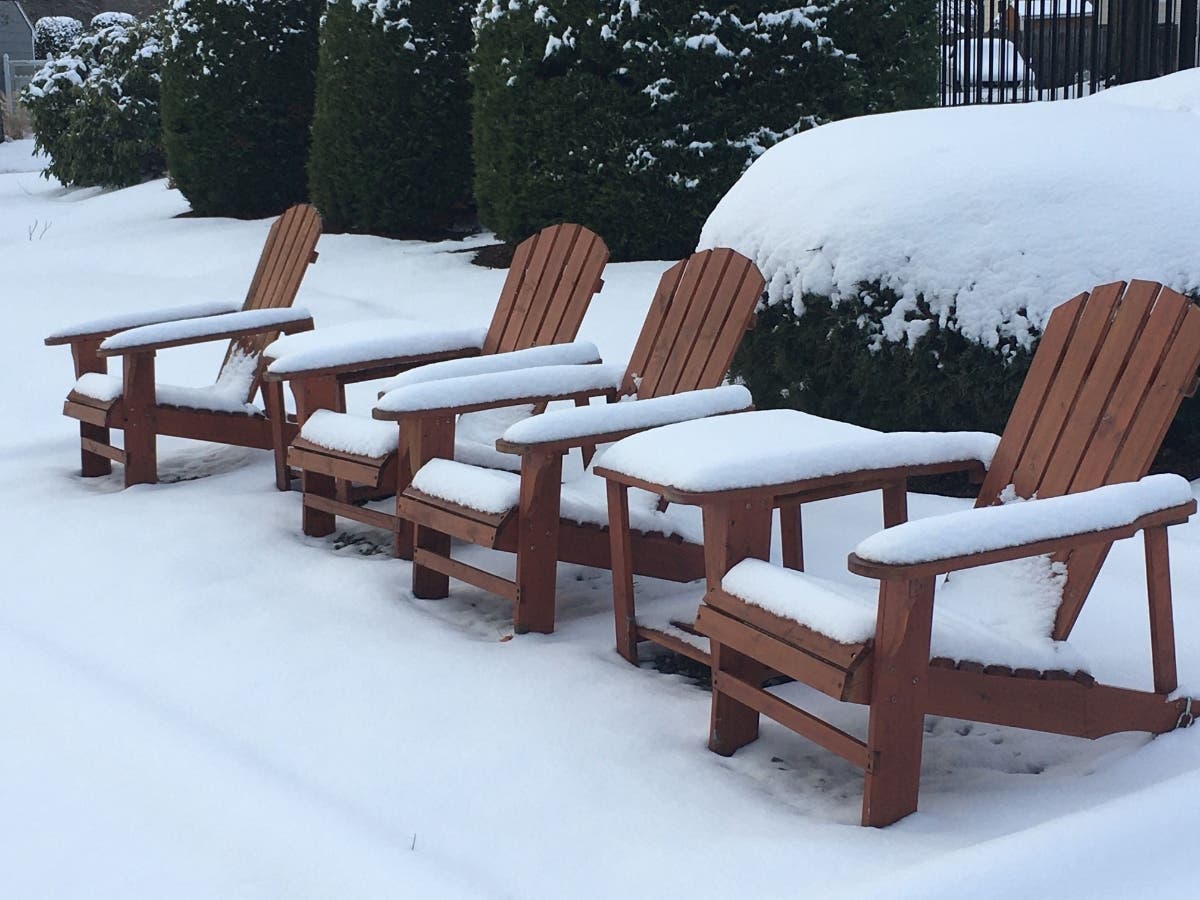
Because you can never have too many long-range winter forecasts while it's still blazing hot in New England, the Farmers' Almanac has released its long-range 2021 winter forecast.
The Farmers' Almanac calls its forecast the "winter of the Great Divide" with "cold and snowy conditions in the North, drought in the West and everything crazy in between."
In Rhode Island, the Farmers' Almanac says we can expect a long, cold, snowy winter, with a late-season blizzard.
Find out what's happening in Newportfor free with the latest updates from Patch.
"Remember last year's almost snow-free winter in the Northeast? Well, this year our prediction is very different, with the possibility of a blizzard hitting the Mid-Atlantic and Northeast states during the second week of February," the Almanac writers warned. "This storm may bring up to 1-2 feet of snow to cities from Washington, D.C. to Boston, Massachusetts!"
Wait, you may be thinking, didn't I just read this? No. That was the Old Farmer's Almanac 2021 winter forecast.
Find out what's happening in Newportfor free with the latest updates from Patch.
Any confusion about the two sources is completely understandable. Both are compendiums of useful information about the weather, gardening and just grooving on nature in general. And though the Old Farmer's Almanac, established in 1792, is the oldest of the two, the Farmers' Almanac is no first bloom of spring. It's been around since 1818.
Both publications claim about 80 percent accuracy in winter forecasts over the 200 years they've been peering into looking glasses that rely on different measurements that are somewhat mysterious.
The Old Farmer's Almanac forecast was originally based on a still-secret formula developed by founder Robert B. Thomas of Dublin, New Hampshire. Thomas believed magnetic solar storms influenced the Earth's weather. His notes remain locked away at the almanac's offices, but they provide the basis of a new forecast model informed by weather, solar and atmospheric science.
The secret formula used by the Farmers' Almanac is based on sunspot activity, tidal forces resulting from the moon's gravitational pull, planetary alignment and other factors. It's known only by the almanac's weather prognosticator, who goes by the pseudonym Caleb Weatherbee.
As winter approaches — it officially arrives in the United States on Monday, Dec. 21 — "preparing for the unexpected is more important than ever," Peter Geiger, Farmers' Almanac editor, said in a news release.
Here's a snapshot of what the Farmers' Almanac says could be in store across America:
- Cold in the Great Lakes and Midwest, the Northern and Central Plains and the Rockies, with abundant and possibly above-normal snow in parts of the western Dakotas, Wyoming, northern portions of Colorado and Utah.
- Average precipitation and chillier temperatures in the Southeast.
- Mild temperatures but continued drought conditions in Arizona and Southern California.
- Tranquil weather mixed with shots of cold and wintry precipitation in New Mexico, Texas, Oklahoma and western parts of Arkansas and Louisiana.
- Rainy, wet weather along the Pacific Coastal Plain from Northern California to the western portions of Oregon and Washington.
- "Winter wild card" weather from the Tennessee and lower Ohio River valleys to the north and east through New England, with a mix of intense systems delivering a wintry mix of rainy, icy and snowy weather throughout the winter.
Patch editor Beth Dalbey contributed to this report.
Get more local news delivered straight to your inbox. Sign up for free Patch newsletters and alerts.