Community Corner
Lieutenant (Junior Grade) William Joseph Sharkey, U.S. Navy
Remembering a U.S. Navy "Mustang" officer killed in accident during World War I
The term "Mustang" is used to describe a sailor who has risen through the enlisted ranks to become a naval officer. Such is the case with William Joseph Sharkey (1885 - 1918). Sharkey rose through the enlisted ranks to become a Chief Petty Officer and ultimately earn an appointment as a Lieutenant (Junior Grade).
Landsman (Recruit) Training
William Joseph Sharkey enlisted in the U.S. Navy on January 7, 1904. He reported to the U.S.S. Franklin on January 8, 1904 for his Landsman (Recruit) training. On May 28, 1904 he transferred to the U.S.F.S. Minneapolis. Upon completion of his Landsman (Recruit) training, he was designated as a Seaman and transferred to the U.S.S. Washington.
Find out what's happening in Newportfor free with the latest updates from Patch.
U.S.S. Washington
Find out what's happening in Newportfor free with the latest updates from Patch.
Seaman Sharkey reported to the U.S.S. Washington (Armored Cruiser No. 11) on October 29, 1906. He served aboard the ship until his transfer to the U.S.S. Franklin on October 8, 1907. He was promoted to Boatswain's Mate Second Class on August 13, 1907.
U.S.S. Franklin
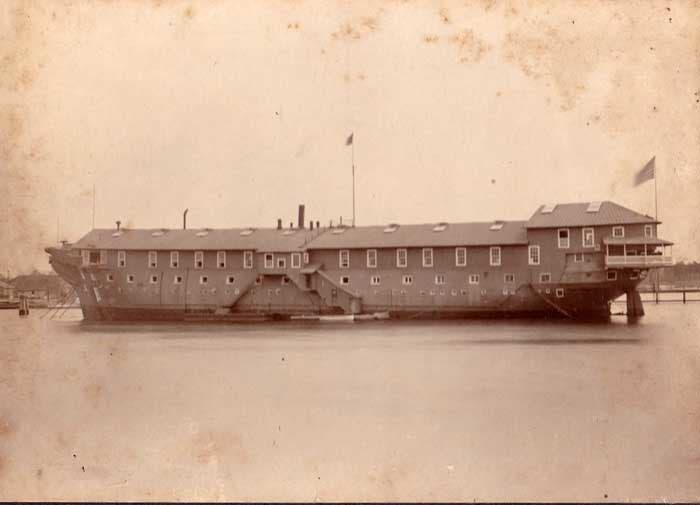
Boatswain's Mate Second Class Sharkey served in the U.S.S. Franklin from October 8, 1907 to November 30, 1907. The ship was functioning as a receiving ship at the time.
Change of Rating
In 1908, Boatswain's Mate Second Class Sharkey attended several classes that allowed him to change rating to Gunner's Mate. He officially became a Gunner's Mate Second Class on April 15, 1909.
U.S.S. Stockton
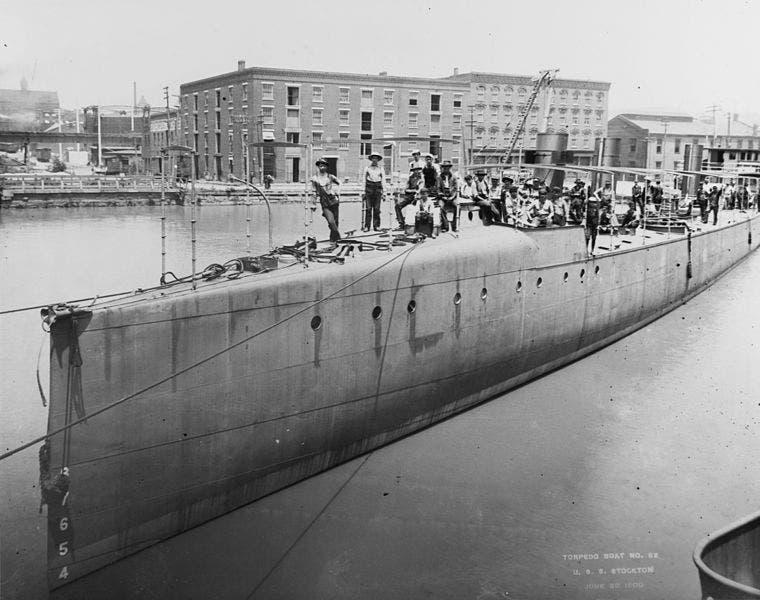
Gunner's Mate Second Class Sharkey reported to the U.S.S. Stockton (Torpedo Boat No. 32) on May 14, 1909. The ship was attached to the 3rd Torpedo Flotilla and on September 9, 1909, transferred to the 1st Torpedo Division. Gunner's Mate Second Class Starkey transferred from the U.S.S. Stockton to the Torpedo Flotilla on January 15, 1910.
U.S.S. Hancock
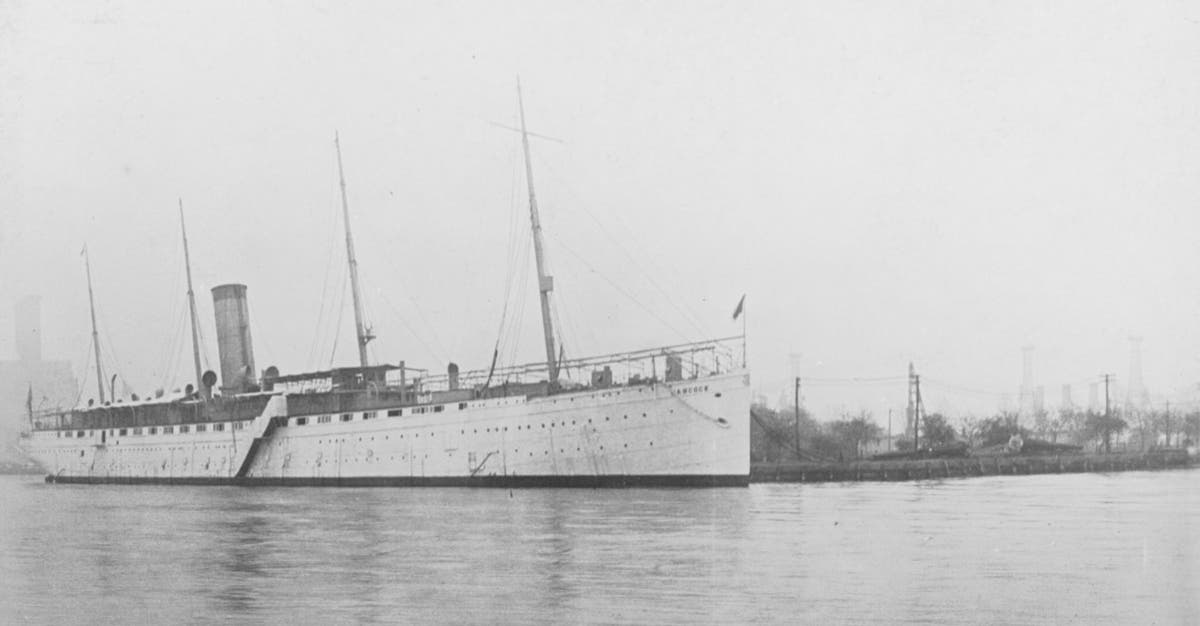
The U.S.S. Hancock was a former troop transport that had been re-commissioned as a receiving ship in 1903. She was stationed at the Navy Yard New York, Brooklyn, New York. Sharkey served several times aboard the U.S.S. Hancock. First, as a Boatswain's Mate Second Class and Coxswain from November 30, 1907 to February 10, 1908. Sharkey's first re-enlistment in the U.S. Navy occurred aboard the U.S.S. Hancock on January 7, 1908. Gunner's Mate First Class Sharkey reported aboard on November 22, 1910 from the B-class submarine, U.S.S. Tarantula. He transferred back to the U.S.S. Tarantula on December 23, 1910.
U.S.S. Tarantula
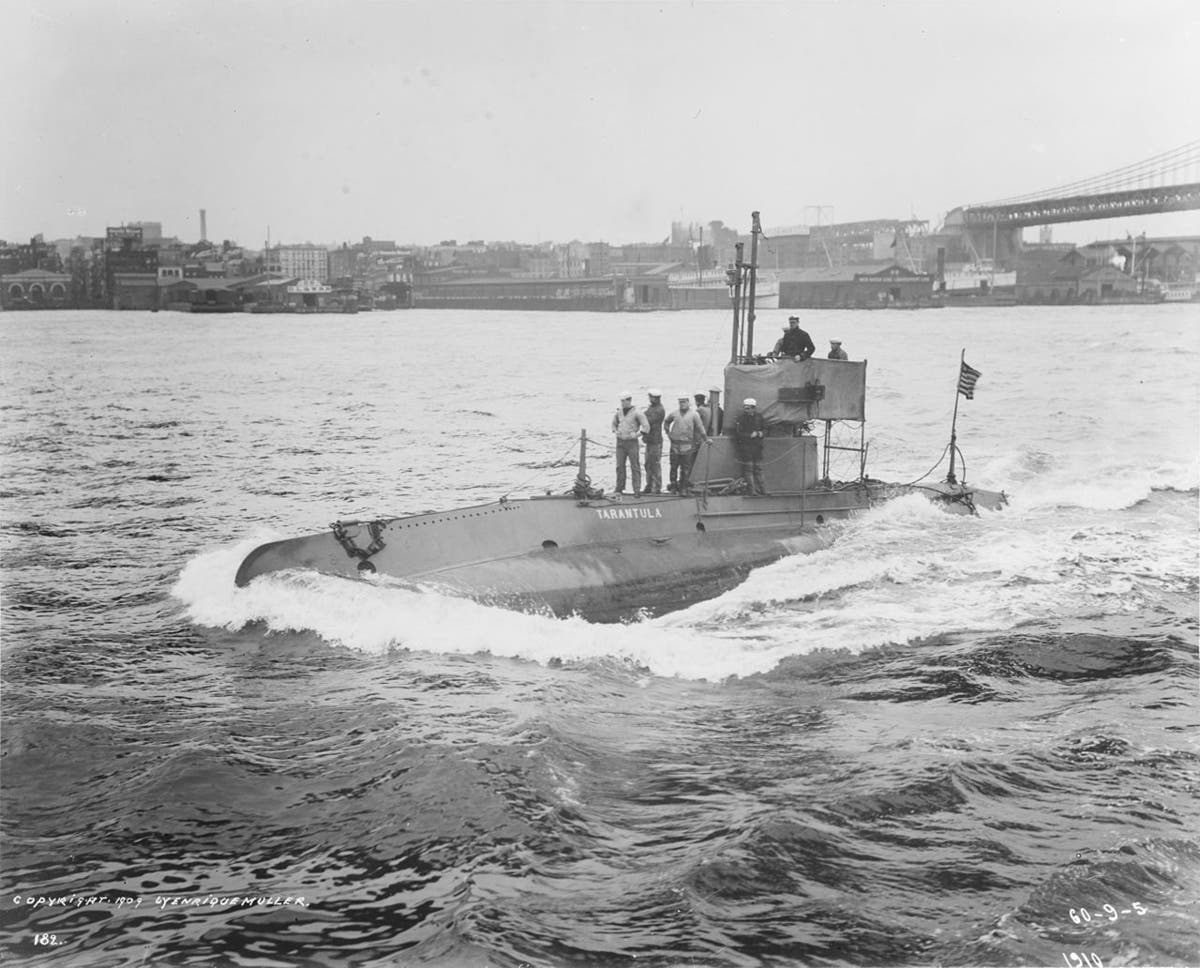
The U.S.S. Tarantula was a B-class submarine later designated as B-3 (SS-12). Gunner's Mate Second Class Sharkey first reported to the U.S.S. Tarantula on April 20, 1910. He was transferred as a Gunners Mate First Class to the U.S.S. Hancock on November 22, 1910. On December 23, 1910, he was transferred back to the U.S.S. Tarantula where he remained until his transfer to the U.S.S. Des Moines on May 10, 1911.
U.S.S. Des Moines (Cruiser No. 15)
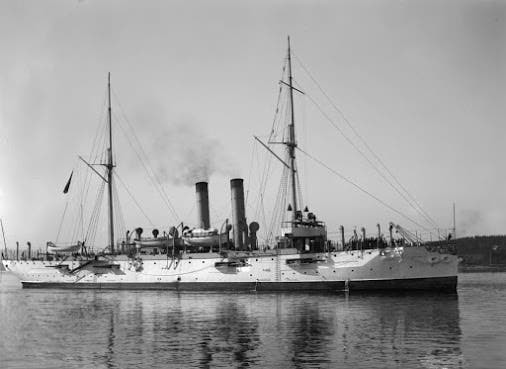
Gunner's Mate First Class Sharkey served in the U.S.S. Des Moines from May 10, 1911 to June 15, 1911. The ship was performing her Atlantic and West Indian duties during this period.
U.S.S. Castine (Gunboat)
Gunner's Mate First Class Sharkey reported aboard the gunboat U.S.S. Castine on June 15, 1911 and was subsequently transferred to the U.S.S. Severn (Former bark U.S.S. Chesapeake). At the time, the U.S.S. Castine was serving as a submarine tender.
U.S.S. Severn (Former bark U.S.S. Chesapeake)
Gunner's Mate First Class Sharkey reported aboard the submarine tender U.S.S. Severn (Former bark U.S.S. Chesapeake) on June 15, 1911. He served aboard the submarine tender until his transfer to the U.S.S. C-5 (SS-16) on October 13, 1911.
U.S.S. C-5 (SS-16)
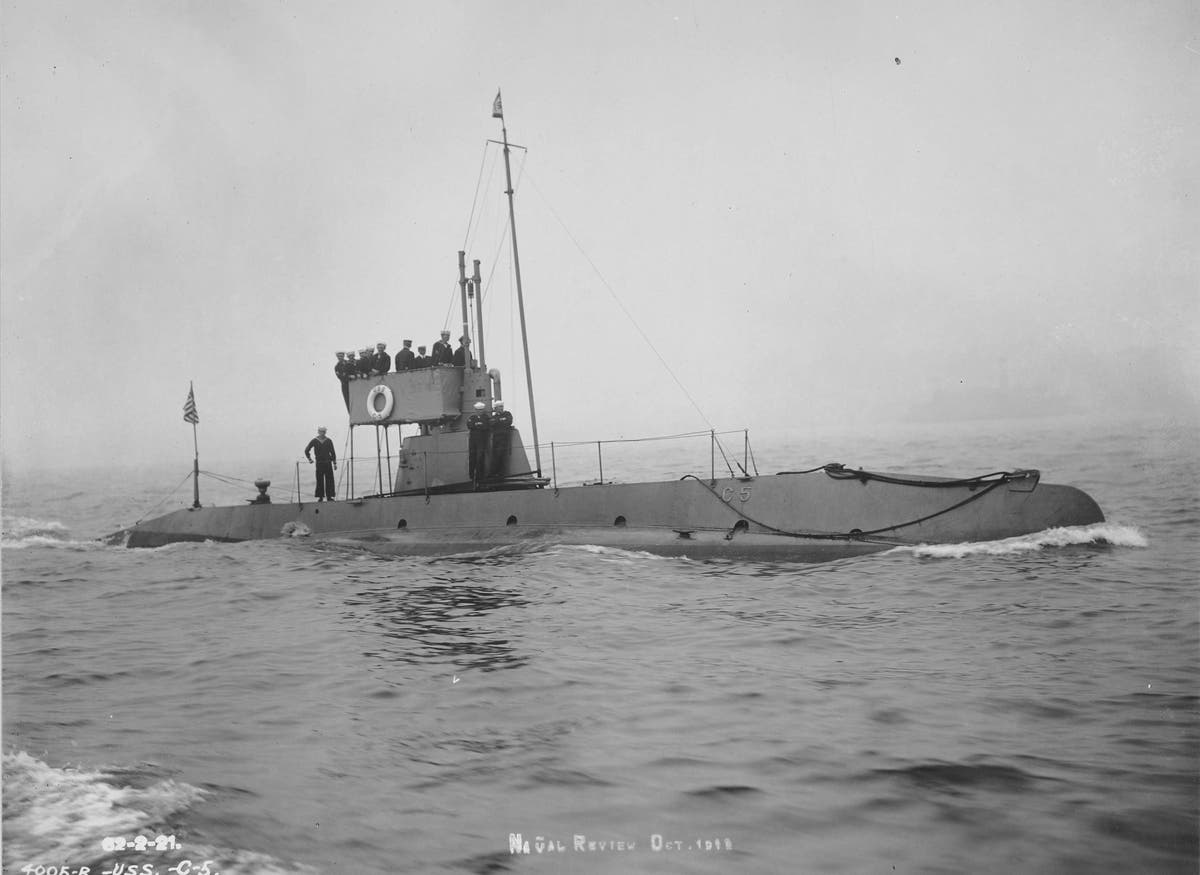
The C-5 (SS-16) was one of five C-class submarines built for the U.S. Navy. The C-5 (SS-16) was built by the Fore River Shipbuilding Company at Quincy, Massachusetts, under a subcontract from the Electric Boat Company of Groton, Connecticut. The U.S.S. C-5 was commissioned and February 2, 1910, and was initially named as U.S.S. Snapper. Each C-class submarine had a crew of one officer and fourteen enlisted men. The submarine's first commanding officer was Lieutenant Chester W. Nimitz.
Gunner's Mate First Class Sharkey reported aboard U.S.S. C-5 (SS-16) on October 13, 1911. He was honorably discharged on January 6, 1912 and re-enlisted the next day at the Navy Yard, Norfolk, Virginia. He transferred to the U.S.S. D-3 (SS-19) on April 13, 1913.
U.S.S. D-2 (SS-18) and U.S.S. D-3 (SS-19)
The U.S.S. D-2 (SS-18) and U.S.S. D-3 (SS-19) were two of the three D-class submarines built for the U. S. Navy between April 1909 and September 1910. They were built by the Fore River Shipbuilding Company at Quincy, Massachusetts, under a subcontract from the Electric Boat Company of Groton, Connecticut. The U.S.S. D-2 was initially named as U.S.S. Grayling. The U.S.S. D-3 was initially named as U.S.S. Salmon. Each D-class submarine had a crew of one officer and fourteen enlisted men.
Gunner's Mate First Class Sharkey was promoted to Chief Gunner's Mate on April 2, 1913. He reported to U.S.S. D-3 (SS-19) on April 13, 1913. He served aboard U.S.S. D-3 (SS-19) until June 11, 1914 when he transferred to the Navy Torpedo Station, Newport, Rhode Island. Chief Sharkey was honorably discharged on December 15, 1915 and re-enlisted at the Navy Torpedo Station the following day.

Chief Sharkey transferred to the Submarine Base, New London, Connecticut, on July 10, 1916. He reported for duty aboard the submarine U.S.S. D-2 (SS-18) two days later. He served aboard the U.S.S. D-2 (SS-18) until being transferred to the U.S.S. O-5 (SS-66) on September 11, 1917.
U.S.S. O-5 (SS-66)
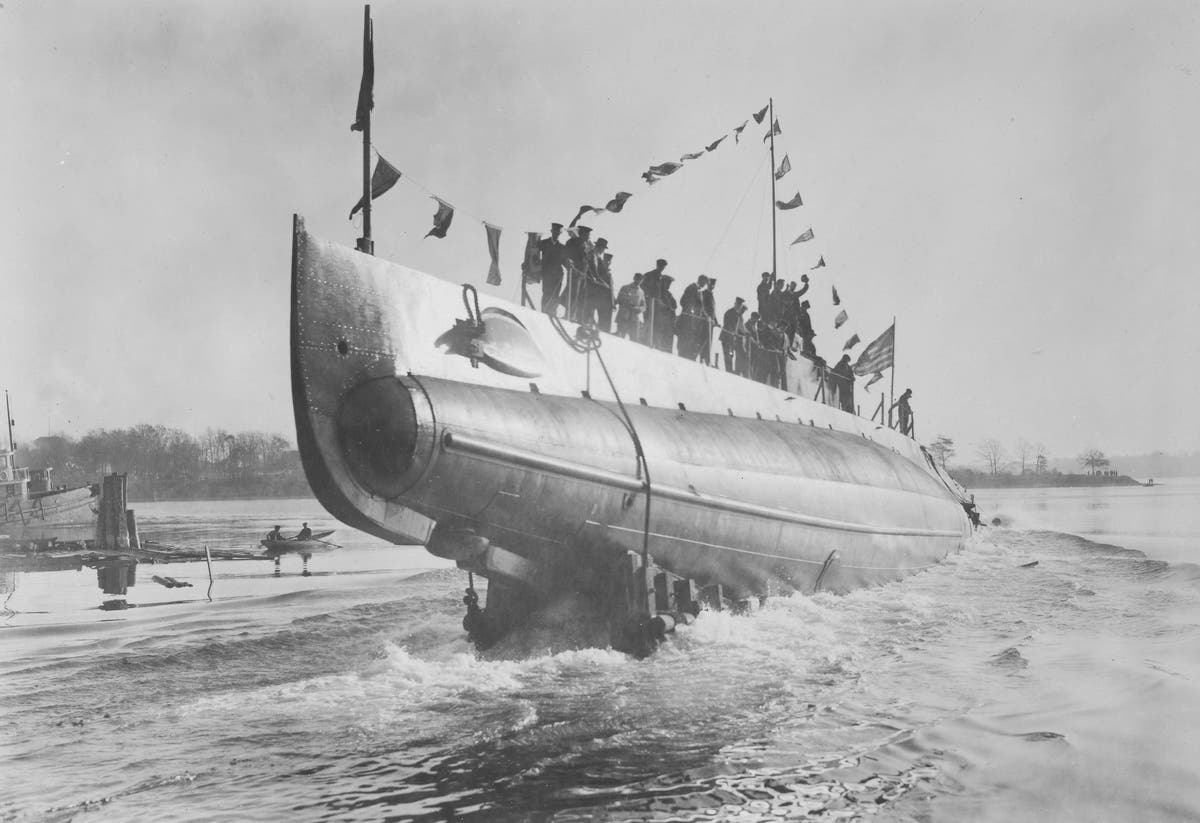
The U.S.S. O-5 (SS-66) was one of sixteen O-class submarines built for the U. S. Navy. It was built by the Fore River Shipbuilding Company at Quincy, Massachusetts, under a subcontract from the Electric Boat Company of Groton, Connecticut. The submarine was commissioned on June 8, 1918. Chief Gunner's Mate William Joseph Sharkey reported to U.S.S. O-5 on September 11, 1917 and was a member of her commissioning crew.
Chief Sharkey was appointed as an Ensign (Temporary) in the United States Navy on March 15, 1918. He remained assigned to the submarine as an officer despite having also served aboard as a Chief. He was promoted to Lieutenant (Junior Grade) (Temporary) on September 21, 1918.

On October 5, 1918, the U.S.S. O-5 (SS-66) was moored at the Brooklyn Navy Yard, New York, New York. The submarine was charging its batteries alongside the submarine tender U.S.S. Savannah (AS-8). Upon receiving reports that fumes were present in the submarine's after battery room, Lieutenant (Junior Grade) Sharkey proceeded immediately to the compartment in an attempt to prevent an explosion. Unfortunately, the explosion occurred resulting in the deaths of Lieutenant (Junior Grade) Sharkey, Electrician J. L. Still, and Lieutenant Commander George Arthur Trever, the submarine's commanding officer.
The explosion destroyed one battery and resulted in a fire aboard the submarine. The submarine was saved and returned to active service.
Board of Inquiry
Naval authorities convened a Board of Inquiry on October 6, 1918, to determine the cause of the explosion and whether it was the result of any misconduct on the part of the crew. The Board of Inquiry concluded that Lieutenant (Junior Grade) Sharkey's death occurred in the line of duty.
Notification of Next of Kin
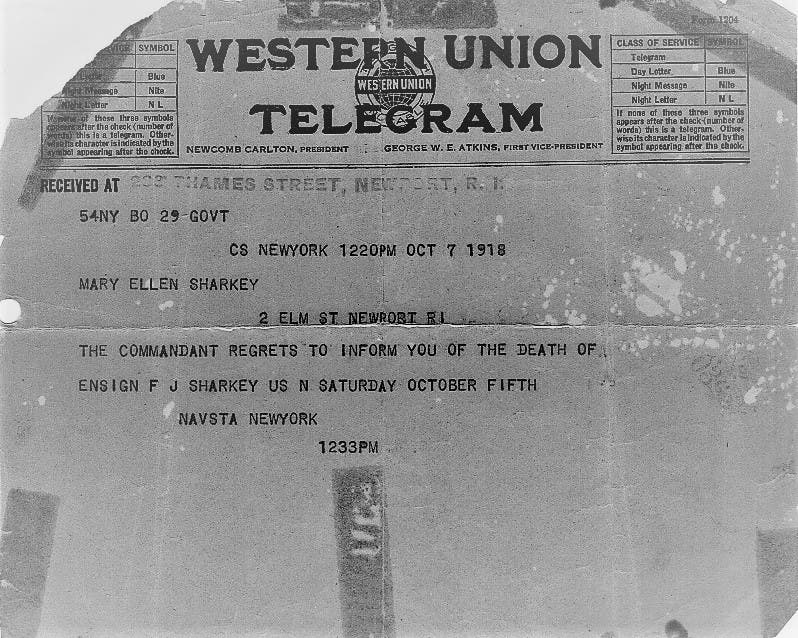
Mrs. Mary Ellen (Goode) Sharkey was officially notified of the death of her husband by the U. S. Navy via a Western Union Telegram sent to her home on 2 Elm Street, Newport, Rhode Island on October 7, 1918.
Navy Cross
Lieutenant (Junior Grade) Sharkey was posthumously awarded the Navy Cross medal for his actions aboard the USS O-5 (SS-66) on October 5, 1918. The Navy Cross citation reads:
"The President of the United States of America takes pride in presenting the Navy Cross (Posthumously) to Lieutenant Junior Grade William Joseph Sharkey, United States Navy, for exceptional meritorious and distinguished service on board the U.S.S. O-5 at the Navy Yard, New York, on 5 October 1918. Lieutenant Junior Grade Sharkey called the attention of his Commanding Officer to the fact that the batteries were gassing and together with his Commanding Officer started forward in the submarine when the battery exploded and Lieutenant Junior Grade Sharkey was killed, his head being crushed."
World War I Honor Roll
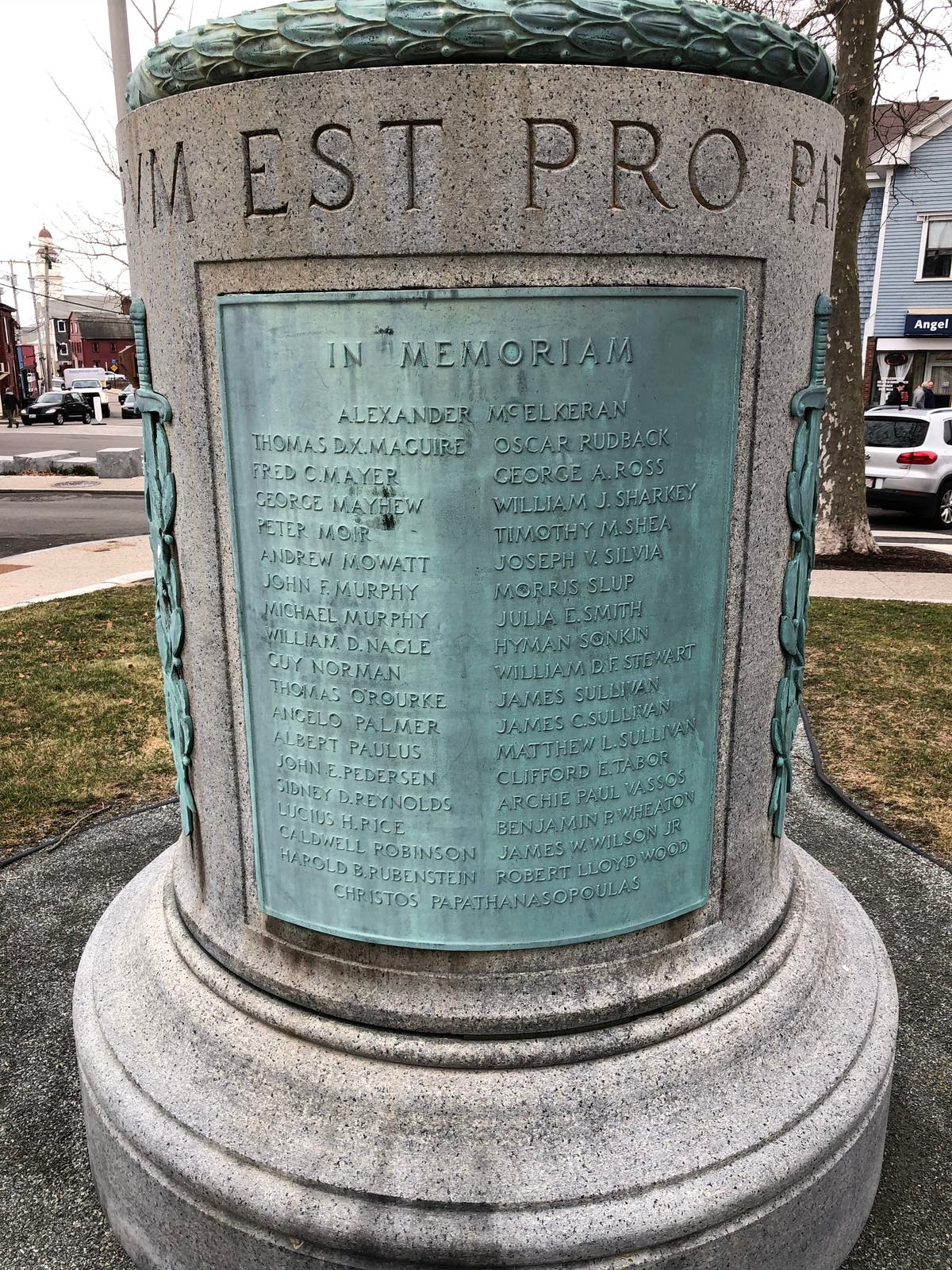
Lieutenant (Junior Grade) Sharkey's name was included on the Honor Roll plaques of the Minatonomi Memorial Tower with the names of the fifty-five other men from Newport, Rhode Island, who lost their lives during World War I. His name is also listed on the Honor Roll plaques of the World War I monument in front of Newport City Hall.
U.S.S. Sharkey (DD-281)
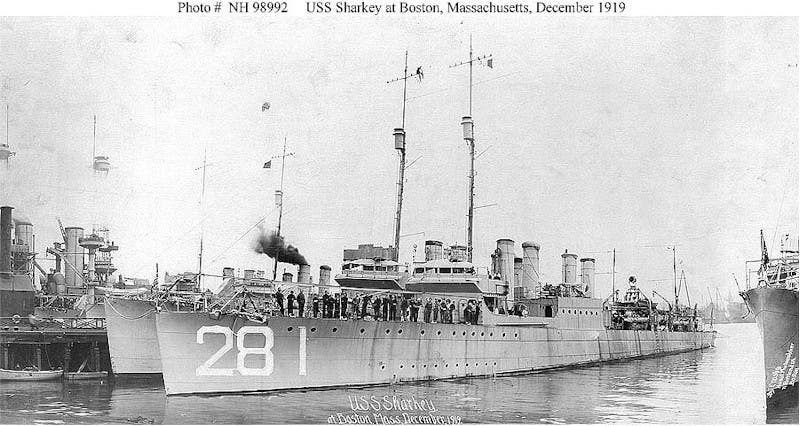
The Department of the Navy honored Lieutenant (Junior Grade) Sharkey's memory by naming a destroyer after him. The U.S.S. Sharkey (DD-281) was laid down on April 14, 1919 by the Bethlehem Shipbuilding Corporation, Squantum, Massachusetts. The ship was launched on August 12, 1919 and commissioned on November 28, 1919. Commander E. D. Washburn, Jr. was the ship's first commanding officer. Lietenant (Junior Grade) Sharkey's widow, Mrs. Mary Ellen (Goode) Sharkey was the ship's sponsor.
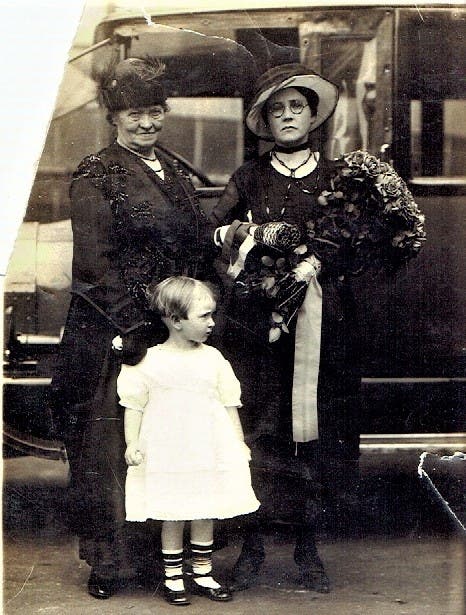
The U.S.S. Sharkey (DD-281) served in the U.S. Navy during the period between the end of World War I and the beginning of World War II. She was decommissioned at Philadelphia Navy Yard on May 1, 1930. The ship was struck from the Navy list on October 22, 1930 and sold for scrapping on January 17, 1931.
Starkey Theater
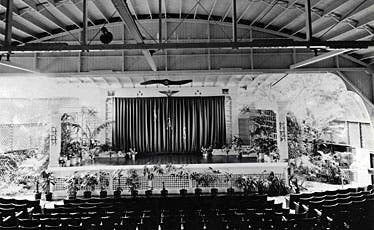
Commander Chester W. Nimitz named the theater at the Submarine Base, Honolulu, Hawaii, in honor of Lieutenant (Junior Grade) William Joseph Sharkey. Nimitz and Sharkey had served together on the U.S.S. C-5 (SS-16).
Family Traditions
William P. Sharkey (1909 - 1962) enlisted in the U.S. Navy on June 12, 1940 at Newport, Rhode Island. He served as a Radioman during World War II and later retired from the U.S. Navy.
Edward John Sharkey enlisted in the U.S. Navy on November 11, 1943 at Providence, Rhode Island. He was assigned to Company 321, at the Naval Training Station, Newport, Rhode Island, for basic military training. Like his brother, he served as a Radioman during World War II.