Politics & Government
Newport Sells Defaulted Loan Note for $1.6 Million
Newport is finally out of the loan business with Clarke School LP, which runs the affordable senior housing complex at the former school.


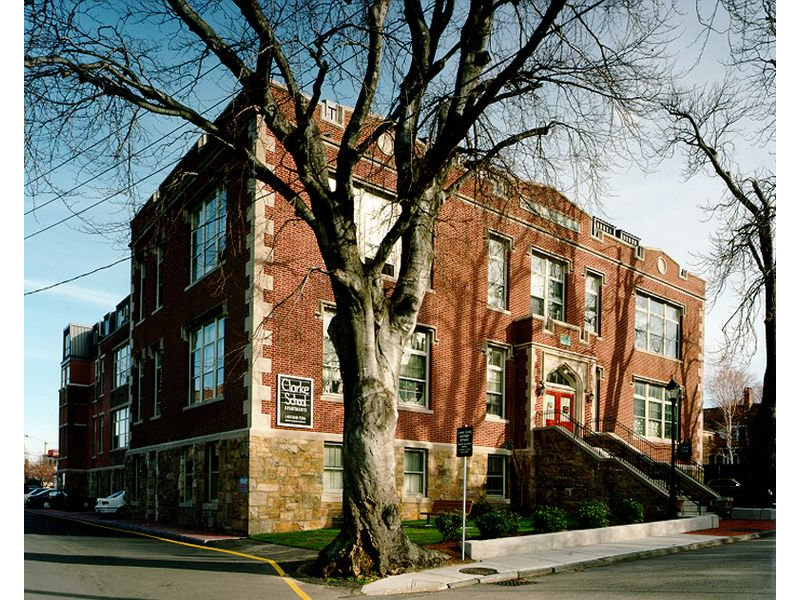
Newport will finally get out the loan business and see some payback from a defaulted $1.8 million loan issued in the 1990s after reaching a settlement with the borrower.
The city was owned a total of $1.8 million after factoring in interest that accrued from the original $1.35 million the city loaned to Clarke School LP in 1994 at a generous 2.2 percent interest rate.
The former school is now a 64-unit elderly housing complex and the loan was originally intended to facilitate the renovation of the building. What was unusual was the procedure: Newport borrowed from a bank and then turned around and lent it to Clarke School LP.
Find out what's happening in Newportfor free with the latest updates from Patch.
On Wednesday night, the City Council publicly confirmed their closed-door July 8 vote to approve a settlement agreement with Clarke School LP. According to the resolution, the city will get $1.6 million and the note will be sold to California Investors VII, a California limited partnershp.
The loan was due to be fully repaid in 2012, but Clarke School LP asked for an extension until 2025. After some debate, the City Council extended the loan for one year. Clarke School LP came back and asked for another extension but by then, the then-City Council had apparently had enough and sought recourse in the courts.
Find out what's happening in Newportfor free with the latest updates from Patch.
The actual bank loan the city took out to finance the Clarke School LP loan was repaid by the city in full in 2005.
The city’s motion in Superior Court against Clarke School LP was dismissed in July of 2014 because the loan is a non-recourse loan, which means the city can only collect it through foreclosure, said Acting City Manager Joseph Nicholson.
The resolution released Wendesday confirms as much. “Due to the nature of the financing which supported a subsidized elderly housing development, the city has limited recourse for the collection of said note until the first mortgage on the project is repaid sometime in 2025,” it states.
Proceeds from the sale are now supposed to go into the city’s Community Development Block Grant fund to support future affordable housing efforts, city officials said.
Eyebrows were raised earlier this year when the Patch first reported that former City Councilor Michael T. Farley filed an ethics complaint against Nicholson, the city’s longtime City Solicitor, for representing both the city and Clarke School LP while the Superior Court case was ongoing.
Farley, according to his complaint, alleged that Nicholson did not disclose his business relationship with the company during several points in the discussions held by the council about the defaulted loan.
Farley’s complaint alleges that Nicholson, who was acting as the City Solicitor, was representing the city’s interest in the matter. At the same time, the complaint alleges that Nicholson’s private law firm was representing Clarke School Apartments’ owners in several eviction proceedings in the fall of 2013.
Court records show that Nicholson’s firm, Nicholson & Sampson did represent Clarke School in two eviction proceedings in District Court, one in September, another in November.
That December, when the City Council directed Nicholson to try to recover the debt, he never disclosed the business relationship which constitutes a “substantial conflict with the proper discharge of his duties,” the complaint alleges.
Nicholson has declined commenting on the complaint but told the Patch in April that he understands that the fact his law firm represented Clarke School LP at the same time the city was taking them to court ”could raise eyebrows.
“I’m not happy it occurred,” he said.
Farley on Thursday said that residents should be alarmed that the proceeds from the settlement will roll back into the CDBG fund, saying that it enables Nicholson to use it “for the exclusive benefit of his other private client: the Newport Housing Authority.”
“The fact is the city borrowed money form a bank in 1993 to make the original loan to Mr. Canepari, and paid the original bank loan back over 15 years using ordinary tax revenue. So the Clarke loan repayment should go back to the taxpayers, not the housing authority,” Farley said. ”This is exactly why Joe Nicholson should not be allowed to double dip.”
Before the settlement was announced, the future of the property seemed murky. There was some talk that the building would end up in the hands of a private developer and turned into a hotel so long as the affordability restriction ended in 2016.
Nicholson told the City Council in a memo that he had talks with a “reputable local hotelier” about the idea, but they never came to pass.
Adding to the difficulty of converting the property’s use is the fact that the owner of the first mortgage, Rhode Island Housing, is unlikely to relent on the restriction and is not due to be fully paid back until 2026.
Get more local news delivered straight to your inbox. Sign up for free Patch newsletters and alerts.