Schools
Positively Newport Schools Holds Workshop for Alternative Pell School Designs
The group met at the Newport Public Library on Sunday to discuss alternative designs and plans for the Pell School project.

held a public workshop Sunday afternoon at the to discuss “alternative possibilities to the official [Pell Elementary School] design.”
The group encouraged community involvement and input in discussing “significant cost savings” and preventing “radical cuts envisioned by the
James Farrar, of Farrar & Associates Inc., was also present at the workshop to provide feedback to the Positively Newport Schools members and audience. Farrar & Associates was recently announced as the newest owner's representative to the Pell School project after Strategic Building Solutions resigned.
Find out what's happening in Newportfor free with the latest updates from Patch.
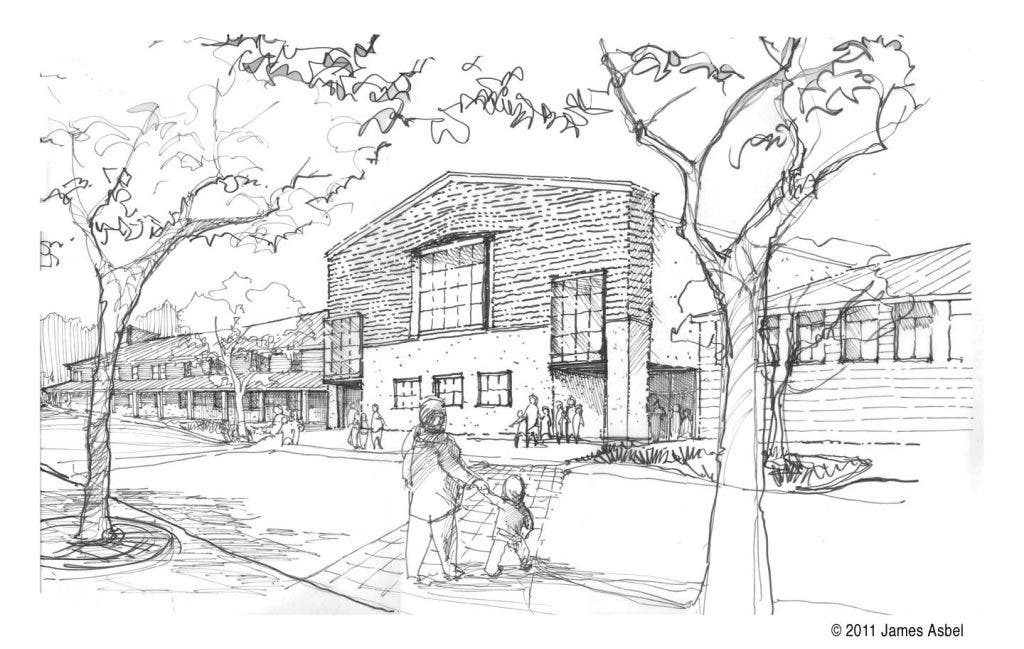
Jim Asbel led a majority of the meeting and presented possible cost savings by reducing materials in the foundation walls, windows, and roof.
The group said their estimates, which they believed were conservative, could save upwards of $4 million on the project.
Find out what's happening in Newportfor free with the latest updates from Patch.
Asbel also said he believes the school department written off his alternative designs because of his experience as an architect and that they believe he must have “ulterior motives.”
“I've been dismissed because I'm an architect. Isn't that funny,” he said.
Asbel said his designs were not a sales pitch, but the group's input came from a place of passion about the school's design and they hope to see a final product that will serve the community for years to come. He said he hopes they could “look constructively at what we and members of the community can bring forward.”
The Newport School Committee is looking to raise another $1 million, Asbel said, by looking for donations from the community.
“They're going to come back and ask us for donations when many of us think they didn't do their job,” he said.
During the presentation, Asbel said their goal was to discuss the design and alternatives that could be merged with the current ideas “already bought and paid for.”
One issue the group had with current design is the size. Several members of the group believe the current design is too small, despite the shrinking student population.
Asbel said the purpose of the school is to show a commitment to education “in hopes of reversing the trend.”
Asbel also said he created a design that would eliminate the need for a bridge by having the lower grades on the bottom floor and the higher grades on the second floor. With the older students on the second floor, the need for a bridge would be eliminated, he said.
Eliminating the bridge would be a significant cost-saving measure, even more than the school committee has indicated, Asbel said.
He also said the design is “much cleaner” than the current design for the school.
Asbel also brought up pre-engineered buildings as another form of cost saving.
Farrar said pre-engineered buildings do not have as much flexibility as conventional buildings, which the vast majority of schools are. Pre-engineered buildings are more common in large structures, such as airplane hangars and warehouses, he said.
“What you would want to do ... you'd certainly want to go out and look at other examples to see how they're doing and performing,” Farrar said.
Asbel said the key takeaway from the meeting should be that the group will continue to look for how constructive ideas can reincorporate things intended to be in the project and merge them with the current process.
Get more local news delivered straight to your inbox. Sign up for free Patch newsletters and alerts.