Community Corner
Encouraging Your Children’s Independence While Keeping Them Safe
While children definitely need boundaries, it is also important to build their independence as well. It's not exactly a safe world we live in, so how do we balance independence and keep them out of harm's way?
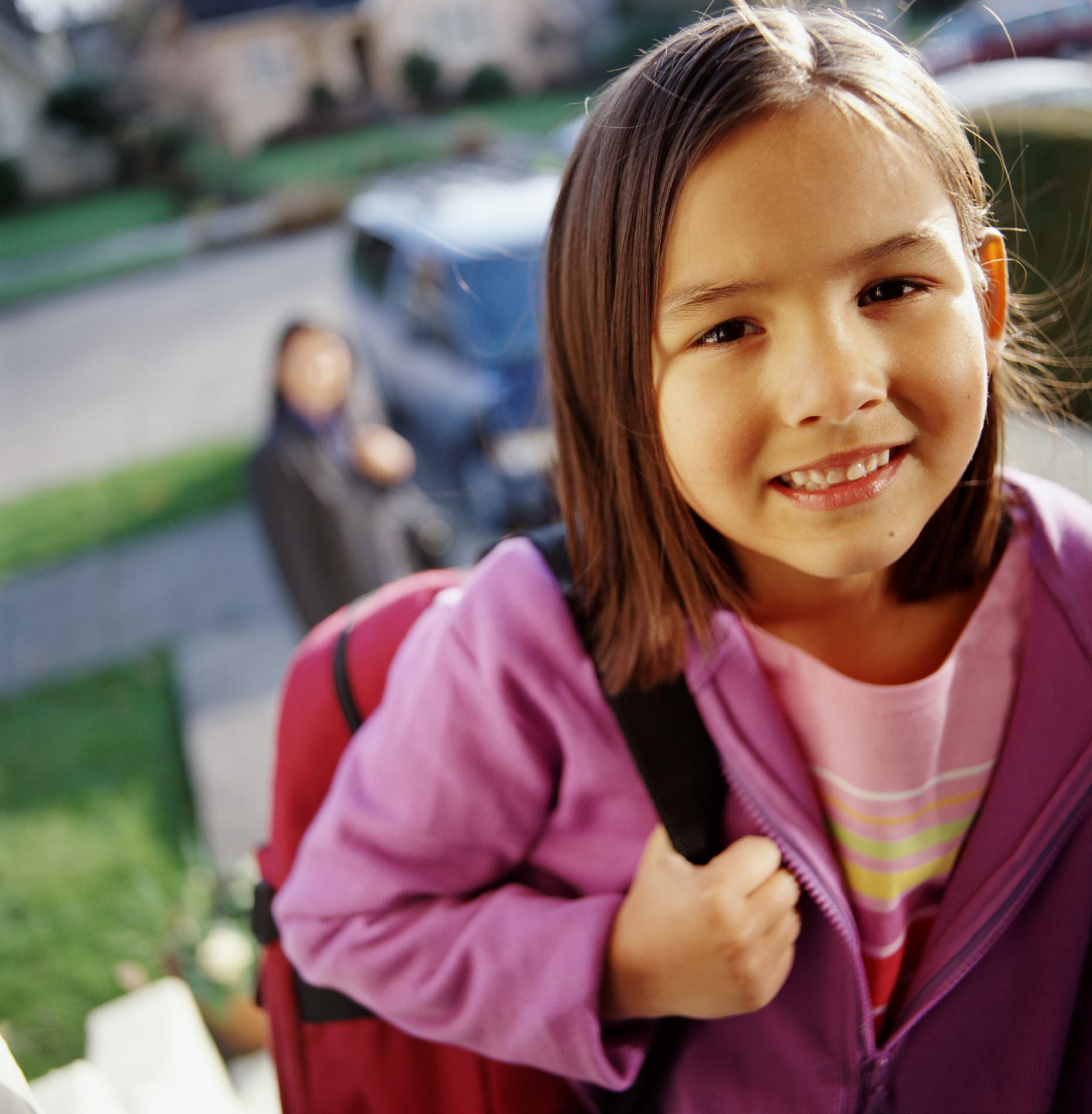
It’s perfectly normal for young kids to beg for independence, many times in the form of being able to ride their bike to a friend’s house or perhaps to be able to roam the mall alone on the weekend. But, when you hear about the horrific tragedy like the one in New York City a couple of weeks ago, you question whether or not you’ll ever let your child leave the yard, never mind be allowed to take on walking a few blocks anywhere until they’re 40.
If you didn’t hear about the heartbreaking NYC story it involved the tragic fate of an eight-year-old boy, Leiby Kletzky. He had begged his parents to let him walk a few blocks home alone from day camp. They'd even practiced the route before, but he got lost and, in looking for help, he encountered a stranger – someone he trusted to help him, part of his Orthodox Jewish community. Instead of helping the boy, the stranger allegedly kidnapped and then killed him and dismembered his body, actually putting parts of Leiby’s body in his refrigerator. This heinous crime is what lingers in a parent’s mind for years after as a reminder that you can never take your child’s safety for granted.
This week, members of our North Kingstown Parents’ Council had one thing on their minds — keeping our kids out of harm’s way while encouraging their independence. We realize psychopaths such as Leiby’s killer are obviously not the norm and we can’t let such a crime stand in the way of fostering our kid’s independence, but the key is finding a balance that works for each family. Here are some of the suggestions on the topic that were discussed.
Find out what's happening in North Kingstownfor free with the latest updates from Patch.
Know Your Child’s Strengths and Weaknesses
Parents usually know their kids better than anyone else; so, if you look at your individual children and know what their strengths and weaknesses are, that's really going to help guide you as to what they're ready to do. Just like some kids, some babies walk earlier than others, some talk earlier than others, some are ready to strike out on their own with a little more independence earlier than others.
Find out what's happening in North Kingstownfor free with the latest updates from Patch.
Intuition plays a part in knowing when a child is ready for the next step in gaining a little independence, too. One of our families with three kids knew their oldest son, now 19, was not even ready to stay home alone while they ran to the milk store because he was on the immature side as well as was very goofy in nature. His privileges for being home alone or being allowed to hang out with friends in a nearby neighborhood were not earned until he was 16 because they sensed danger during his earlier teen years. If it doesn’t feel right, listen to yourself and trust that you’re doing the right thing for that particular child, regardless of how much he fights you on it.
Practice Role Playing
Role playing is highly encouraged in many “stranger danger” classes held in both school and other community venues. Our council members say they believe this is one of the most important strategies you can teach your child because, when you are directly involved in the role playing, they will have a better chance of remembering what to do, God forbid they are ever put in a scary situation. Experts say that the single most important thing to remember when teaching your children about stranger danger is to instill confidence, rather than fear.
Here are some role playing scenarios adapted from www.mychildsafety.net
Role play the following encounters and fit the circumstances of your own neighborhood and surroundings:
- Children waiting for the bus or a ride home
- Your child is home alone and the doorbell rings
- Your child is home alone and the phone rings
- Your child is playing an online game and a player asks for her real name
- Your child is outside riding his bike when a car begins to slowly follow along
Helping Younger Children to Identify Strangers
One of the trickiest parts of discussing “stranger danger” with younger kids is helping them to identify who a “bad” stranger is. Kids are so trusting and can be easily persuaded by a predator who knows exactly what tricks and treats to use that will lure the child away with him.
Ninety to ninety-five percent of all the crimes against children are not committed by strangers they meet on the street: they're committed by people they know, often family members or close family friends.
The following tips were listed on www.crime-safety-security.com for helping to identify who a potential stranger is and tips to safe.
OVERALL CHILD SAFETY TIPS for STRANGER DANGER
• Know your full name, phone number and address.
• Never be alone off your property. Stay with friends – even when going to public lavatories.
• Always get your parent’s approval before going anywhere – and phone your parent often.
• Walk only on routes to school and elsewhere that your parent has scouted out with you and pointed out safe places along the way. And never walk through parking lots or take other shortcuts.
• No headphones or hand-held games to distract you from what’s around.
• If someone comes near you, don’t speak to him other than saying, "Go ask an adult.”
• Never go near someone in a car or truck. Just run the other way – toward other people.
• Cute animals and candy are just two tricks used by bad people to get near you.
• Always get your parent’s OK before accepting money or a gift.
• If you see someone doing something wrong, go the other direction.
• Do not have your name printed on anything visible to strangers.
• Give up your valuables if you’re robbed by another kid – never fight back.
• Never get money for any school or club project unless your parent is with you.
• Don’t trust anyone who tries to get you to break your parent’s rules.
• Tell your parent about places or people that make you feel unsafe.
• Have a secret code word for emergencies. If you phone your parent while you’re with someone who scares you, you can say the code word to secretly let your parent know that you need help.
IF LOST – CHILD SAFETY TIPS for STRANGER SAFETY
• Never go anywhere that your parent hasn’t told you is OK – you might get lost.
• If you do get lost anyway, go to a store or a home where you know someone is at home. Go anywhere there are people to help you (stranger safety) – and be loud about it.
IF FEELING THREATENED – STRANGER DANGER
• If you think that you’re being followed by someone, start blowing your whistle (or pull the pin on your noisemaker) while running to a store or a home where you know someone is at home (stranger safety). Run to anywhere there are people to help you – and be loud about it. (Instead of hanging a whistle around his/her neck on a cord that can be used to strangle, use a beaded-metal chain that breaks too easily for strangling. Or wear a whistle on a wrist bracelet.)
• Trust your feelings. If you feel scared, just run away to a safe place. Yell “NO,” then RUN and TELL an adult.
• If someone grabs for you, thrash, fight, bite, and scream, "Help! Police!" repeatedly, shed a jacket or backpack that is grabbed, drop any excess baggage slowing them down, escape to a populated area (stranger safety), and call the police. YELL! RUN! TELL! The kidnapper fears a public spectacle and may simply flee alone.
• What if he has a weapon? Ignore it and run! Weapons are rarely used to threaten a child, and almost never used to harm a child at the kidnapping scene. A kidnapper does not want to attract attention. Besides, if he’s willing to harm a child there, he’s willing to do even worse harm at a secluded location. The same advice still holds true: shout, "Help! Police!" Get away no matter what! Drop to the ground, kick, hit, bite and scream – then run!
Be Explicit with Terms and Explanations
In this day and age, our parents’ council members agreed we need to be very explicit with our kids when discussing potential dangerous situations. An important place to start is the discussion of what safe “good touch” and unsafe “bad touch” are.
“Good touch” is anything that makes us feel good and leaves us feeling happy and comfortable. This includes holding hands with our friends, sharing yummy snacks and meals with our friends and family, and getting a warm hug from our parents.
“Bad touch” is anything that leaves us feeling unsafe, confused, uneasy or uncomfortable. These touches include any touching or kissing to our private parts such as the penis, vagina and rectum, and especially any touches made by an older child or adult and then they tell the child keep it secret.
The following rules for personal safety were adapted from http://www.mdhil.com/child-sexual-abuse-good-touch-bad-touch/
Do you have any suggestions for balancing safety and independence with your own children? Please share them with us in the comment suggestion or e-mail me at CB091987@aol.com. Also, please let myself or our editor, Samantha Turner Samantha.Turner@patch.com know if you have a question you’d like us to address or if you would like to join our Parents’ council. We’d love to hear from you.