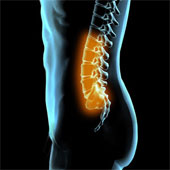
At this point I was going to be tested. I treat patients with this type of pain everyday and give lots of advice on how to recover from this injury, commonly referred to as an Internal Disc Derangement or Lumbar Sprain/Strain. I was about to put it all to the test. I knew this would get worse before it got better, and that if I just kept moving throughout the day I could delay the inevitable-- an increase in sharp, intense pain with the possibility of muscle spasms that would severely limit range of motion. I immediately did some of the McKenzie Extension exercises (back bends) that I routinely recommend. They were a little painful, but tolerable. I then took 600 mg of ibuprofen to help reduce the inflammation and pain then carried on with my day. It was uncomfortable. I had to be very careful with my positioning to avoid further flexion of the lumbar spine. This is called flexion avoidance and the idea is to avoid re-creating the method of injury (which involved bending forward (flexing), incorrectly). I was able to continue upright movement which can help minimize the buildup of inflammation in the injured region. I was able to finish the day ,though I was completely drained and exhausted from coping with the constant, ever increasing low back pain.
I got home and took another 600mg of ibuprofen, changed my clothes (with help from my wife) and laid down on the couch, rather than sit (I am always telling patients that sitting on the couch will only make you worse). I watched the Bruins Hockey game that night and had one heck of a time getting off that couch two and a half hours later. I fully expected this and was not surprised, but the intensity of the pain was more than I had anticipated. Getting into bed that night was comical! My wife had a good laugh and even had me laughing (which did not feel good). I slept OK but got stiffer and more sore as the night went on. Getting out of bed was very painful and slow (as I had expected), and it took me about 5 minutes to get to an upright position (sort of…leaning to the right), and about 15 minutes before I could walk without wincing with every step. Again sitting was painful.
I managed to follow my own advice for the first 24 hours by continuing to move as much as possible, avoid bending and sitting, regularly perform my extension exercises every hour, and take NSAIDS every 4-6 hours. I even went to the gym and used the elliptical machine (cautiously and slowly) just to keep myself moving. It was painful at first but I was able to loosen up and felt considerably better for 2 hours afterward. The evening was very painful again as the inflammatory cycle was nearing its peak and movements became more difficult as a result.
The second morning was again quite painful. I used my 7 year old son as a crutch until I loosened up enough to get around on my own. I again pretty much followed my own advice throughout the morning, used the elliptical, and felt better as a result. I was progressing much like I had expected. However, by mid day, I began to go off course. I broke one of my own pieces of advice and decided to take an hour long trip to IKEA in the car. My advice for patients is to stay out of the car or vehicle as much as possible as it will only make you worse. After an hour drive up, an hour and a half walking around on a concrete floor, and an hour drive back, I was definitely feeling worse and my mobility was considerably compromised. I sat on the couch (compounding my mistake) exhausted from coping with the increased low back pain and could barely get off it later. I was worse that night and paid for my mistakes the next morning. It took me 20 minutes to get out of bed! Lessons learned: stay out of the car, avoid sitting as much as possible, and stay off the couch!
Find out what's happening in North Kingstownfor free with the latest updates from Patch.
I think the events of the second day set me back by at least 48 hours. I was able to utilize the elliptical machine at the gym daily (slow and steady just to keep moving). This helped loosen me up immensely every day, and I felt best 2 hours following this exercise. I was also able to get treated by my wife (also a chiropractor) at my office four days after the injury and felt considerable relief afterward. This significantly improved my mobility, got me standing straighter, and reduced the pain intensity by 50%. I got increasingly better throughout the next 5 days, and continued to increase my activity accordingly.
What have I learned from this experience? First and foremost, I am reminded of what it is like to be a patient in pain. Everything I did within the first 72 hours hurt, but not everything was detrimental to my condition. I would say that all of the advice that I routinely give was helpful, as long as I followed it. Below are a few things that I highly recommend to anyone suffering from acute low back pain:
Find out what's happening in North Kingstownfor free with the latest updates from Patch.
- Keep moving as much as possible in an upright position. The elliptical machine helped me tremendously even when I was in considerable pain and had very limited mobility. Walking could be a substitute as well. Yes it was painful at first, but it did not make me worse. As I continued with the exercise, I began to loosen up and this lasted for at least 2 hours afterward and I felt at least 50% better afterward. I used the elliptical for about 40 minutes each day. I would recommend at least 20 minutes.
- Stay out of the vehicle! The position of sitting and especially driving in a vehicle puts more pressure on the lumbar disc by virtue of the positioning( arms and legs forward while leaning back.) I was considerably worse each time I got out of the car.
- Limit the sitting, and avoid the couch! Sitting naturally puts more pressure on the lumbar disc compared to standing and lying down. Sitting in an upright chair such as a kitchen chair helps to lessen this pressure. The best advice is to not sit longer than 20 minutes at a time and avoid soft chairs/sofas altogether.
- The McKenzie Extension exercises really help. These exercises reduce pressure on the lumbar disc and also help to keep it moving. Movement is essential for proper and speedy healing. These exercises can be painful initially, but are not increasing the damage that has occurred. Rule of thumb-- they are OK to perform as long as you are not getting progressively worse while doing them.
- Flexion avoidance proved beneficial. Initially after the injury, I could not bend at all without sharp shooting pain and muscle spasms. This is your body’s natural response to splint your spine and avoid further injury. But as I improved, limiting the bending and reaching by keeping the head and shoulders up definitely reduced the amount of pain in the low back and helped to avoid re-injury.
- Get treatment as soon as possible. This can make a huge difference in the course of your recovery. Getting treatment early can help to lessen inflammation, restore normal movements, straighten you up, and facilitate healing all with the goal of getting you better sooner. It can also teach you how to take care of your spine and what to avoid to keep from making it worse.
Acute low back pain is very common but the cause (pain generating tissue) will vary. Everyone from your coworker to your mother-in-law to the internet has some advice for you. Some of it may apply, some of it may not, but the best advice I can give you is to go to an expert. Have an evaluation by someone, like myself, who treats low back pain on a daily basis and can examine you and provide the best advice based on your condition. Following the appropriate advice during the first few days of your acute pain can make a big difference in how much time you may be “laid up” from back pain!