Schools
Aquidneck Island Superintendents Examine Six Regionalization Options
The first public forum to discuss the regionalization of high schools on Aquidneck Island was held Tuesday night in Middletown at the Gaudet Middle School.



For roughly five years now the prospect of regionalizing schools on Aquidneck Island has been the subject of scattered discussions among various boards, councils and committees, two financial and educational impact studies and, more recently, the sole and deliberate focus of a formal island-wide ad hoc committee looking closely at regionalization.
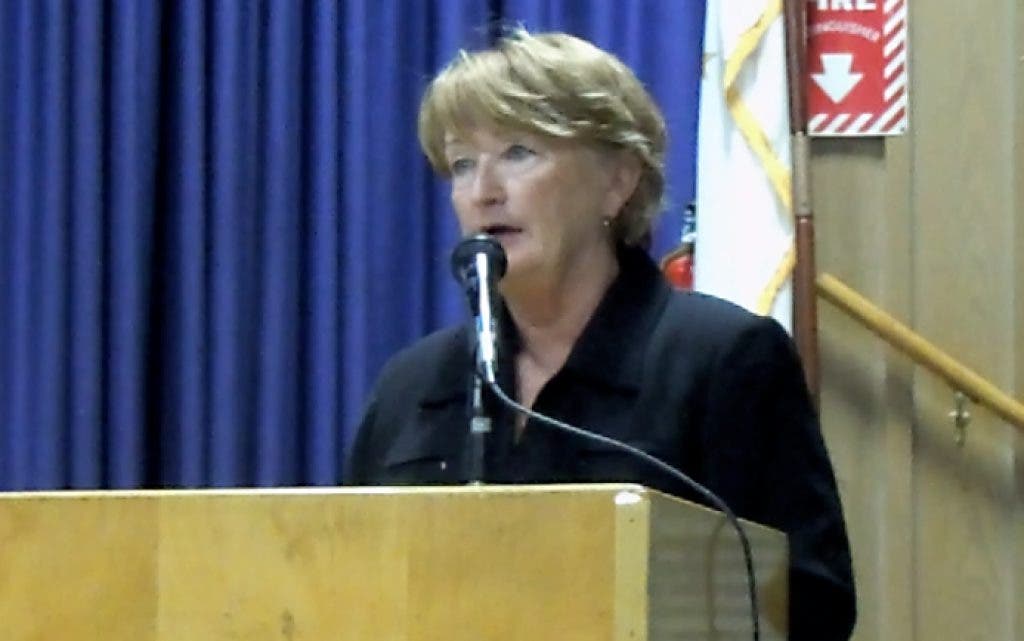
A collection of those findings and the island’s top educators’ points of view were presented together to the public for the first time at a nearly three-hour forum held Tuesday night in Middletown in the The meeting was with the Aquidneck Island School/Municipal Advisory Committee that’s been studying the issue. The community forum was sponsored by the American Association of University Women and moderated by former District 12 State Senator and former Middletown Councilor June Gibbs.
No action was taken, but the three Aquidneck Island public schools superintendents at the forum seemed to agree on several main points: that both pros and cons related to potential financial and educational impacts could be seen; that sharing resources and a larger district could result in a critical mass needed to create expanded educational programs and opportunities for students; that both the degree of projected savings and educational benefits could be debated and would depend on the final structure a regionalized school district, or single high school; and that the ultimate decision to regionalize schools should be left up to the three communities to decide, given the emotional nature of the issue and high levels of community pride found in Newport, Middletown and Portsmouth.
Find out what's happening in Portsmouthfor free with the latest updates from Patch.
“Just when you think it couldn’t be any more complicated. There are no easy answers and there’s still much to learn and hear on the subject,” remarked forum moderator Gibbs, following a lengthy presentation that covered six financial scenarios for all three school districts. Those scenarios recently changed again after the state revamped its school funding formula.
The six models or degrees of regionalization were addressed in two independent studies, with scenarios ranging from doing nothing or leaving the three districts at the status quo—resulting in greater projected financial shortfalls for all three districts in coming years—to having one high school for Aquidneck Island and to forming one district of 6,500 students and potentially saving about $12 million per year collectively amongst the three municipalities.
Find out what's happening in Portsmouthfor free with the latest updates from Patch.
No one is looking to regionalize the elementary or middle schools at this time but are focusing on the high school, Newport Superintendent John Ambrogi emphasized during his presentation.
Taking into account declining school populations, economic indicators and the new state funding formula, Portsmouth was foreseen to see the least immediate financial gain from regionalizing, with savings realized after the first two years, while Newport and Middletown would likely see the greatest financial incentives immediately, according to Ashley Denault of the Rhode Island Public Expenditure Council (RIPEC), who presented her detailed findings Tuesday night.
Other options, such as “voluntary collaborations” for sharing certain resources, services or school programs were not addressed in the studies but were suggested at the forum by New England School Development Council (NESDEC) consultant Donald Kennedy as the next areas to examine to possibly find some financial efficiencies without regionalizing school districts. Kennedy performed the most recent feasibility study that looked at both educational benefits and financial impacts from six different regionalization models.
“When we first started to take a closer look at regionalization, many of us were astounded at how much collaboration was already happening on Aquidneck Island,” said Dr. Charles Shoemaker of Newport, who serves as chairperson of the Aquidneck Island School/Municipal Advisory Committee. He noted the Special Education program as one of the more obvious and successful examples.
The three Aquidneck Island superintendents each indicated a willingness to explore finding more voluntary collaborations, especially since each district seems to offer a strength in a particular area that might be shared, such as the music and arts in Portsmouth, technology in Middletown and the ability to secure grants in Newport. There might be an opportunity to look at collaborating on a science and technology program, Middletown Superintendent Rosemarie Kraeger suggested as an example.
Expanding educational opportunities to students was a key positive argument made for regionalizing schools, but each superintendent seemed excited to first explore possible collaborations.
“This is exciting stuff and tonight is the first time I’m hearing about this particular direction,” remarked Newport Superintendent John Ambrogi. He spoke with great excitement over the option of having specialized high schools with certain areas of academic focus, and he encouraged all three communities to keep an open mind about regionalization and to "keep the diaolgue open."
“I push back a little and say, ‘Have we really explored all the efficiencies?’” Kraeger said, when she expressed some of her reservations over regionalization.
She also questioned some findings in the NESDEC report, for example, the argument that similar size comparable regionalized school districts have produced better test scores. She questioned, “Can we really attribute that to regionalization or to the fact that there’s been a greater emphasis in recent years on improving test scores?’”
Nearly 50 people turned out for the forum, including local elected and planning officials, teachers, parents and concerned taxpayers from across the island. Questions from the audience were submitted on index cards and read aloud by Gibbs and answered by the panel.
Afterward, Susan Fitz-Morris, a high school teacher and resident of Portsmouth, said she came into the forum not supporting the concept of regionalization and continues to lean that way, but heard about some benefits from expanding educational opportunities for students that sounds promising.
“I worry about local control, that when you get that large you lose that parental input and that worries me,” Fitz-Morris said.
She said she was leaving the forum with an expanded open mind about voluntary collaborations between schools, perhaps for a science-based program, but given the districts’ different schedules and daily programs, she wondered if even that might be possible among the three island communities.
Presentations were made Tuesday night by Donald Kennedy of the New England School Development Council (NESDEC), which performed the most recent feasibility study that looked at both educational benefits and financial impacts from six different regionalization models. Ashley Denault, of the Rhode Island Public Expenditure Council (RIPEC), which conducted the first financial studies and has continued to update those findings as the state education funding formula has changed, also spoke.
Both reports are available to view in the image gallery at upper right online at the following Web sites:
- www.RIPEC.org
- www.NESDEC.org
Get more local news delivered straight to your inbox. Sign up for free Patch newsletters and alerts.