Health & Fitness
Imagine No Toll on the Pell Bridge
Innovative ideas that to do not add taxes or fees and do not cut services.
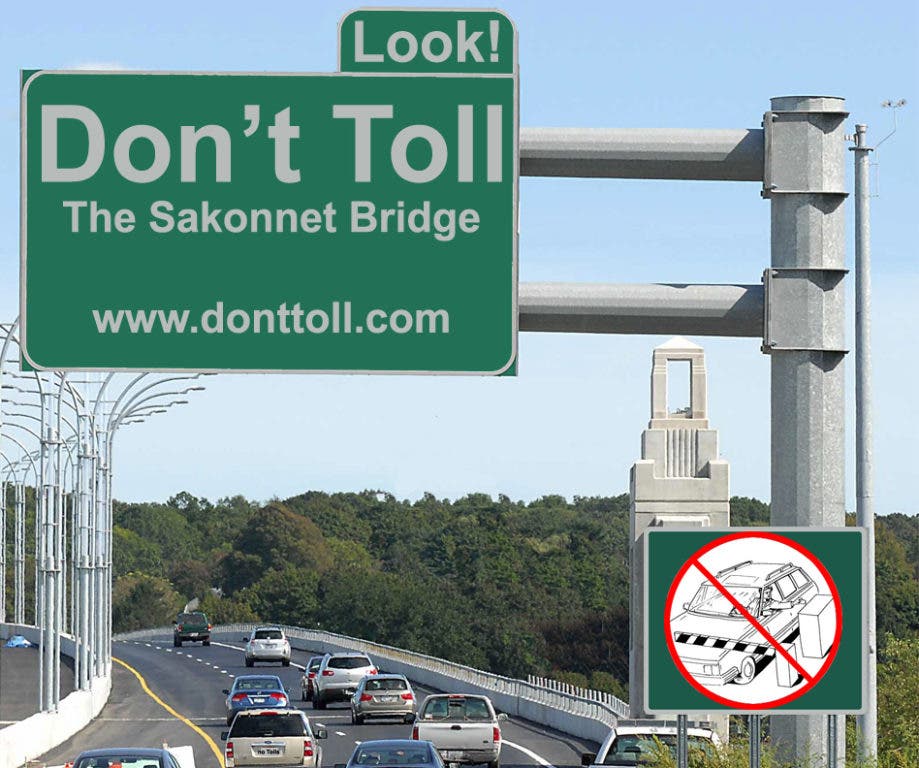
Imagine Newport….without a toll on the Pell Bridge……
On Wednesday evening, Feb. 13, 2013, scores of East Bay residents testified to the Rhode Island Senate Finance Committee on Senate Bill 20 by Senator Walter Felag and Senate Bill 242 by Senator Lou DiPalma.
Senate Bill 20 would repeal Article 20 of the 2013 Rhode Island State Budget which created the East Bay Infrastructure and authorized the transfer of the Sakonnet and Jamestown Bridges to the Rhode Island Turnpike and Bridge Authority.
Find out what's happening in Portsmouthfor free with the latest updates from Patch.
Senate Bill 242 proposed alternative legislation to create a bridge maintenance trust fund and alternative funding proposals instead of a toll on the Sakonnet River Bridge.
There was plenty of testimony about how the proposed toll on the Sakonnet River Bridge would negatively affect individuals, small businesses, and the area economy.
Find out what's happening in Portsmouthfor free with the latest updates from Patch.
Senate President Teresa Paiva-Weed attended the hearings as well and challenged the folks who gave testimony on how to maintain the four bridges to Aquidneck Island without having a toll increase on the Pell Bridge.
A number of anti-toll advocates met with her on January 15th of this year to discuss this very topic. They shared information on how the proposed toll on the Sakonnet River Bridge would have many negative economic impacts in the East Bay area. She expressed her concern about the possibility of an increase on the toll on the Pell Bridge if a toll did not go on the Sakonnet River Bridge. Her concern is real and she must protect her constituents.
One of the anti-toll advocates went as far to suggest a solution without any toll on the Pell Bridge. It sounds far-fetched, but it is within the realm of possibilities.
Based on figures provided by RIDOT and RITBA, the four bridges to Aquidneck Island would require funding of about $38 million a year each year for the next ten years. This would include enough funds for bridge maintenance, debt service and setting aside funds for future capital improvements.
The Rhode Island State Budget is roughly $8 billion dollars. One half of one percent of this figure is $40 million dollars. Is there a way to find $38 million dollars a year within an $8 billion dollar annual state budget? There may be.
One way would be to consider incorporating private sector business best practices into the state budgeting and money management practices. The ISO standards come to mind.
The State could examine the way the U.S. Army responded to sizable budget cuts in the early 1990’s as a result of the “peace dividend” after the Berlin Wall came down in 1989. The U.S. Army implemented two programs – the Army Community of Excellence (ACOE) program and Total Quality Management (TQM) to reduce costs and operate with reduced budgets. They implemented these programs with success and responded to budget cuts greater than five percent.
Another possibility is to incorporate practices similar to the Inspector General system in the U.S. Army. The U.S. Army Inspectors General are charged with looking at systemic problems and recommending solutions to fix these problems. Some of the areas that the Inspectors General investigate is systemic spending problems and looking at areas where there is fraud, waste and abuse.
A fourth possibility is to have a dialog with UPS – “the Logistics People.” UPS developed internal programs to become more efficient and more profitable. This program was successful and so much so, they added it as an adjunct business and have offered their methodologies to any other business that wants to save time and money. Why not give them a try? At least have a discussion with them.
It certainly seems possible that implementation of any of these four ideas could save the State one half of one percent of the State Budget. If this happens, then the State could identify $38 million dollars a year to dedicate to RIDOT and RITBA.
Then they would be able to maintain the four bridges, take care of debt service, set aside funds for future capital improvements and do it without a toll on the Pell Bridge.