Health & Fitness
In the Garden This Week: Let's Talk About Tomatoes!
For all of those who grow tomatoes, here are some helpful hints to get the most and the best out of your garden tomatoes.
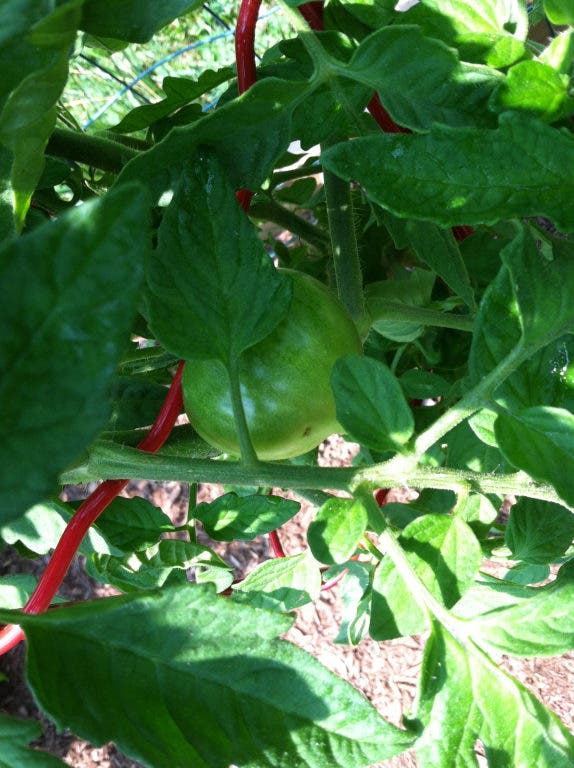


Let's face it: We all love the taste of a fresh-picked tomato. There is nothing more luscious that that. Some of us even enjoy eating a tomato in the same way that we eat an apple. Let's look this week at some of the various types of tomatoes as well as some of the potential problems of home-grown tomatoes.
First of all, we all know that tomatoes are relatively easy to grow and most people who grow any vegetables usually grow tomatoes.
You may be surprised to know that there are two basic categories into which almost all tomatoes fall:
Find out what's happening in Portsmouthfor free with the latest updates from Patch.
1.Determinate tomatoes: These are a bush variety and they can be grown with or without support. Their fruit (yes, tomatoes are a fruit!) ripens at a fairly concentrated time. Some examples of determinate tomatoes are Celebrity, Orange Blossom, Defiant and Mountain Fresh Plus.
2.Indeterminate tomatoes: These are climbing varieties which need to be caged, staked or otherwise supported. They produce more fruit if they are pruned by triming foliage especially on the lower extremities. They need air circulation. They ripen over an extended period of time. Examples of indeterminate tomatoes are Big Beef, Mountain Magic, Martha Washington, Pink Beauty and New Girl.
Find out what's happening in Portsmouthfor free with the latest updates from Patch.
By the way, tomatoes, especially those classified as Heirlooms, come in many different colors. There are Cherokee Green, Cherokee Purple, Japanese Black Trifele, Green Zebra, Black Krim and others.
Most of us grow indeterminate tomatoes and therefore they will need staking of some kind. There are metal cages, metal supports and you can use wooden stakes as well. Put these supports in early so you don't damage the plant's roots. Some of my tomato plants last year reached seven feet tall, so be warned. Plan ahead.
Insect pests: The most common insect pest for Tomato plants is the famous tomato hornworm. This greenish-yellow worm is hard to see on a tomato plant because of it's color being so similar to the green foliage of the plant. You usually will notice you have hornworms by a trail of black excrement that you see. When you discover a hornworm you can pick it off and dispose of it in soapy water. However, if the hornworm has a lot of white larvae attached to its back, leave it alone. Those are the larvae of parasitic wasps. The wasps will kill the hornworm and they will kill many more hornworms on neighboring plants.
If you feel that you have to spray something you can use Bt, Insecticidal Soap or Spinosad (mostly organics). See last week's blog about Oganic Pest Control. Always remember you are going to EAT what is growing in your vegetable garden. Thee are other pests that we have to watch out for, so a close inspection of your plants about twice a week is now necessary.
Diseases: Two of the most common diseases that we hear about on our URI Master Gardener Hotline (Mon-Thu 9-2, 1-800-448-1011) are Blossom End Rot and Late Blight.
Blossom End Rot appears on the tomato itself as a brown or water soaked discoloration on the bottom of the tomato. The tomato becomes inedible and should be disposed of. The cause of this disease is a calcium deficiency in your soil. Tomato plant soil should be maintained at a pH of about 6.4 to avoid this. Soil testing can be done at almost any time of the year. (See our kiosk note below). Often an application of lime will help sweeten the soil, improving the pH.
Another very serious problem has come to New England in the past couple of years. Late Blight (Phythophthora infestans) can attack tomato and potato foliage and wipe out an entire crop almost overnight. It is an airborne fungus that sometimes survives in the leaf litter and soil. It causes leaves to turn dark green (water-soaked lesions) and then brown/black and then die off. You should pick off any affected leaves, bag them and get rid of them. Do not put them in a compost pile. Sanitation is very important. There are some fungicides (like Chlorothalonil) that can control Late Blight if they are applied BEFORE an infestation. But remember, you are going to EAT those crops that you are spraying. Read the label VERY carefully!
To prevent Late Blight you should water your tomatoes only early in ther morning (before 10 AM) and water them at the ground level as much as you can. Don't let the leaves get soaked. That encourages fungal growth. Also do not water in overcast weather. Keep a good airflow in your plants by pruning. And be sure to remove any affected plants expeditiously. You also can put row-covers over your plants.
These are a few of the problems to look out for. But most of all practice vigilance and watch your garden closely, looking for any problems. Treat your plants well and they will provide you with that wonderful experience of harvesting and eating fresh, fresh fruit. Enjoy.
And don't forget to come see us at our free garden kiosk at Paradise Valley Park (Paradise and Prospect Avenues) in Middletown every Sunday (rain or shine) from noon to 2. Bring all of your garden questions and samples or photographs of any problems you encounter. We will do all we can to help your garden grow.
Send you email questions to us at gardeninginformationri@gmal.com.