Health & Fitness
In The Garden This Week: Some Common Gardening Problems
Le's look at few of the major gardening and lawncare problems we are now facing.
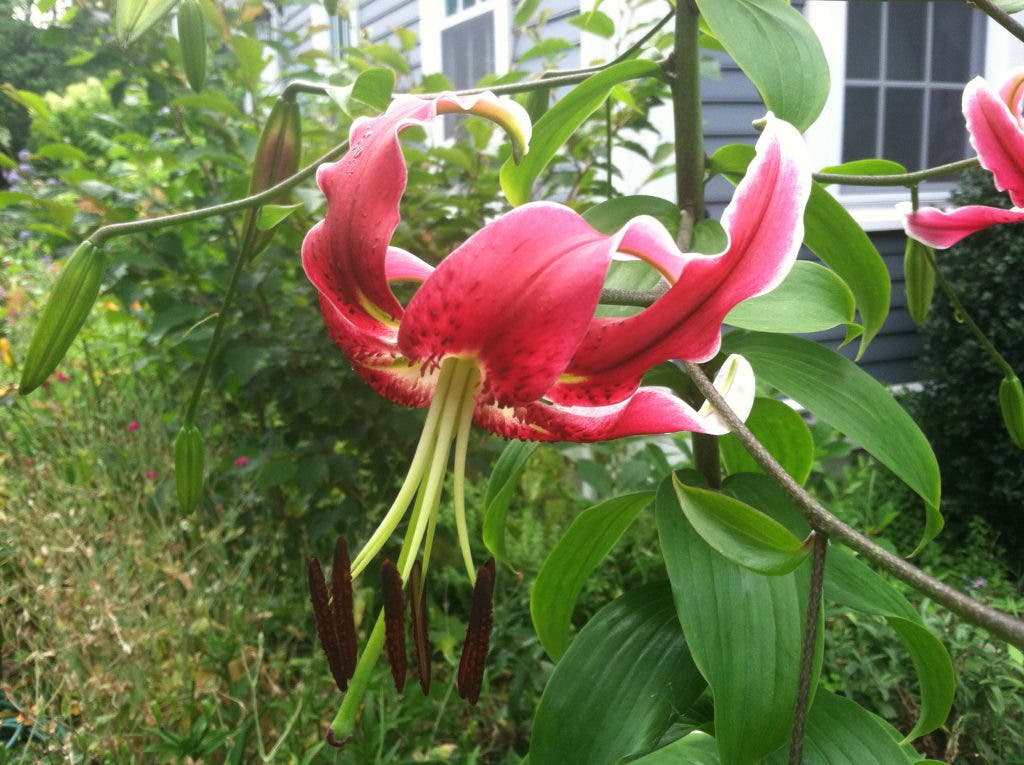


Let's look this week at three common garden problems that many of us are facing at this time: Late Blight on tomatoes, Downy Mildew on Impatiens and that old perennial Crabgrass.
Late Blight on tomatoes is a very common occurrence these days, especially with the warm and humid conditions we have been experiencing. Although Late Blight has been around for many years, it has become particularly prevalent in the past few years in this area. There are several types of blight that tomatoes and potatoes can get. Most of them are characterized by brown and then black leaves which fall off the plant. These are generally leaves that are at the bottom of the tomato plant. Late Blight is particularly insidious because it can kill a whole bed of tomatoes or potatoes in just a day or so. The easiest way to see if you have Late Blight is to examine the stems of your tomato or potato plants. If you see what look like wet spots on the stem, usually circular or oval in shape, then you probably have Late Blight and those plants should be removed from the bed immediately. They should be bagged and put out with the trash. Do not compost them. I know this hurts, but it has to be done.
Blights are caused by fungal spores that are carried by the wind and they are very hard to control once they are discovered. The primary treatment is to use a fungicide before you have the blight. There is a fairly new organic fungicide called "Serenade" which is safe to use on food crops. Other fungicides, such as Daconil and Chlorothalonil can be somewhat toxic. (Read the label VERY CAREFULLY!) and you need to wait a certain number of days before harvesting food crops that have been sprayed with them.
Find out what's happening in Portsmouthfor free with the latest updates from Patch.
As mentioned, Late Blight can also affect potato plants. In fact it was the major cause of the famous Potato Famine in Ireland in the 1840s.
Tomato plants also need to have air circulation at this time of the year. It is not a bad idea to trim off some of the bottom leaves, even healthy ones, to let some air circulate under the plants. Also when you water that one inch per week (and of course you do it before noon if possible) try to water the ground under the plants and don't get the leaves any wetter than absolutely necesary. Again that dampness encourages fungal infections. And finally be sure to clean up the ground under your tomato plants; sanitation is very important.
Find out what's happening in Portsmouthfor free with the latest updates from Patch.
There is not a cure for Late Blight; only removal and disposal of the infected plant. If you do not do this, all of your plants will be endangered. And remember, IT WORKS FAST!
A fairly new problem, first seen in the area on Impatiens plants in 2011, is Downy Mildew which is doing serious damage to them. It doesn't seem to be affecting New Guinea Impatiens, but it is affecting many of those reasonably inexpensive and long-lasting impatiens plants we love.
Downy Mildew starts as light green or yellowing or stipling leaves. Infected leaves usually curl and die off leaving the plant stunted with no flowers and only a few sparse yellow leaves. This disease, spreading rampantly this summer, is causing a great deal of concern. It is a fungal-like disease, spread by spores blowing in the wind, and the best cure is a preventive spray with a fungicide.
If your plants are infected the best response is to remove all of the plant and dispose of it in the trash. Do not compost it. Most analysts of this nasty disease recomment that because the spores of this disease stay in the soil, you should not plany impatiens in that spot for THREE YEARS!
Finally, we must consider that traditional lawn problem: crabgrass. "But I put down crabgrass control in April (or May) and why did I get crabgrass?" The first thing to understand is that preemergent crabgrass chemicals are good for about three or four months at most. Also the warm conditions that we have had lately, greatly encourage crabgrass growth. If you look at a tall blade of crabgrass, you see many, many hundreds of seeds on that blade waiting to fly into the lawn. If the preemergent treatment does not work (and remember it is a preemergent and has to work before the crabgrass begins to grow) you can use a pump spray of crabgrass control (many manufacturers) to control patches of crabgrass at this time. Try to select a crabgrass control that is selective and will not kill the grass you want to keep. (Read their label carefully!) It can be controlled, but it is a battle! Better, it is a war for people like me!
Those are a few of the common problems right now for all of us. There are obviously lots of other problems in the garden as we begin to tire of the chores. Feel free to tell me of some of YOUR problems (and solutions?) in the comments section below or by email at the address there as well. But have faith, as the weather cools, it will become a lot easier to work outside. And we can get back to having it being FUN!
And don't forget: our Gardening Information and Soil Testing Kiosk at Paradise Valley Park (Paradise and Prospect Avenues, Newport) every Sunday (rain or shine) from noon to 2 each Sunday. Stop by to see us with your problems. Bring a sample for us to analyze.
Ot contact us at this email address: gardeninginformationri@gmail.com.