

Impatiens: It is once again worthwhile to mention that the year 2013 is NOT a good year to plant impatiens. This flower, which has had enormous popularity for many years, should be replaced by other shade plants. This spring many gardeners have been frustrated by their inability to find their favorite color of impatiens, or ANY impatiens at their favorite nursery. Many nursery staff, who are refusing to stock or sell impatiens, are reporting that they have had very frustrated, and sometimes angry, customers demanding these flowers. Oh, if you look hard enough you will find them for sale, but you should be prepared: they will likely dry up and collapse sometime about July, just as they did last year.
The problem: Impatiens Downy Mildew! This is an airborne fungal infection. It is transferred by spores flying through the air and at first there are white spots on the leaves. Then the leaves turn all white and dry out; the flowers fall and the stalks collapse. The fungal spores will overwinter in the soil and the disease will return next winter.
The solution: There are numerous alternatives that can be planted in those former imaptiens beds which will provide lots of color and charm for your garden. New Guinea Impatiens and Sunimpatiens are not affected by the downy mildew and they provide wonderful colorful alternatives. Also begonias and coleus can be good replacements too. Avoid frustration and avoid planting impatiens this year. There are many alternatives to getting color in your yard or garden. Find some new plants and let me know what alternatives you discover.
Find out what's happening in Portsmouthfor free with the latest updates from Patch.
An Awkward Spring: After a much warmer-that-ususal winter of 2011-2012 we had a fairly normal winter in 2012-2013. The major problem is that we have had a too-cool Spring so far and we have gone from near-drought to very warm conditions and back again. That dampness has encouraged diseases like powdery mildew to show up on more plants than usual. This is a usually white powdery substance. It is possible to try to control this with a copper fungicide spray or, more organically, by just pruning off the infected leaves or flowers, and bag them up and destroy them.
Winter Moths: These pests which have skeletonized leaves on many red maple, oak and crabapple trees, among others, are no longer a danger to the trees-for the time being. The larvae stage of the moth has fallen from the tree and is in the ground beneath it. It will return around Thanksgiving and fly around your outdoor lights just as other moths do during the summer. But they will be back next year. The trees have begun to put out new leaves. Winter moths damage has not been as bad this year as last year, but we still hope they will go away.
Find out what's happening in Portsmouthfor free with the latest updates from Patch.
Ants: Many people have expressed concern about ants and anthills in the lawn this spring. These are not a big problem. It is not necessary to apply an insecticide on them. Think about it, these ants are aerating your lawn-a good thing. If they really trouble you over an extended period of time, just pour hot water on the anthills and you will solve the problem. Ants in the house, on the other hand, are a problem that you need to deal with sooner rather than later. There are many treatments available. Just be sure to read the labels very carefully.
Grubs in the Lawn: This is the time of year that grubs are active in the lawn. Grubs are the larval stage of Japanese and other beetles. They live deep in the soil in the wintertime. As the soil warms up, the grubs move closer to the surface. We find them in our lawns as they can chew on the grass roots and parts of the lawn can die out. We also find them in the garden as we do our vegetable planting. All soil has grubs. If you peel back a square foot of turf you will find grubs. You can determine whether you have a problem. If you see a dozen or more grubs, you have a problem. If you see three or four, you do not have a problem.
Mid-June is a good time to treat your lawn for grubs. There are various grub controls available. Read the label carefully and water it in thoroughly. You will want to kill the grubs before they emerge as Japanese or other beetles. These beetles can do a great deal of damage to your plants. Also if you have skunks in your neighborhood, they love to dig for grubs and in doing so, they can do considerable damage to your turf. So control the grubs and do it before the first week of July.
Vegetable Gardening: Vegetables that were planted early (cole crops) are doing well in the vegetable garden at this time. Potatoes are zooming along, as are onions, lettuce, peas and spinach. Other crops that require a lot of sun, like tomatoes, peppers and cucumbers are just starting to come alive. Hopefully the cold nights are behind us. Happy vegetable gardening!
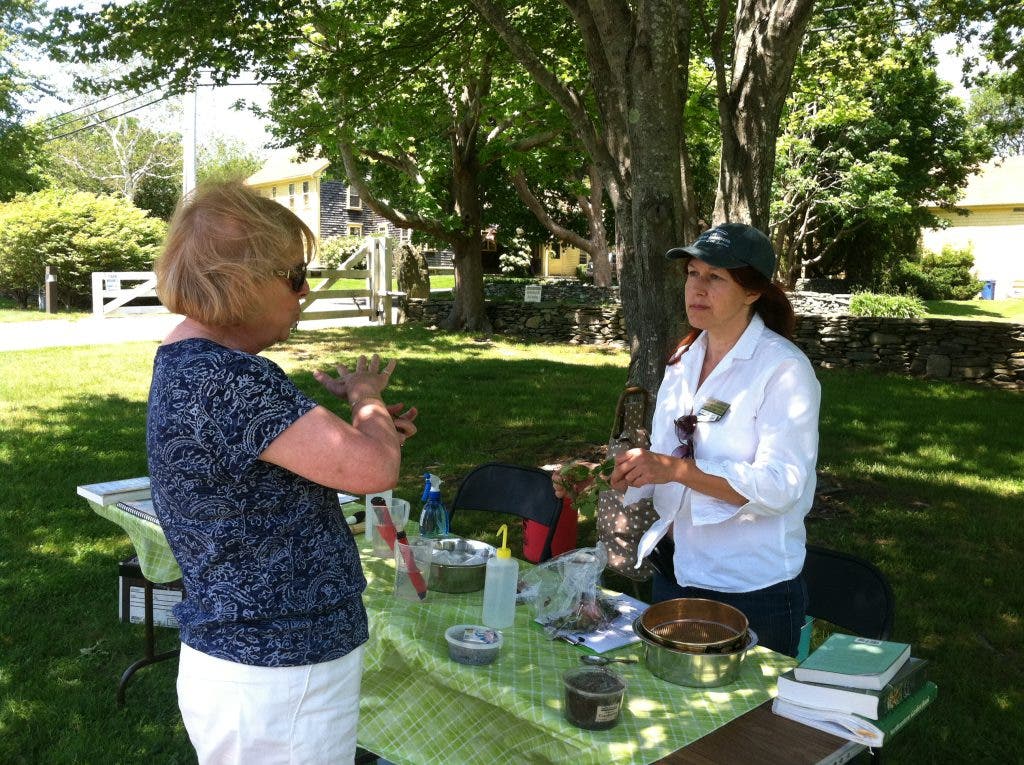
A reminder: Come visit us at our gardening informaion and soil testing kiosk at Paradise Valley Park (Paradise and Prospect Avenues) in Middletown every Saturday fom 11-1 rain or shine until the end of September. The soil test and the gardening information are a free service of the URI Master Gardener vounteers. Bring samples for plant or insect id or any gardening questions. Or you can contact us directly at gardeninginformationri@gmail.com.
Questiolns? Comments?