Health & Fitness
In The Garden: There Is More To A Vegetable Garden Than Tomatoes
Helpful hints on growing vegetables in your garden, some of which can still be planted.
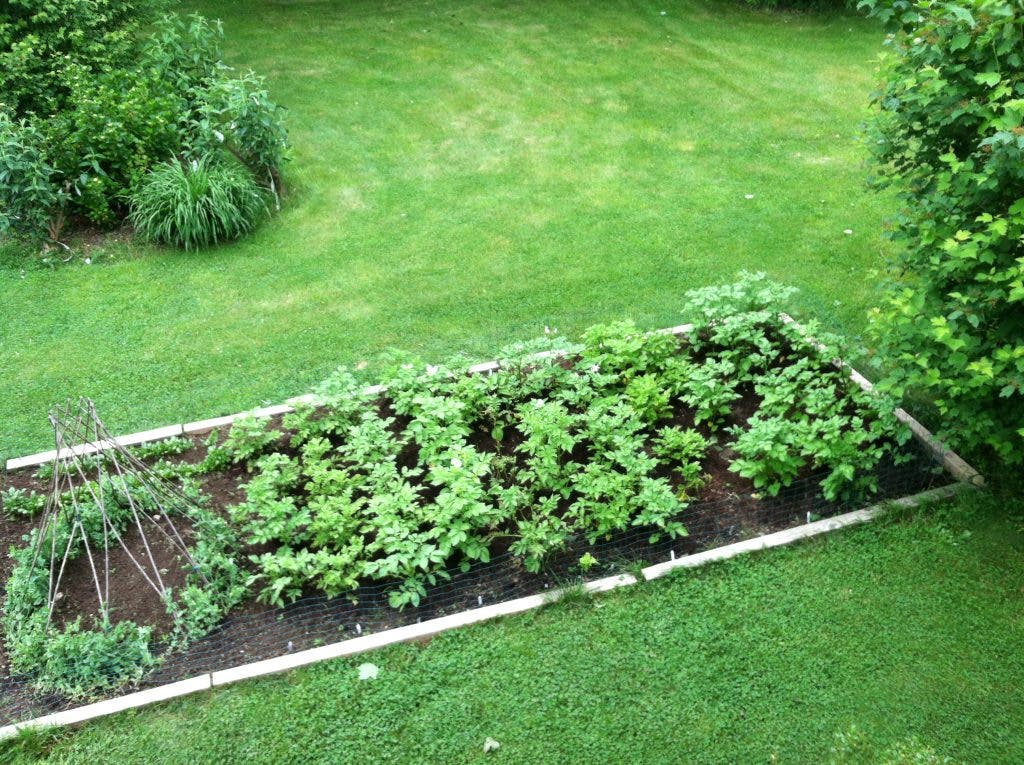


Everyone grows tomatoes. Those luscious fruits were discussed here last week. Now that I have picked (and eaten) my first tomato, let us look at what else we can grow with relative ease. Forget about peas, spinach, broccoli and other "cole crops". It's too warm but remember them for mid-August planting.
Green beans are relatively easy to grow. They come in two basic types: bush beans and pole beans. Bush beans can be planted almost any time in the spring or mid-summer. They thrive in well-drained soil with a pH above 6.0. They do best with a soil temperature of 60 degrees or higher. The seeds can be doused with an innoculant which will increase the yield. These are sowed in rows a foot to a foot and a half apart. Mine were planted in early May and they now have flowers and I expect to see the beginnings of beans in the next week or so. There are many varieties of bush beans.
Pole beans need similar growing conditions but they also require a trellis or some kind of fencing support to grow on. They do best if they are kept off the ground. Make sure your trellis or fence is anchored securely in the ground because there will be little wind resistance when the beans have taken over. Pole beans come in green, yellow and even red.
Find out what's happening in Portsmouthfor free with the latest updates from Patch.
You will be amazed at the amount of beans you can harvest at one time from a single packet of seeds. One day, a year or so ago, I harvested 22 pounds of green beans from one bed (one seed pack)! And there were more!
Beets are another vegetable that is relatively easy to grow. In addition to the most familiar red beets, they also come in gold, white and dark purple. The time from seeding to harvest is usually 45 to 55 days, depending on the variety. You need loamy soil with a pH of over 6.0. You need to keep them well-watered to prevent scab. Like potatoes, parsnips and turnips, beets are a root crop although, like onions, they tend to work their way out of the soil as they mature.
Find out what's happening in Portsmouthfor free with the latest updates from Patch.
Cucumbers are one of the easiest vegetables to grow. They can grow almost anywhere. You need a soil temperature of 70 degrees if you are seeding directly into the soil. There are many different varieties of cucumbers from small pickling ones to large tasty ones. Some varieties are seedless and have thin skins. Most plants will take from 45 to 60 days to produce delicious cucumbers. The most important insect pest to cucumbers is the aptly-named cucumber beetle. They can be controlled by using row covers or by the application of pyrethrin which is an organic. Please note: it is not too late to plant cucumbers now. One of the biggest problems with cucumber growing is giving them enough room. They spread almost as much as squash and pumpkins. You can trellis them or put them on a fence. They'll grow well that way and they won't become too heavy as long as the support is relatively strong.
There are many, many varieties of lettuce, some of which can be planted now for fall harvesting. Greenleaf, Redleaf and Romaine Hearts are all-season varieties that can be planted now. There are a vast number of other types, but because lettuce germinates best in cool weather, you need to be very careful about your selection. Others can be planted in mid to late August. Lettuce varieties take 45 to 55 days from seeding to harvest and they have few pests.
Radishes are another vegetable that can be planted now or any time during the growing season. Here, as well, there are many different varieties with different tastes. They need a little extra moisture if they are planted in hot weather like we have been having lately. Most can be harvested in about 30 days. The biggest problem that I have had with radishes is trying to space the seeds far enough apart. Thery are miniscule and radishes often have to be thinned as they sprout. Flea beetles are the most common pest on radishes. They can be controlled by the application of Bt which is a bacterium and therefore organic.
All gardeners need to exercise considerable caution in applying chemical pesticides or insecticides to the vegetable garden. The labels on those products often will say things like "Don't harvest until 2 (or 5 or 7) days after using this product." But let's be realistic. Do you really want to eat something that has had a chemical sprayed on it? We do all the time when we buy vegetables from the grocery store. But isn't that a big part of the reason we like to grow our own? Think about it and enjoy those fresh vegetables that we are now beginning to harvest.
"Enjoy the fruit (or vegetables) of your labor!"
Don't forget to bring your gardening questions and pest problems to our Gardening Information/Soil Testing kiosk at Paradise Valley Park in Middletown (Paradise and Prospect Avenes) every Sunday (rain or shine) from noon to 2 PM.
And contact us at gardeninginformationri@gmail.com to help you with your gardening problems.