Health & Fitness
On the Water: Historical Society Looks at the Early Bristol Ferries
What we think of as West Main Road was actually the path to the Bristol Ferry in colonial days. In those early days canoes, sailboats and even horse-powered boats were used as ferries.
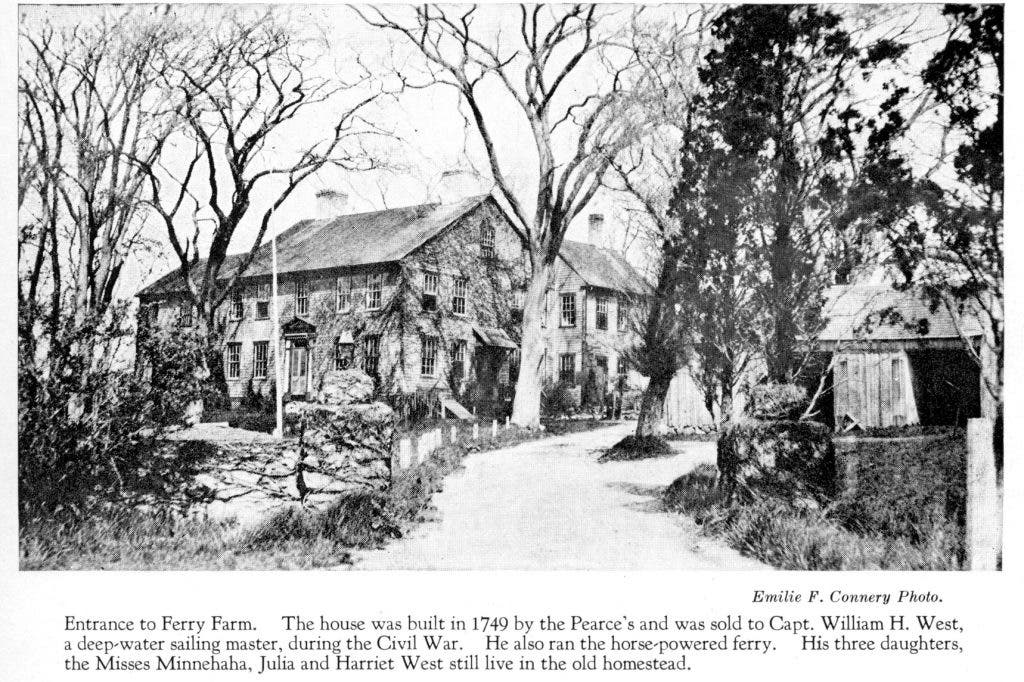


West Main Road in colonial times was known as the Path to Bristol Ferry.
Howland Ferry to Tiverton came first in 1640, but once the ferry to Bristol was established, it became the primary way off the island to the mainland and Providence.
The ferries on the Portsmouth side were known as the Tripp's Borden's and Gifford's ferries after the owners. Early records show John Tripp was paid for ferrying the colony's general assembly across to Bristol.
Find out what's happening in Portsmouthfor free with the latest updates from Patch.
John's son Abiel built a wharf around 1680. In 1698, John Borden had a ferry operation alongside the Tripp ferry. In 1766, Thomas Tripp sold his wharf and land to Joseph Borden (John's brother) and after that the ferry was generally known as the Bristol Ferry.
In 1774, Joseph Borden sold the land, ferry house and ferry privileges to David Gifford. All ferries were discontinued during the British occupation of Aquidneck Island during the Revolutionary War.
Find out what's happening in Portsmouthfor free with the latest updates from Patch.
Gifford's sons, Gideon and Jeremiah, bought even more land to form "Ferry Farm" to care for the horses that were used to power the new type of ferries. Horseboats were not all that practical at the Portsmouth ferry, so that ended in 1845.
The exhibit "On the Water" (opening Memorial Day Sunday) will display maps, photos and documents related to the Bristol Ferry.