Health & Fitness
The Glen: The First Settlers
Early Settler Thomas Cooke built his home in 1655 on the same spot that the Glen Manor House is today.

The "Glen" and Glen Road appear early in Portsmouth history. In 1638 the first European settlers came to Portsmouth (which was originally called Pocasset). Anne Hutchinson was forced to leave Boston because of her religious beliefs. William Coddington, John Clarke and seventeen others came with her. The Puritan church in Boston was entwined with the government. When Anne's views conflicted with those of the ministers, she was banished from the colony. This little group of settlers came to Roger Williams (who had been banished earlier) for help in locating another place to go. Through Williams' contacts with Narragansett sachems Miantonomi and Canonicus, Hutchinson's group traded 40 fathoms of white beads, 10 coats and 20 hoes for the Narragansetts to leave the island they used as a summer camp ground. Before the settlers left Boston they signed an agreement we call the “Portsmouth Compact” in which they formed a new independent colony based on general Christian principles. The new settlers lived together around the pond at Common Fence and Island Park areas, but they also had big grants of land to farm in other parts of town.
William Brenton came here about a month later than the first group of settlers. His large farm grant stretched from just below McCorrie Point (they called it Sandy Point) to Hutchinson land at our Sandy Point (they called it Little Sandy Point). He called his farm "Middleford Farm" and Glen Road was the approach to it. There was a split in the settlers and Brenton went with those settlers who moved south to form Newport. Brenton, however, kept his Portsmouth land.
Early town records show a land sale by Brenton to Thomas Cooke on October 25, 1649. Brenton reserved the right to a “cart way” through the land to carry hay from the water to his farm. Thomas Cooke originally sailed to America on the Speedwell. The Speedwell was supposed to carry some of the Pilgrims to America, but she sprang so many leaks that her passengers were put on board the Mayflower for the voyage. The Speedwell was sold and made many voyages after 1620. In 1637 the Speedwell sailed for Boston with a merchant’s goods and close to 70 passengers. Among the passengers were Thomas Cooke, his wife Mary and three children. Later in 1643 he moved to Portsmouth.
Find out what's happening in Portsmouthfor free with the latest updates from Patch.
In 1648 Cooke is listed in the Town records as receiving 30 acres of a land grant on which he built his house. This property ran toward Mr. Burtun’s ferry which may be an early name for the Fogland Ferry near the foot of Glen Road. In 1649 Cooke bought the adjacent land from Brenton. In 1655 Thomas Cooke Sr. built a home on the site of the present day Glen Manor House. Cooke’s son and grandson bought land around it and the family was very active in Portsmouth life. In 1657 Thomas Cooke, Jr. sold part of his land to Giles Slocum. The border of that property was called "the brook" and we know it as the stream that runs through the Glen. John Randall also sells Slocum a piece of land he had bought from Thomas Cook Jr. This land is around the Slocum graveyard and current Glen barns. I'll write more about this property around the barns in a later blog.
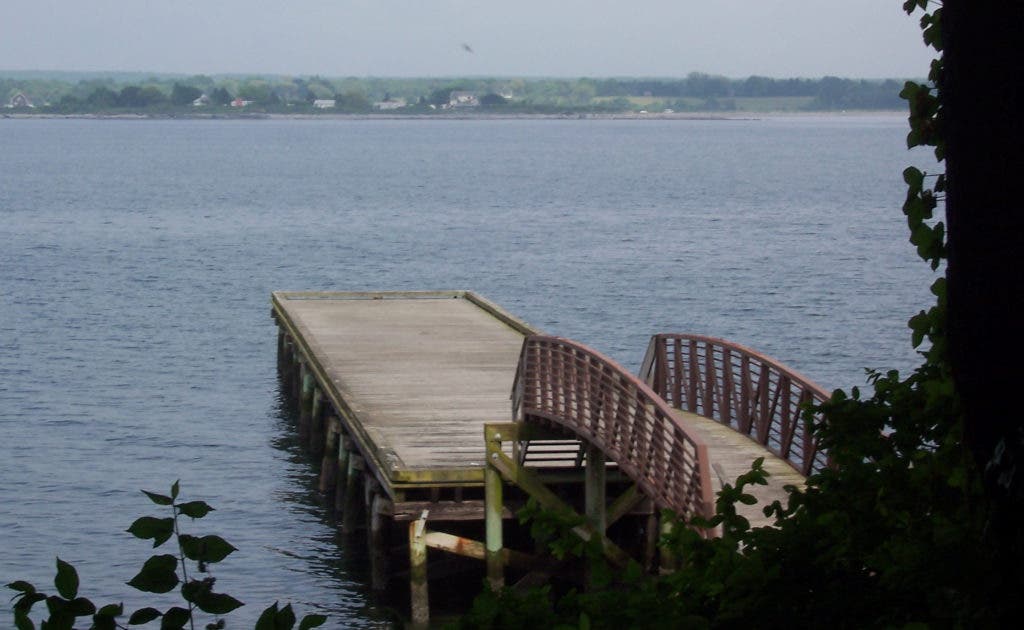
In 1668 records show that the Cooke family ferries cattle, sheep and horses daily for grazing from what is now the Glen Manor House dock area to Fogland in Tiverton. Grazing land in Portsmouth was hard to find because so little land had been cleared. The settlers went to Wampanaog Sachem Massasoit who granted grazing rights on Fogland in Tiverton (for five fathoms of wampum) to Aquidneck residents.
Find out what's happening in Portsmouthfor free with the latest updates from Patch.
What was life like on the Cooke farm? Thomas Cooke's 1677 death inventory gives us an idea of that life. We know what animals he raised. He had 15 sheep, two horses, 6 cows and ten pigs. He had the tools to brand his animals, shear the sheep, card the wool for spinning and do carpentry work. He did have hoes, but there weren't many tools for raising crops. He had an orchard on his lands. Among his possessions were two guns and two swords. "One Indian Boy" is listed among his belongings as well, and that wasn't uncommon in that day. The original of this document is included in the Portsmouth Scrap Book.
The town Glen lands are a historic landscape and riverscape as well. As I drive down Glen Road towards a closed Elmhurst and the beautiful Glen Manor House, I can't help but think that this is the view Thomas Cooke had from his land. I can imagine him ferrying his livestock over to Fogland to graze.