Neighbor News
Moses Brown biology students learn through “play”
Hands-on kinesthetic learning invites the spirit of play into the lab classroom
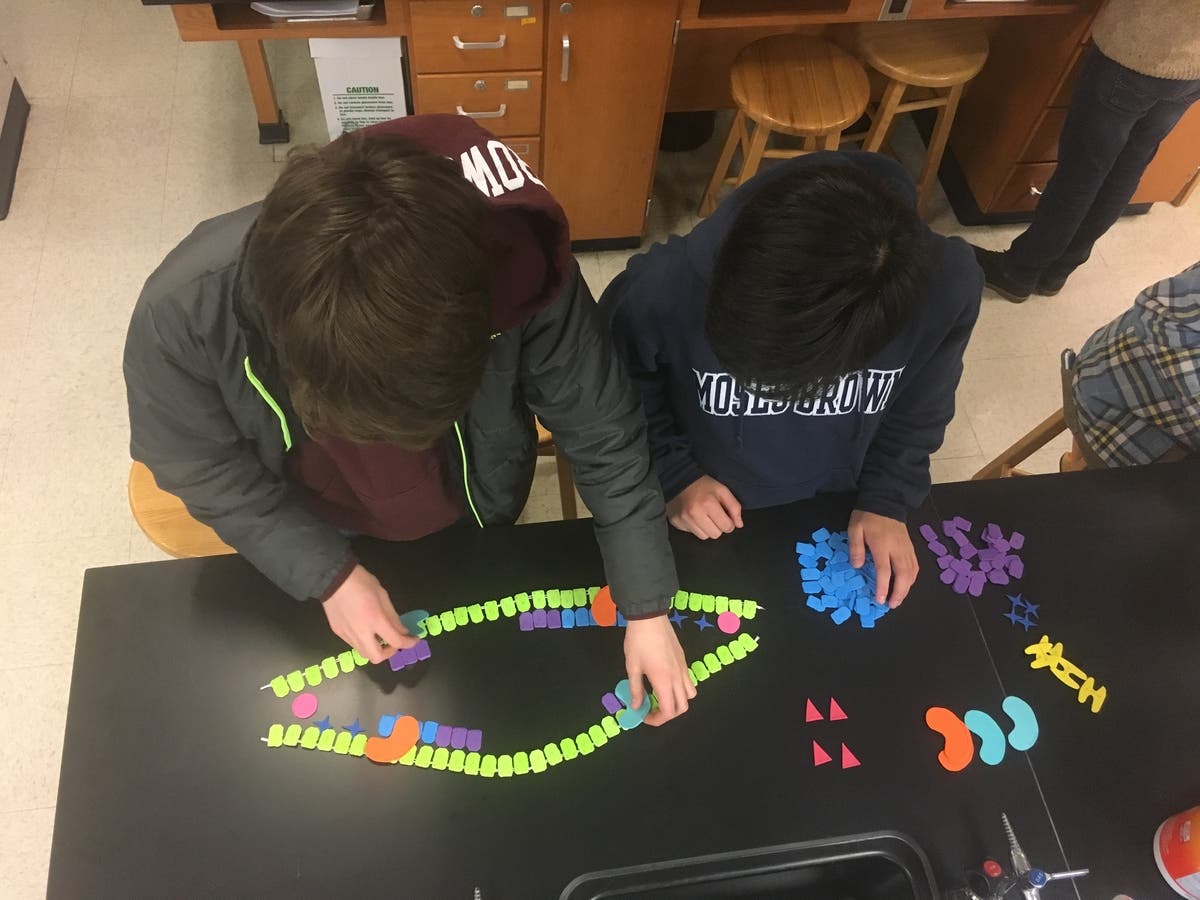
Kate Turner, a five-year member of Moses Brown School’s upper school science faculty, was recently struck by her students’ level of anxiety. Ninth graders in her Honors Biology classes seemed to fixate on mastery and test scores, pinning high hopes on this high-stakes, first lab science course in the upper school, to the detriment of learning. Compounding matters was some students’ belief that they “couldn’t” absorb the material in the traditional modality of lectures, worksheets, and lab.
Kate decided to shake things up. She designed a 20-minute tactile activity for each unit to reinforce a specific topic. No teacher demo, these exercises would be student-driven, short-duration activities to encourage hands-on kinesthetic learning – with no grades. Inviting the spirit of play into the biology lab would help lower the stakes for her anxious students, Kate believed.
The activities used common, easily accessible supplies, such as paper, coins and dice. To illustrate the complex process of cellular respiration – glycolysis, acetyl CoA formation, citric acid cycle – Kate created molecules with plastic Perler beads. The products of each step that weren’t used in the next were placed in a table, for reference at the end. “The process takes about five minutes, so most students ran through it three or four times,” Kate says. “The students really loved using a hands-on activity to demonstrate cellular respiration. Some of them even asked to bring a set home during exam review week.”
Find out what's happening in Providencefor free with the latest updates from Patch.
Kate’s students worked through natural selection, as birds with pipe-cleaner “worms”, and played a card game to demonstrate mechanisms of microevolution. They visualized cell membrane transport with M&Ms, Lifesavers, gummy bears, candy corn, and Smarties – representing sodium, glucose, proteins, starch, water, oxygen or phospholipids, with their specific properties. “That one was time-consuming to set up, but the kids loved it!” Kate says. “Now the students ask me when the next activity will be, and look forward to them.” Thanks to these hands-on exercises, Kate’s students understood the material thoroughly, and felt much less intimidated by advanced concepts.
Find out what's happening in Providencefor free with the latest updates from Patch.