Neighbor News
Rhode Island Gets Mixed Reviews on Cancer-Fighting Public Policy
Lawmakers Have Opportunities to Save Lives by Implementing Effective Tobacco Control Measures
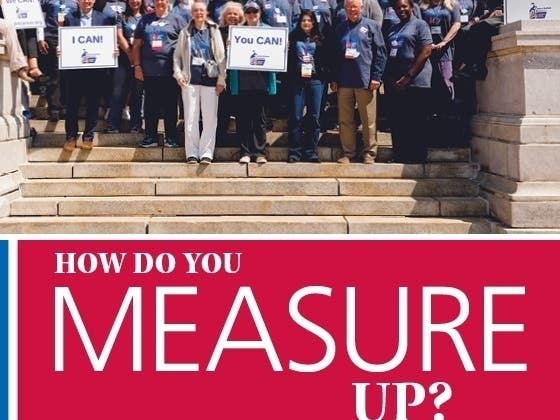
AUGUST 1 – Rhode Island is making progress when it comes to implementing policies and passing legislation to prevent and reduce suffering and death from cancer. According to the latest edition of How Do You Measure Up?: A Progress Report on State Legislative Activity to Reduce Cancer Incidence and Mortality, Rhode Island measured up to policy recommendations in five of the eight evaluated issue areas.
How Do You Measure Up? rates states in eight specific areas of public policy that can help fight cancer: increased access to care through Medicaid, access to palliative care, balanced pain control policies, cigarette tax levels, smoke-free laws, funding for tobacco prevention and cessation programs, cessation coverage under Medicaid and restricting indoor tanning devices for people under 18.
“This year alone in Rhode Island, over 6,500 people will be diagnosed with cancer,” Robert Dulski, director of government relations for ACS CAN in Rhode Island. “We owe it to them—and to everyone at risk of developing this disease—to do everything in our power to prevent cancer and improve access to screenings and treatment. This report provides lawmakers a legislative path forward to improve cancer prevention efforts, curb tobacco use, prioritize the quality of life for patients and their families and increase access to critical health coverage.”
Find out what's happening in Providencefor free with the latest updates from Patch.
“This report highlights the important progress we’ve made in passing policies proven to reduce suffering and death from cancer. But there’s still more work left to do to make a difference for Rhode Islanders by implementing proven cancer-fighting policies,” said Dulski.
This year’s report includes a special section examining efforts to stem youth tobacco product use by raising the legal age of sale for tobacco to 21. E-cigarettes have driven a dramatic 36% rise in youth tobacco product use over the last year—and in statehouses across the country, policymakers have prioritized efforts to keep tobacco products out of the hands of our kids, introducing 88 bills that raised the age of sale for tobacco products. But state lawmakers’ good-faith efforts have been co-opted by the tobacco industry, who want to use these laws to advance policies that will interfere with effective tobacco control and protect their profits. In fact, 55 out of the 88 age of sale bills introduced in 2019 included provisions that advance tobacco industry interests. The special section draws attention to Big Tobacco’s dangerous agenda—including preempting local governments’ ability to pass strong tobacco control laws—and outlines the principles that make tobacco 21 policies effective.
Find out what's happening in Providencefor free with the latest updates from Patch.
“This year, Rhode Island lawmakers worked to pass a tobacco 21 law that would protect our kids from a lifelong addiction to tobacco. Even though we made significant strides, we were unable to pass the bills out of either chamber during a tough budget year,” said Dulski. “We look forward to working with lawmakers next year to help them better understand the healthcare cost savings associated with passing strong tobacco 21 law.”
As in past year, the report also highlighted the fact that Rhode Island has room to improve when it comes to Tobacco Prevention and Cessation Program Funding.
“Rhode Island has only one “red” grade – funding for the state’s tobacco control program. In 2018, we spent only $0.35 per Rhode Island on this lifesaving program. That’s less than the cost of one postage stamp. We can – and must – do better when it comes to protecting our youth from Big Tobacco’s targeting and arming current smokers with the tools they need to quit.”
“By passing laws that prevent cancer and help patients get the care they need, our lawmakers can save lives and money in Rhode Island,” said Dulski. “We stand ready to work with our leaders to build a healthier and brighter future for Rhode Island and eliminate death and suffering from cancer.”
A color-coded system classifies how well a state is doing in each issue. Green shows that a state has adopted evidence-based policies and best practices; yellow indicates moderate movement toward the benchmark and red shows where states are falling short.
How Rhode Island Measures Up:
Increased Access to Medicaid GREEN
Access to Palliative Care GREEN
Pain Policy YELLOW
Cigarette Tax Rates GREEN
Smoke-free Laws GREEN
Tobacco Prevention and Cessation Program Funding RED
Medicaid Coverage of Tobacco Cessation Services YELLOW
Indoor Tanning GREEN
Nationally, the report finds that increased access to health coverage through Medicaid is the most met benchmark, with 35 states, in addition to the District of Columbia, having broadened Medicaid eligibility to cover individuals earning up to 138 percent of the federal poverty level ($17,236 a year for an individual and $35,535 for a family of four). Smoke-free legislation is the second-most met benchmark with 27 states, in addition to the District of Columbia, Puerto Rico and U.S. Virgin Islands, considered “doing well.”
To view the complete report and details on Rhode Island’s ratings, visit www.fightcancer.org
The American Cancer Society Cancer Action Network (ACS CAN) is making cancer a top priority for public officials and candidates at the federal, state and local levels. ACS CAN empowers advocates across the country to make their voices heard and influence evidence-based public policy change as well as legislative and regulatory solutions that will reduce the cancer burden. As the American Cancer Society’s nonprofit, nonpartisan advocacy affiliate, ACS CAN is critical to the fight for a world without cancer. For more information, visit www.fightcancer.org.
# # #