Politics & Government
Pay As You Throw (Families Out of Tiverton)
A failure to raise taxes has not been the cause of the landfill dilemma, and increasing the cost of living in Tiverton should not be the solution.
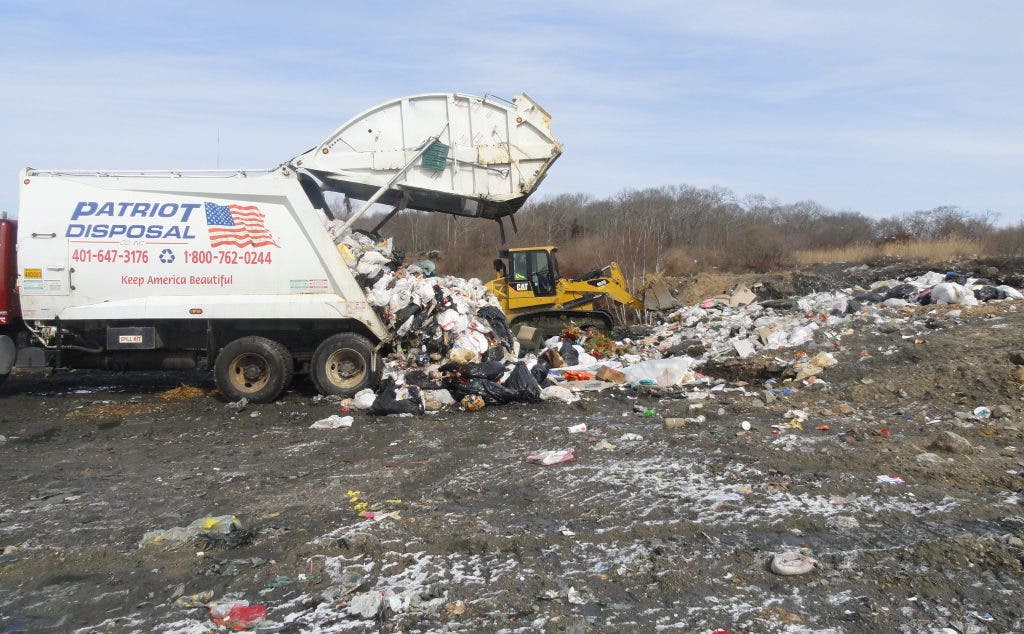
According to the fiscal year 2011-12 budget document currently posted on the town's Web site, Rubbish/Recycling Collection is going to cost the taxpayers of Tiverton $556,664. That's the baseline. Thanks to a brand new Pay as You Throw (PAYT) that will begin draining residents' wallets on May 16, the real cost will likely be more than twice that.
Beginning on that spring week, all regular garbage that residents discard - whether they put it out on the curb or deliver it to the dump themselves - will have to be placed in official town bags, manufactured and administered by South Carolina-based WasteZero. A fifteen-gallon bag will cost $1, a thirty-gallon bag will cost $2, and with an estimate of one bag per household, which surely seems absurd to any household of three or more, the town expects to generate around $500,000 in new revenue.
Turning back to the budget document, the town also appears to be pushing the limits of the state's 4.25% limit on tax levy increases, meaning that property taxes will increase somewhere in the neighborhood of $1.5 million. With $330,000 equaling approximately a 1% increase in the levy, May flowers look likely to bring a 6% increase in the cost of town services through additional taxes and fees. In case you're wondering, it does not appear to be the case that any town employees are being asked to forego 6% of their total compensation.
Find out what's happening in Tiverton-Little Comptonfor free with the latest updates from Patch.
Granted, of all of the factors contributing to this increase, the proximate end of the landfill's usable life is among the most legitimate. Town leaders have spent decades inadequately preparing for the day that the dump was full - so much so that we'll be shy of the $6.8 to 8.2 million needed to cap the dump around 2015 by between $2.4 and 3.8 million. That's a real problem, and it still doesn't include the costs of implementing another solution for Tiverton's refuse. Moreover, the estimated $500,000 per year that the PAYT program is supposed to generate will still cover only half of the shortfall.
These are just the numbers, though. The point that has not been adequately considered is that the lack of preparation has not been caused by a refusal to raise taxes. This has been proven dramatically as the tax levy doubled over the last decade. In other words, the money that should have been saved in order to close the landfill was not given back to taxpayers; it was spent on other things, most significantly labor costs. Why, then, should the pain for this error be felt among those who've been forced to increase town revenue, these many years, rather than those who've benefited by the profligate spending?
Find out what's happening in Tiverton-Little Comptonfor free with the latest updates from Patch.
The answer is a somewhat generic application of political theory: Government is empowered simply to take money when it claims to need it. Oh, there can be political risks associated with the taking, but that's a point of strategy, not of objective.
By contrast, because businesses must convince customers and clients to hand over additional funds, they are much more apt to shave costs, including those associated with personnel, in order maintain market share. Even where increased costs affect all competitors, businesses that can find ways to increase productivity to compensate for growing expenses will have an advantage over those that merely jack up prices.
And what of individuals? When our cost of living goes up, we must rely even more heavily on our ability to persuade employers that our value exceeds our current compensation. That means working more, taking on more responsibility, or changing jobs.
Be that as it may, it wouldn't be entirely accurate to say that mere residents cannot just take money from the town, after a fashion. If, for example, residents begin dumping additional garbage on our many rural roadsides, not only would the town fail to collect money for that tonnage, it would have to pay even more to collect it. Alternately, if households begin carrying bottles and cans across the border, where they can procure recycling refunds, the town would lose that opportunity for credits.
The better solution, which is exponentially preferable to littering, would be for the people of Tiverton to attend the financial town meeting on May 14 and eliminate the line item for rubbish collection, effectively giving themselves one free bag per week each. The naysayers will declare the proposal, at best, to be a further abrogation of responsibility, kicking the can down the road, or, at their usual worst, the end of Tiverton as we know it, but it is neither.
When the PAYT program began to look inevitable a little over a year ago, I began recycling in earnest and rapidly reduced my number of garbage bags to one-third of its prior average. With the added incentive of not exceeding a single thirty-gallon bag, recycling would skyrocket, thus adding years to the life of the landfill and multiple budget seasons to the time that Tiverton's leaders have to figure out what expenses to reduce in order to resolve the problem properly.