Politics & Government
County Sales-Tax Increase Advances With Council Vote
Measure appears headed to a referendum. Increase would raise rate to 8 percent to help fund transit, road, and greenway improvements.


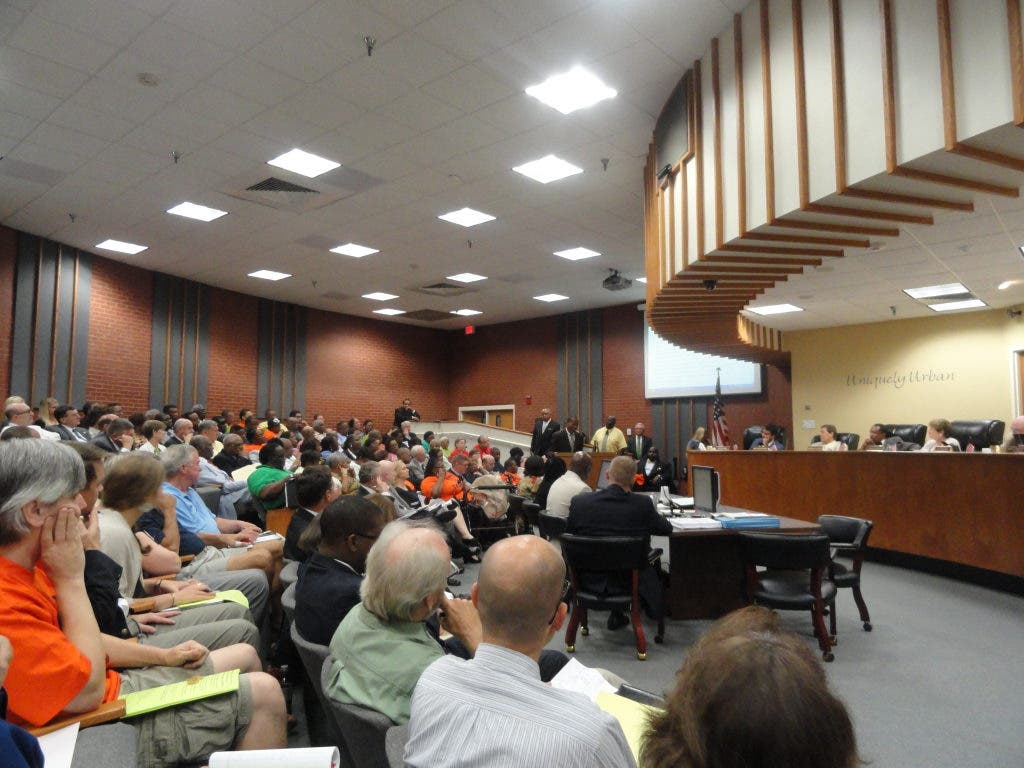
Who's afraid of a tax increase?
Not the throng of people who pleaded with Richland County Council on Tuesday night to approve a November referendum that would ask voters to increase the county's sales and use tax to 8 percent.
The increase -- a penny per dollar on most purchases for the next 20 years -- would be earmarked to tackle the county's myriad transportation problems.
The extra money raised -- estimated to be nearly $1 billion -- would be used to upgrade and expand the county's admittedly woeful bus-transit system, create or finish a number of bike paths and greenways throughout the county, and pave and improve numerous roadways.
The Council, in a 9-1 vote on second reading, approved a measure that would place the issue on the Nov. 6 ballot for a popular vote. The only dissenter was Council member Bill Malinowski. Fellow Council member Damon Jeter was absent.
A third and final reading by Council is scheduled for July 18.
Of the 45 or so people who spoke up on the issue, all but two were enthusiastic supporters of the tax increase. Of those, most urged that the Council concentrate on public transit and fully fund the county's bus system above all else. A small handful of others urged action on greenways.
Creating a robust and first-class public transit system would serve as both a vital lifeline for many without other forms of transportation, and create an economic engine for the region, many argued, making Columbia and Richland County more competitive with other cities in attracting economic development and a sophisticated workforce grown accustomed to first-class urban transit.
"We have, you have, a moral, a civic, and an economic responsibility here," said Columbia resident and state Highway Commissioner Harrison Reardon. "So I ask that you ensure that the penny tax is on the ballot and let the voters decide. There is a great marketing job we must do. If we market it well, and we the voters understand it, and the public understands it, I really think they will vote for it."
An original consultant's study suggested that of the estimated $970 million the tax would raise, that 60 percent go for roads, 33 percent for public transit, and 7 percent for bike paths and greenways.
The Council, however, is proposing that 25 percent go towards public transit (along with 71 percent for roads and 4 percent for bike paths and greenways). The vast majority of speakers at the public hearing, however, strongly urged that the Council adhere to the 33 percent funding formula for public transit.
Those calling for the higher formula consisted of the elderly, students, minorities, and people with disabilities who told personal stories of how deficient the current bus system is in regards to routes and hours. Many told of how they might be forced to miss school, or forego jobs, or be forced to spend money they can't afford on taxi cabs unless significant improvements are made in the transit system.
Several speakers said the 25 percent funding formula would only produce a "minimally adequate" system.
“Don’t short-change the people of Richland County,” bus rider Bob Liming said. “We need an exceptional system.”
“We don’t need a minimally adequate bus system that’s not going to attract new riders,” said Brett Bursey of the S.C. Progressive Network.
The higher formula also received support from a handful of business people who said a first-class bus system was important for Columbia and Richland County's future.
Council balked at resetting the funding formula, but it did suggest that it would reconsider it. Council member Seth Rose suggested that the county change the referendum ordinance to earmark a third-of-a-penny increase solely for public transit. That motion died, but other Council members suggested county staff consider the legality and feasibility of splitting the referendum to give voters the choice of choosing an increase solely for public transit, or for roads and bike paths and greenways.
Bob Snyder, who heads the Central Midlands Regional Transit Authority (CMRTA), suggested that the proposed formula that would earmark 25 percent of revenues for the bus system would be sufficient to fully fund the system once cost savings and other revenue enhancements were taken into account over the 20 year life of the tax.
Snyder, for example, said that significant savings would be realized by switching the fleet to compressed natural gas fuel. Also, the system would see increased revenues over time through fees from increased ridership, and from other extra-governmental funding, among other things.
Council chairman Kevin Washington, Sr., said he believed that public transit was absolutely vital, but that the county must take a comprehensive approach to the problem.
"It's the interconnecting of transportation," he said. "It's not busses against roads, or roads against greenways. All of this is interconnected. That's the story we need to talk about to people in the community. It's not just about busses."
While nearly all were in favor of a tax increase, a couple balked at the tax increase. Among them was Columbia resident William Depass, who said he supported the bus system, but not the proposed tax. The system, he argued, could be fully funded by existing revenues without resorting to a tax increase.
"It's just plain wrong," he said. "I don't know if any one of you noticed, but times are tough. We are in a recession. I know it's only a penny … but I think it's the wrong time to be raising money in additional taxes…. I beg you, don't do this tax. We beat it last time with virtually no effort, and we'll put up a vigorous campaign against it this time."
A transportation tax was beaten back by voters a few years ago by 2,200 votes, but two speakers who voted against the increase last time said they wouldn't make that mistake again.
"I'm just begging you to get this penny tax," said one woman, who noted that she was on disability and couldn't walk when the busses weren't running, and couldn't afford a taxi to transport her and her granddaughter.
"I was one of those who didn't vote for it [last time] because I didn't understand it when it came out," she said. "I didn't have a lot of knowledge like I have now, and the significance of that penny. But I understand now what this penny means."
In a separate vote, the council also agreed to spend up to $50,000 to educate voters on the referendum.
In other Council news:
The Council delayed until a later date any action on Internet sweepstakes cafes. The Council agreed to take up the matter in an upcoming work session.
At the sweepstakes centers, customers buy phone cards or Internet time and are given credits to pay video poker or slots for a chance to win prizes. The operators argue that their business model is no different than a fast food restaurant giving game pieces to customers who buy food and drinks.
State Law Enforcement Division Chief Mark Keel, S.C. Attorney General Alan Wilson and 5th Circuit Solicitor Dan Johnson have determined the games violate state law.
Council will look at possible options for restricting the cafes, perhaps through zoning measures.
Also, Council named assistant County Administrator W. Anthony McDonald interim County Administrator effective July 1, likely setting the stage for McDonald to assume the position full-time. He will take over for retiring administrator Milton Pope.
Find out what's happening in Columbiafor free with the latest updates from Patch.
Get more local news delivered straight to your inbox. Sign up for free Patch newsletters and alerts.