Politics & Government
Report: More Than 1,000 S.C. Bridges Structurally Deficient
Transportation for America released a report on the condition of S.C. bridges.


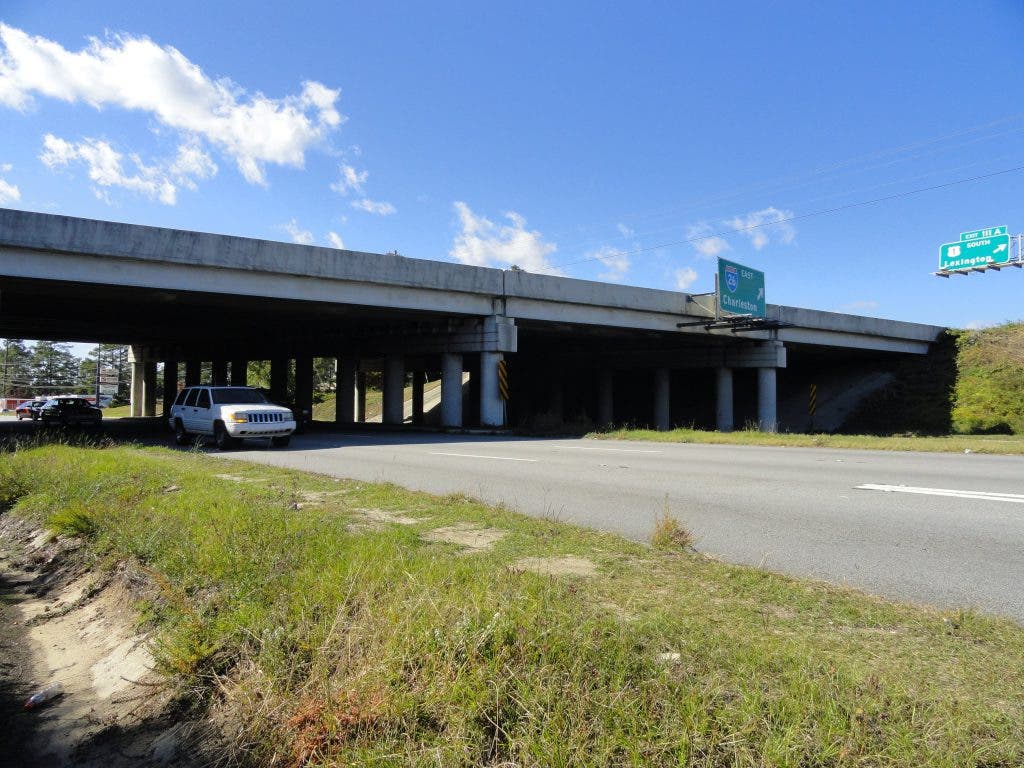
About 13 percent of bridges in South Carolina are structurally deficient by federal standards, according to a report released by Transportation for America in late October.
That's higher than the 11.5 percent of bridges nationwide classified as structurally deficient, according to the national coalition working for transportation reform.
Lee Floyd, state bridge maintenance engineer for the S.C. Department of Transportation, said while it's human nature to associate the classification with danger, the structurally deficient bridges aren't necessarily unsafe.
Find out what's happening in Columbiafor free with the latest updates from Patch.
"None of these bridges are unsafe just because they're rated structurally deficient," Floyd said. "It just means that you may have a problem or that you may have a problem in the future."
Federal law requires that bridges be inspected at least every two years. Bridges are considered structurally deficient if one of more of the three features of the bridge is rated poor or worse during inspections based on federal guidelines.
Find out what's happening in Columbiafor free with the latest updates from Patch.
More than 1,000 of the state's 9,236 bridges were rated structurally deficient, according to the report.
The report also lists the 10 structurally deficient S.C. bridges with the highest traffic volumes, including ones in Charleston, Richland, Lexington, Greenville, Anderson and Spartanburg counties.
The data used in the report could be up to a year old though, Floyd said. The S.C. Department of Transportation no longer lists three of those 10 bridges as structurally deficient.
Numbers six and seven on the list, the north and southbound lanes of I-385 that cross over I-85 in Greenville County, are no longer structurally deficient, Floyd said. Work may have been done to remove the classification, he said.
And No. 9 on the list, I-85 southbound that crosses over Brushy Creek in Anderson County, is also no longer listed as structurally deficient, Floyd said.
The status of bridges is constantly changing, he said, so reports that are released aren't always up-to-date.
The seven other bridges on the list are still classified as structurally deficient, including the one with the highest traffic in S.C. — a bridge on I-26 that crosses S.C. 642 in Charleston County. This bridge had some minor to moderate repairs in the past couple of months, Floyd said.
The rest of the structurally deficient bridges haven't had any recent repairs, he said, but are being monitored, including a bridge on S.C. 277 that crosses I-77 in Northeast Columbia.
Here is the list of the 10 structurally deficient bridges in South Carolina with the highest traffic, according to Transportation for America. A star indicates bridges that are no longer considered structurally deficient, according to the S.C. Department of Transportation.
Greenville I-385 NBL I-85 6 mi. E of Greenville 44,750 *7 Greenville I-385 SBL I-85 6 mi. E of Greenville 44,750 8 Richland S.C. 277 I-77 7 mi. N of Columbia 41,600 *9 Anderson I-85 SBL Brushy Creek 8 mi. N of Williamston 33,600 10 Spartanburg S.C. 85 Southern RR & S-42-995 3.2 mi. NW of Spartanburg 32,800
Get more local news delivered straight to your inbox. Sign up for free Patch newsletters and alerts.