Politics & Government
'The House That DJJ Built' Kicks Off with Signing Ceremony
Youth incarcerated at the S.C. Department of Juvenile Justice will start building Habitat for Humanity houses in a few weeks.


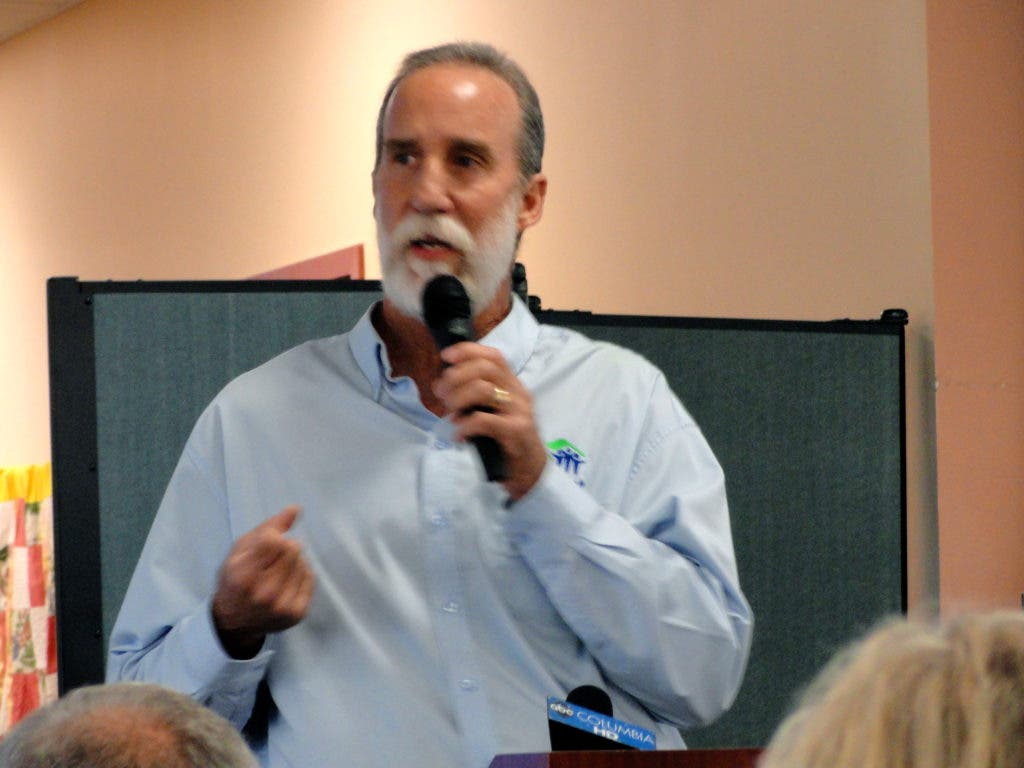


DJJ, Friends of Juvenile Justice and Central South Carolina Habitat for Humanity signed a memorandum of agreement Tuesday at the Bill Rogers Community Connections Center, formalizing DJJ's largest volunteer project for incarcerated youth.
"" will allow youth ages 12 to 17 to build Habitat for Humanity houses behind the fence at the DJJ complex on Broad River Road. After the houses are framed, they will be lifted over the fence and moved to their permanent locations.
The project is part of DJJ's restorative justice model — the idea that giving back to the community will help rehabilitate the youth incarcerated at DJJ.
Find out what's happening in Columbiafor free with the latest updates from Patch.
Many of the youth destroyed property in some way before they were incarcerated, said DJJ Director Margaret Barber.
"It may have been destroying a home. It may have been actually taking something from somebody," Barber said.
Find out what's happening in Columbiafor free with the latest updates from Patch.
This project will help them learn to create rather than destroy, she said.
"What better way to rehab someone who has taken somebody's property than to teach them to put it back, to make it whole, to build again," Barber said. "And that's what this project will do for us. It will restore justice. It will make things whole again."
Not only will the youth learn to give back to the community, they'll learn valuable construction skills, said Katrina Shealy, chair of Friends of Juvenile Justice, the nonprofit organization that supports DJJ.
"The House That DJJ Built" involves partners from the community, such as the Mechanical Contractors Association of South Carolina and the Columbia Electrical Council.
The supporters will be the ones who work alongside the youth and teach them the valuable construction skills, Shealy said.
"They're going to help us teach these children skills so when they go back into the communtiy maybe they can have something to build on and be a better person," Shealy said. "They can go back and say 'Look what I did. I built a house.'"
Get more local news delivered straight to your inbox. Sign up for free Patch newsletters and alerts.