Politics & Government
Governor's Transportation Proposal Adds 7 Cents to Gas Tax, Cuts Food Tax
Gov. Bill Haslam's plan for infrastructure funding includes a mechanism for local governments to fund transit projects through sales tax.

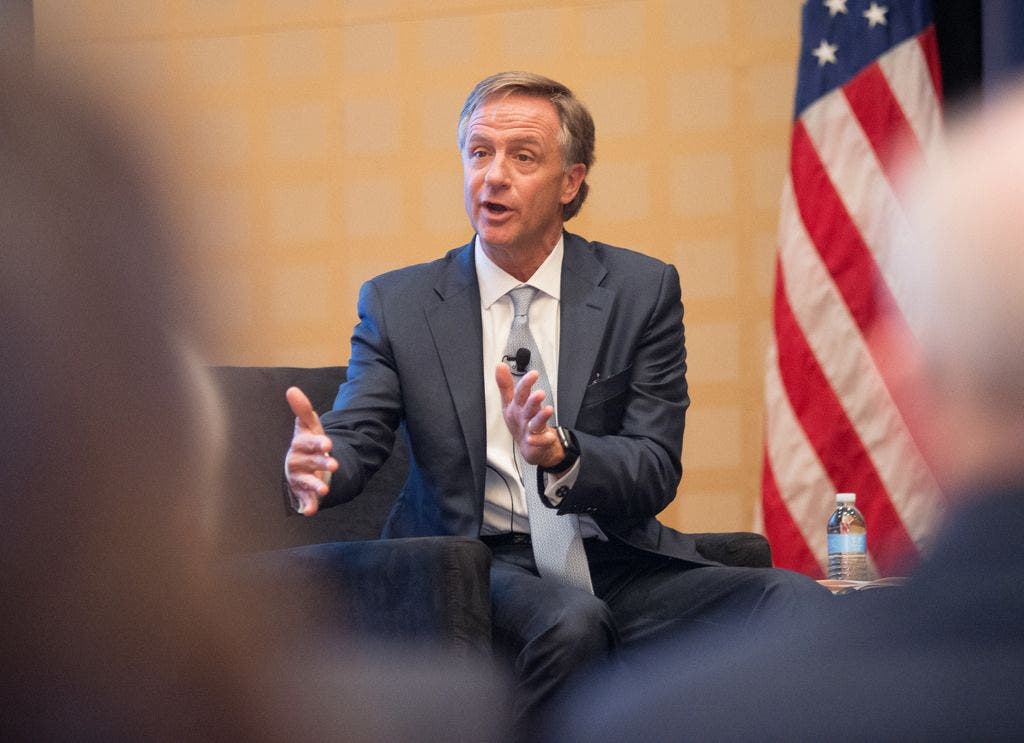
NASHVILLE, TN — Under a proposal unveiled Wednesday by Gov. Bill Haslam, the state's gas tax will increase 7 cents while taxes on groceries, businesses and the Hall Income Tax will be cut. The tax changes are part of a comprehensive transportation plan rolled out by the governor.
Also included in Haslam's proposal is a ban on open containers in cars. Under current law, passengers can have an open container of alcohol, but the state's long-time refusal to change the so-called "pass the bottle" provision ties up $18 million in federal road funding. In addition, the governor is proposing new fees on electric cars, an 18 cent increase in the diesel tax and an option for local governments to hold referendums on using a portion of sales tax revenue on transit projects.
The plan — officially the Improving Manufacturing, Public Roads and Opportunities for a Vibrant Economy, or IMPROVE, Act — will also cut the state's grocery tax and Hall Income Tax while making changes to the state's franchise and excise tax system.
Find out what's happening in Nashvillefor free with the latest updates from Patch.
Under the plan, the 7-cent gasoline tax increase and 12-cent diesel tax increase will go into effect in July, generating an estimated $227.8 million for the state Department of Transportation, with another $39 million for cities and $78 million for counties. The gas tax will also be indexed to the Consumer Price Index, allowing it to fluctuate with inflation. Under current law, the gas tax is a flat rate and hasn't increased since 1989.
Vehicle registration fees will increase by an average of $5, with owners of electric vehicles required to pay a $100 road-user fee. The proposal also adds a 3 percent charge to rental cars.
Find out what's happening in Nashvillefor free with the latest updates from Patch.
In an effort, perhaps, to assuage legislators who might balk at voting for tax increases, the governor included several tax cuts in the plan, as well. The plan will reduce the state's grocery tax by 0.5 percent to 4.5 percent, while the Hall Income Tax on dividends will decrease 1.5 percent this year with another 1.5 percent cut tax year. In addition, business owners will see a cut in franchise and excise taxes. A recent study from the University of Tennessee said the state has the third-highest business tax burden in the country.
The governor has repeatedly refused to use the state's $2 billion surplus to pay for road improvements and reiterated that call today, saying doing so would be analogous to paying the mortgage out of a savings account; the plan does, however, move $120 million from the state's rainy-day fund back into the road fund.
A final, and intriguing, piece of the puzzle would allow local governments to call a referendum to add a sales tax surcharge to pay for local transit projects. The state has a 7 percent sales tax with local governments permitted to add another 2.75 percent. Nashville, for example, tacks on 2.25 percent. A referendum could raise that another half-cent to generate transit funds under the governor's plan, though state law still requires half of the local-option sales tax to go to schools.
A half-cent sales tax increase would have generated $143 million across Middle Tennessee in 2015 with $67.7 million in Davidson County alone.
Business leaders, along with local government officials, have been advocating for a dedicated funding mechanism for transit projects. In a statement, Mayor Megan Barry, who is attending the winter meeting of the U.S. Conference of Mayors in Washington, D.C., said she believed Nashvillians will vote for such an increase.
“I appreciate Governor Haslam’s leadership on the issue of transportation infrastructure in Tennessee and the inclusion of a local option for voters to approve dedicated transit funding in his legislative package. I believe Nashvillians are willing to pay for a mass transit system that meets the needs of our growing community if given the chance to make that decision. Over the coming weeks and months, we will continue to advocate on behalf of Governor Haslam’s comprehensive transportation legislation that will keep Nashville and Tennessee moving forward," she said.
Image via United States Department of Agriculture
Get more local news delivered straight to your inbox. Sign up for free Patch newsletters and alerts.