Crime & Safety
Jocques Clemmons Shooting: DA Won't Charge Officer, Police Chief Refutes Bias Accusation
An internal report from Metro Police released Thursday includes a previously undisclosed eyewitness account of the Jocques Clemmons shooting

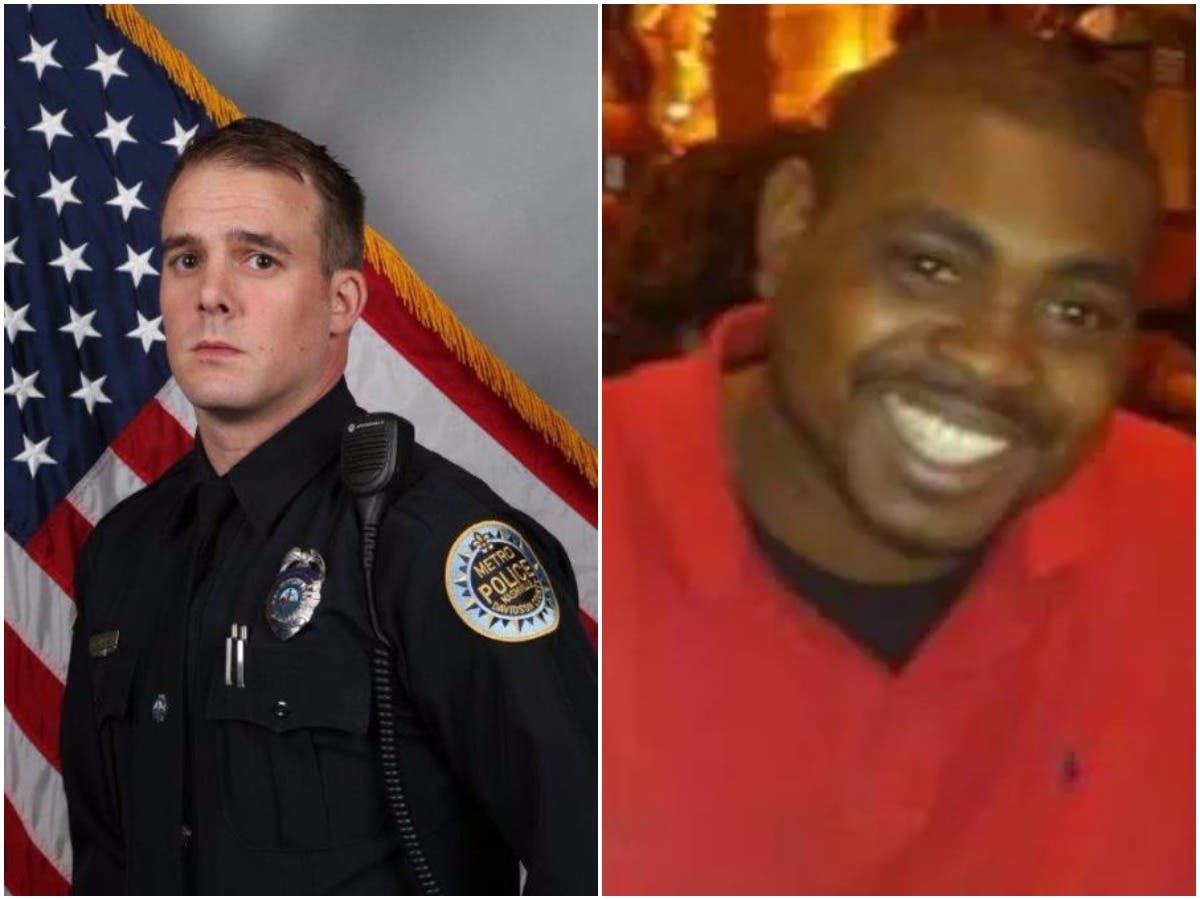
NASHVILLE, TN — An internal affairs investigation says Joshua Lippert, the Metro Police officer who shot and killed Jocques Clemmons in the James Cayce Homes in February, was justified in firing his gun. That report, along with an investigation by the Tennessee Bureau of Investigation, led District Attorney General Glenn Funk to conclude that Lippert "has a legally sufficient claim of self-defense. Therefore, the state will not pursue criminal charges against Officer Lippert.”
A 20-page report from MNPD's Office of Professional Accountability says that Lippert acted in self-defense when he shot Clemmons, 31, three times — twice in the back and once in the hip — February 10.
(For more updates on this story and free news alerts for your neighborhood, sign up for your local Middle Tennessee Patch morning newsletter.)
Find out what's happening in Nashvillefor free with the latest updates from Patch.
“Refusing to obey the commands, Mr. Clemmons turned clockwise away from Officer Lippert to run away, looked back over his [Clemmons’] left shoulder, and raised the gun up about waist high in Officer Lippert’s direction,” according to the report.
The report also says that while department policy is to maintain evidence in situ, Lippert was justified in pocketing Clemmons' gun because his life was in danger.
Find out what's happening in Nashvillefor free with the latest updates from Patch.
Ultimately, Metro Chief of Police Steve Anderson will have the final call on whether Lippert will face disciplinary action. Lippert has been on standard administrative duty since the shooting. Anderson was invited to Funk's press conference at TBI headquarters, but did not attend. At his own press conference, he said he wanted to avoid any indication that he had already decided on disciplinary action for Lippert.
"I have a decision to make at some point actually on a higher plane — that Officer Lippert will have to meet a higher criteria — not just whether there were circumstances where he was in violation of law, but did he follow our policies? That has not concluded," he said "So me appearing at a press conference where it's concluded that he did not violate the law would indicate some predisposition on my part."
A previously unknown eyewitness came forward during the investigation and said she was getting in her car to go to work when she saw two figures pass through her rear-view mirror, which she initially believed to be children playing and running around.
“Independent witness Person 1 was in the parking lot when these events occurred. She was a short distance from the incident. She observed Mr. Clemmons with a handgun. Person 1 observed Mr. Clemmons arm himself by picking the handgun off the ground during the altercation with Officer Lippert. The statements of Person 1 and Officer Lippert corroborate each other, and both of their statements are sufficiently corroborated by MDHA video," Funk's report read, in part. Funk said he and an assistant district attorney met with that witness personally.
The woman told investigators she saw Lippert throw Clemmons to the ground and could hear him shouting at Clemmons, telling him to put up his hands, through her closed car windows. She said she could see Clemmons resisting and when he got up and ran, he stumbled, and a gun fell to the ground. The woman said Lippert tried to kick the gun away but Clemmons was able to retrieve it and put it in his pocket. She reported hearing the officer order Clemmons to stop and put his hands up, but he continued to run. She eventually lost sight of the pair and later heard three gunshots.
That essentially matches the events as initially detailed the day of the shooting.
During an interview in the hours after the shooting, Lippert told the OPA he saw Clemmons grab at something in his waistband during their initial confrontation at a traffic stop just outside Cayce Homes. Lippert said he drew his Taser but did not use it, as he wanted to use minimum force. Eventually, according to Lippert, Clemmons raised the gun and had a "‘it’s me or you look in his eye,’" according to the report. After the shooting, Lippert said he held Clemmons' hand and tried to talk to him until the ambulance arrived.
Clemmons died at the hospital later that day.
Despite Lippert not facing charges, Funk's report nevertheless criticizes Metro Nashville Police procedures, particularly that OPA recommended Lippert be "exonerated" on March 27, prior to the completion of the TBI report and that the policies themselves could lead to the perception of bias. Funk and Deputy DA Amy Hunter particularly criticized MNPD for saying that the investigation was "complete" within hours, but at a separate news conference, police spokesperson Don Aaron said prosecutors were misunderstanding police terminology.
"The word 'complete' is a qualifier for justifiable homicide — you either have a justifiable homicide that was completed, meaning the act occurred, or an attempted justifiable homicide," Aaron said. "The last page of that offense report under 'case status' clearly states 'open.' It's an open case."
Funk further recommends that despite criticisms of its analysis and conclusions, activist group Gideon's Army's "Driving While Black" report, which argues that black and white drivers face significant differences in interactions with police, shows that the perception of racial bias may have "valid basis in fact." Anderson has called the report "morally disingenuous."
“For Nashville to move forward, all law enforcement, including my office, must take steps to enhance fairness and confidence in the criminal justice system,” Funk's report read.
Funk announced a new policy that people charged with misdemeanors — with certain exceptions — will not be held in pre-trial detention. He is also creating a conviction review unit to "make sure we have no one who has been unjustly convicted in the penitentiary."
Funk recommends his office, the mayor's office and the police department meet and conduct a joint study to review the issues raised in the DWB report. Funk also says the groups should decide whether MNPD should investigate any incident where an officer discharges a weapon. He recommends policies to "further encourage intentional, deliberate recruitment of minority personnel" and the funding of the Restorative Justice Program, a program wherein victims can be fully supported while juvenile offenders have the opportunity to avoid detention for some specific, agreed upon charges.
Funk said the case has raised questions about policing regarding the appropriateness of foot pursuits, for example, and perceptions of bias. He said those questions are important, but that they do not effect the legal analysis in the case.
Get more local news delivered straight to your inbox. Sign up for free Patch newsletters and alerts.