Politics & Government
Mayor Megan Barry Returns To Work, Says 'Thank You' To Nashville
Metro Nashville Mayor Megan Barry returned to work Monday following the death of her son, Max, and penned a thank-you note to the city.

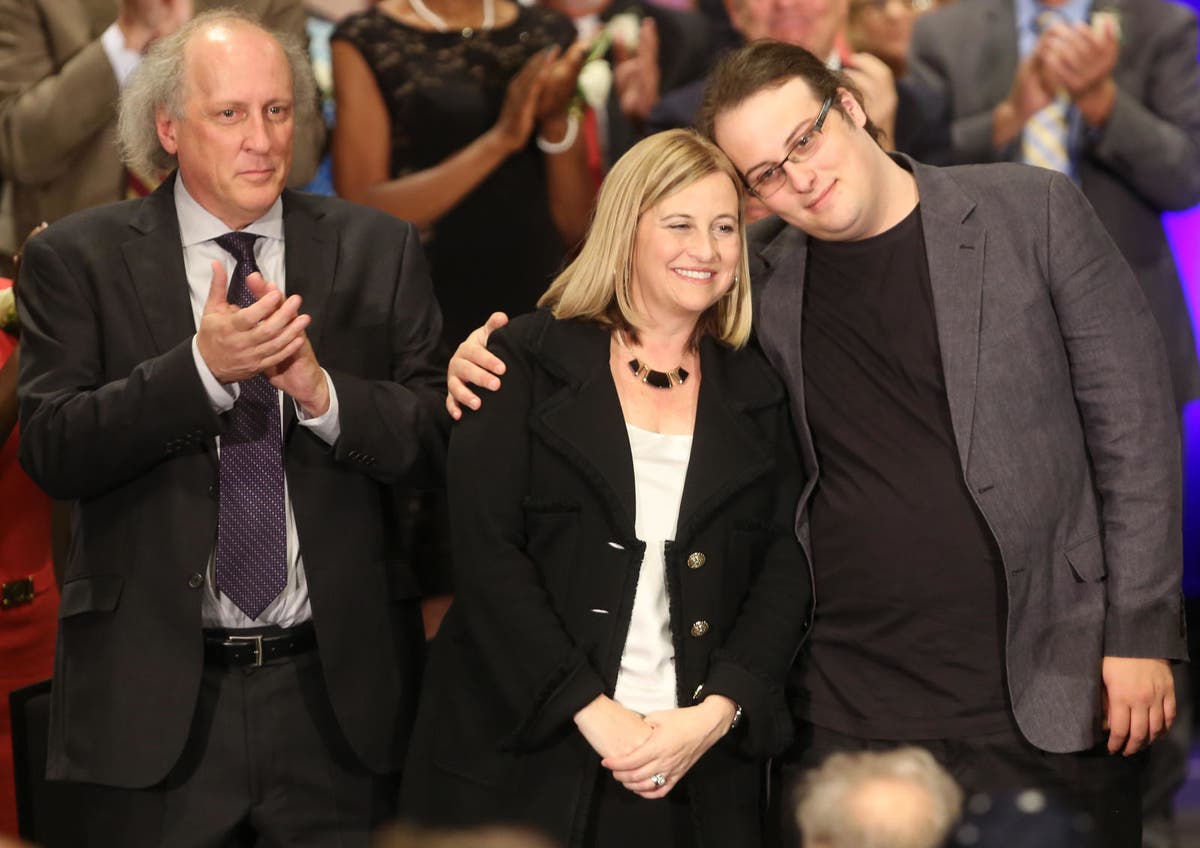
NASHVILLE, TN — For the first time since the death of her 22-year-old son, Max, from an apparent drug overdose in a Denver suburb July 29, Metro Nashville Mayor Megan Barry returned to work Monday, penning a letter thanking the city for its support and opening up about Max's addiction.
Hundreds of Nashvillians attended Max Barry's visitation at Vanderbilt and his memorial service at the Belcourt Theater last week in a dramatic outpouring of support for the mayor and her husband, Bruce, on the death of their only child, and Her Honor said it helped pull her through a difficult time and said at a Monday morning press availability "we have to have a frank conversation about how he died."
(For more updates on this story and free news alerts for your neighborhood, sign up for your local Middle Tennessee Patch morning newsletter.)
Find out what's happening in Nashvillefor free with the latest updates from Patch.
"We don't have the full autopsy yet, we don't have the final toxicology report. But the reality is that Max overdosed on drugs," she said. "I don't know exactly what the combination of drugs was, but I do know and we all know that that's what caused him to die."
Barry said Max spent a month last summer at a Florida rehabilitation facility after "occasional brushes" with drugs and after leaving rehab, returned to the University of Puget Sound, from which he was graduated earlier this summer.
Find out what's happening in Nashvillefor free with the latest updates from Patch.
After graduation, Max got a job with a concrete company in Denver and was living in an apartment with two friends. Barry said he planned to make his way back to Nashville at some point.
"That's where Max was in his journey, and then last Saturday night, he was with some friends," Barry said Monday. "And together with those friends, he did take drugs and those drugs did kill him."
The Jefferson County, Colo. Sheriff's Department said Max's friends called 911 after finding him non-responsive. Though first-responders administered anti-overdose drug Narcan, it did not work and Max Barry was pronounced dead in Littleton, Colo. at 9 p.m. Mountain time July 29.
Metro's first-responders are equipped with Narcan and while Barry said, with increasing overdose deaths nationally — there were 245 in Davidson County last year — that's an important tool, but often that's the last step.
"As we continue to think about what we can be doing as a community, it's not that last moment. It's all those moments that come before the Narcan. That's meaning that we have to be more specific about this crisis," she said.
Barry's 2017-18 budget included funding for an opioid specialist at the health department; that position is in the process of being filled.
Prior to the press availability, Barry released a letter to the city:
Thank you, Nashville.
At around 3 a.m. last Sunday, my husband Bruce and I awoke to a knock on the door. We proceeded to receive the most devastating news a parent could ever hear – that our beloved son, Max, had left this world before us.
In those next few moments, we were crushed by a weight of sadness and grief – of pain and disbelief.
But within hours, we were surrounded by close friends who came to us in our time of need to shoulder this great pain and burden. Shortly thereafter, we released the news publicly that Max had suffered from an overdose and died because we knew that as a public family, our private pain would not stay private for long.
What happened next was a tremendous outpouring of love and affection from all over Nashville and across the country. Close friends and perfect strangers sent their thoughts and prayers, offers of assistance, and deeply personal stories of their own similar pain, and how they were able to push forward.
As Bruce said at Max’s memorial, “this crushing weight of sadness and loss has an incredible emotional counterweight called community… this warm embrace from an incredible family, and an incredible community, and an astounding city. This warm embrace fills that hole [in our hearts] in a lot of ways, and to a significant extent.”
In my office hangs a sign. It reads: “Power is about waking up every day and making a difference in someone else’s life.”
Over the last week, the Nashville community has shown itself to be tremendously powerful, because you have all made a difference in our lives as we mourn the loss of our son.
Now, it is time for me to return to a new normal.
Over the last two years, I’ve talked with many mothers who have lost children – most often to gun violence. I knew enough to know that I couldn’t really understand how painful that must be.
Now, I know. Now, I understand.
With that knowledge, I must move forward for all of the people in Nashville who are not as fortunate as myself or my family to have an entire city come together and lift them up in their most tragic and painful moment.
They are families who have lost a loved one to drugs, or victims of crime or gun violence, or simply people who are wanting for the opportunities and pathways to success that children like my son, Max, had available to them.
I don’t yet know what that looks like, but I know that I must use the time I have left in office to return to the community the love, kindness, and compassion that we have received in our time of need. Nashville, you’ve pulled us up in our lowest moments. You’ve blanketed us with love and kindness. I want to do everything in my power – and with my power – to do the same for you.
While the following two words are not enough to truly express my gratitude for your outpouring of support, as I have learned over the last week, sometimes there are no other words.
Thank you.
Image via the Office of the Mayor
Get more local news delivered straight to your inbox. Sign up for free Patch newsletters and alerts.