Business & Tech
Dallas' Bullet Train Station Unveiled: Take A Look
The station is slated to be built just south of the Kay Bailey Hutchinson Convention Center and will provide access to DART transportation.


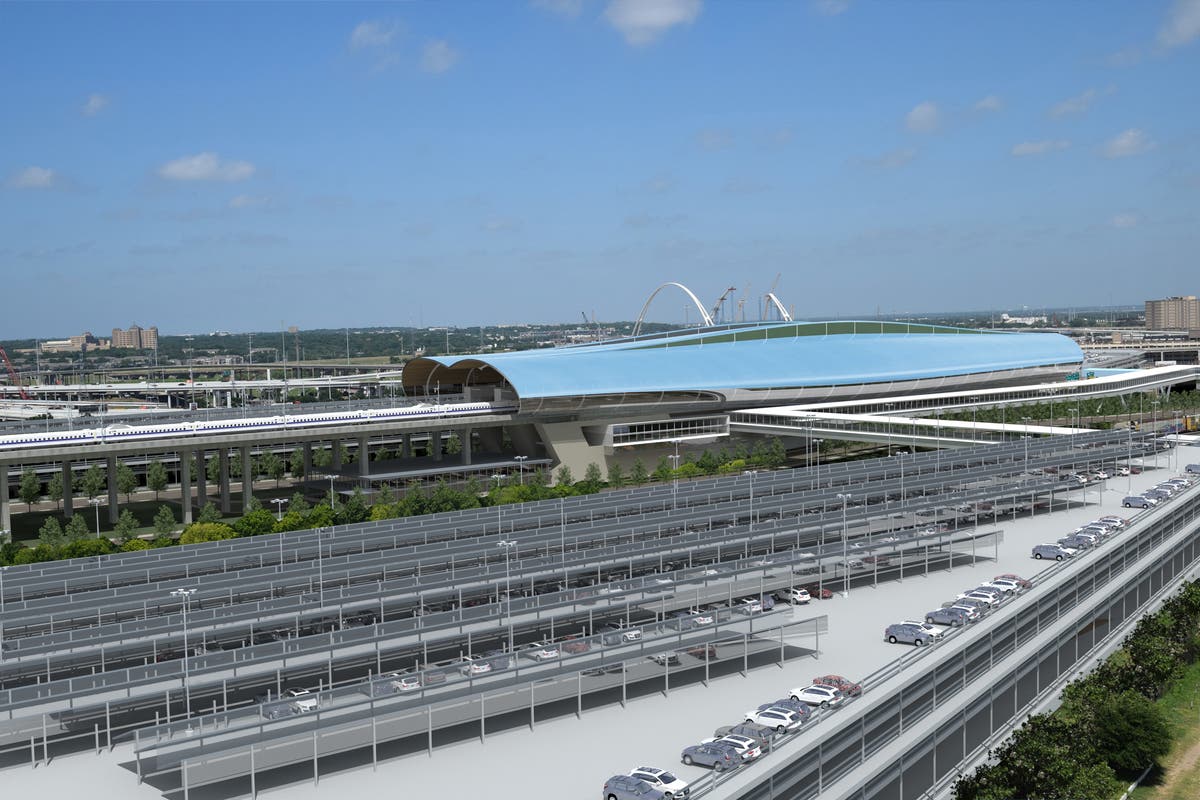
DALLAS, TX — Texas Central took another step Monday in developing the Dallas-to-Houston bullet train. New conceptual renderings show Dallas' upcoming train station, which will be located just south of the Kay Bailey Hutchinson Convention Center in the Cedars neighborhood.
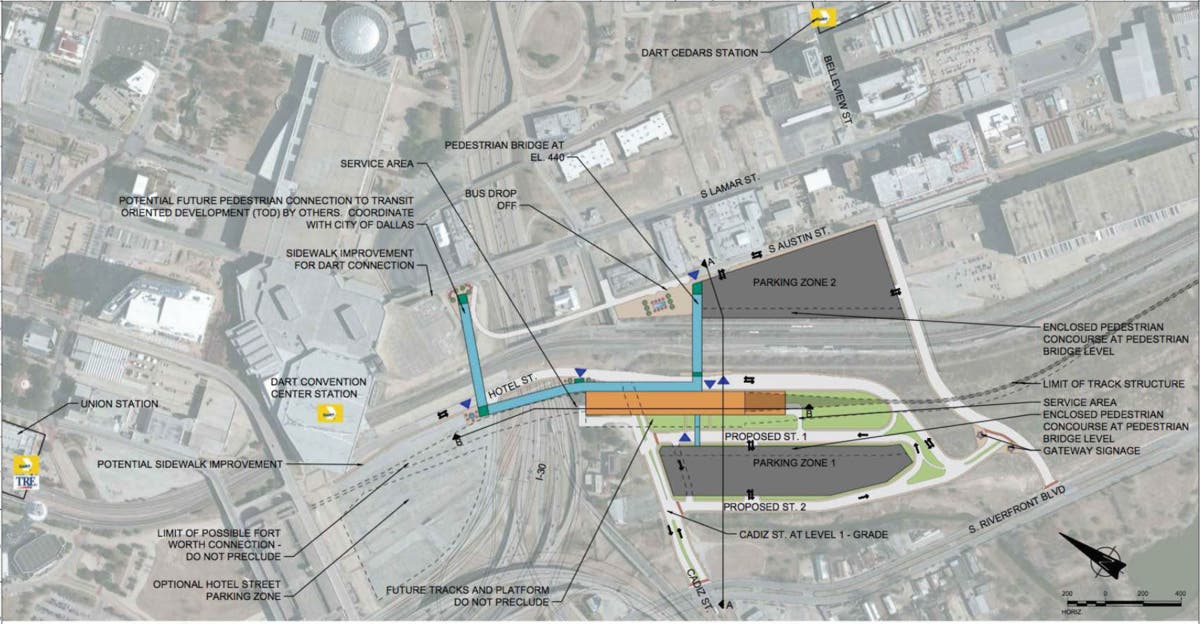
Texas Central released maps and conceptual renderings that show a sleek multi-level station between South Riverfront Boulevard and Austin Street, built to link with nearby roadways and other forms of transportation.
Texas Central said the terminal will be built on a largely vacant 60-acre plot near the Interstate 30 and Interstate 35 interchange.
Find out what's happening in Dallasfor free with the latest updates from Patch.
From the Dallas station, passengers will have a 90-minute connection to the Greater Houston region, along with a midway stop in the Brazos Valley. Plans call for connecting the local station to multimodal transportation networks, including DART services.

“This station will be a magnet for economic activity in an area ripe for development, and it will connect seamlessly with local roads and public transit,” said Texas Central CEO Carlos Aguilar.
Find out what's happening in Dallasfor free with the latest updates from Patch.
As North Texas’ population continues to soar, this project also will attract new residents to the area, encouraging the densification of the Cedars neighborhood and aiding the region’s highway congestion relief efforts.
The Texas Bullet Train would bridge the two largest cities and half of the state’s population. Last month, the FRA identified the train’s preferred route, mostly following transmission lines in a utility corridor between North Texas and Houston, with the Brazos Valley stop serving Bryan-College Station, Texas A&M University and others.
Aguilar said the Texas Bullet Train also is a draw for Amazon’s new headquarters, providing easy access to the urban, suburban and rural parts of the state, and puts highly ranked research facilities within a train ride away.
"This creates a super economy. It’s an amazing way to accelerate transit-oriented development that sets Texas apart from any other state, and provides businesses with unparalleled access to workers, suppliers and other critical needs,” he said.
Federal regulators, in the environmental report, cited the Dallas station’s many economic benefits, including an increase in property values within a half-mile of the terminal.
Also, the Environmental Impact Survey said the station and its support facilities would generate more revenue for property-taxing entities, and station ticket sales would produce more in local sales taxes.
“The impact to property tax revenue would be beneficial for all local jurisdictions,” the FRA said. “These additional resources would benefit schools, libraries, parks, municipal utilities, hospitals and emergency services that are funded through property taxes.”
Texas Central, an investor-owned project, is not taking federal or state grants for construction or its operations. It has reached an agreement with developer Jack Matthews, who owns the site picked for the proposed terminal.
More on Patch:
- Panera Bread Recall Affects North Texas Customers
- Dallas Named Best Texas City For Football Fans: Study
- High School Student Up For $250,000 Prize In Science Competition
The Railroad will create 10,000 jobs during each year of construction and about 1,500 full-time jobs when operations start.
According to the DEIS, the Dallas station concourses would consist of public areas such as restaurants, bars, seating areas, fast foods, concessions, newsstands and rental car counters.
Enclosed, elevated pedestrian bridges would connect it to new parking facilities. The bridges may be extended to provide easy access to public transit, such as DART’s nearby stations at the convention center and Union Station, and an extension of the Trinity Railway Express commuter line from Union Station to the bullet train terminal, the DEIS report said.
Improvements also would be planned for Riverfront Boulevard at Cadiz Street, Riverfront Boulevard at Corinth Street, Belleview Street at South Akard Street and Hotel Street north of I-30, along with an extension south along the station area. These would be designed in part to alleviate current congestion and improve traffic flow.
Residents living in areas affected by the development of the train are asked to speak at a number of public forums during the week beginning Jan. 29.
About Texas Central:
Texas Central is developing a new high-speed train that will connect North Texas, the Brazos Valley and Houston, using proven, world-class technology. The 90-minute trip will provide a safe, reliable and productive transportation alternative. The company’s market-led approach is backed by investors, not government grants, a new business model for infrastructure advances. Texas Central and its affiliated entities will be responsible for the system’s design, finance, construction, operation and maintenance.
Editor's Note: The images above are conceptual renderings from Texas Central. The station's final designs are pending. Patch will bring you updates on the Dallas-Houston bullet train when they are available.
Images via Texas Central, used with permission
This report was compiled with information from a Texas Central press release.
Get more local news delivered straight to your inbox. Sign up for free Patch newsletters and alerts.