Community Corner
Dallas ISD Declines the State's Invitation to Organize Prayer
Only about 15 districts statewide opted in before the deadline


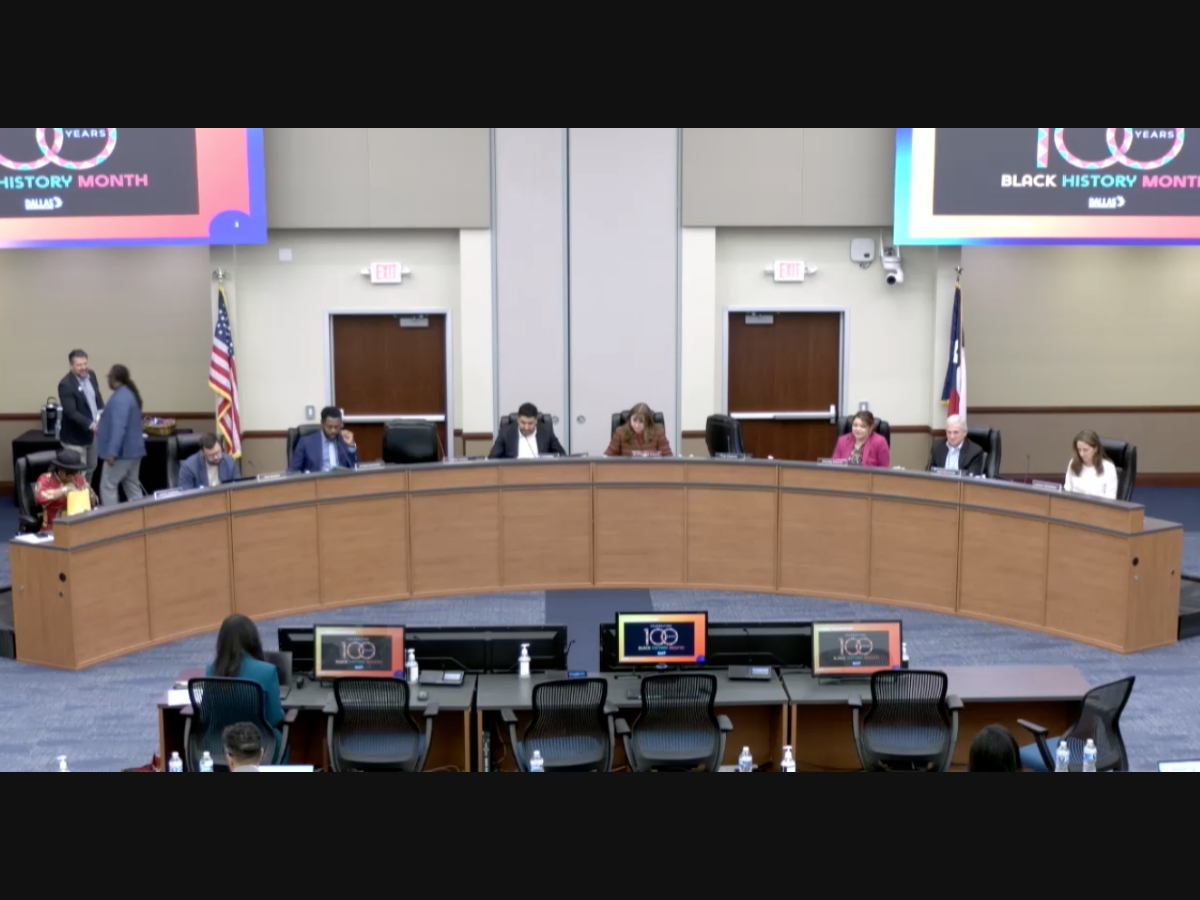
Dallas ISD voted to reject Senate Bill 11, the state law that authorizes school boards to establish a daily period of prayer and Bible reading on every campus. Trustee Lance Currie, who noted he is Christian, put the redundancy plainly: "There will always be an opportunity for students to read their religious texts, talk to their fellow classmates about their faith, to wear their crosses around their necks. Right now our constitution and our First Amendment already protects all those things, and that's reflected in our own board policy." Trustee Byron Sanders framed it in personal terms: "Faith being such a deeply personal experience, it makes sense for us to continue the policy as we have it to allow people to personally pray to whomever they need to whenever they choose to."
Dallas joined Fort Worth, Garland, Grand Prairie, Irving, and Cleburne in rejection. Only about 15 districts statewide opted in before the March 1 deadline; Keller and Aledo were among the few. The most telling friction came not from opponents but from conflicted believers. In Garland, trustee Jamie Miller said he became a Christian because of an experience in high school, then added: "I feel very strongly about my faith, but at the same time, I know what we were elected to do." A coalition of more than 160 faith leaders had urged rejection, and Rev. George Mason, a retired Dallas Baptist pastor, articulated the deeper discomfort: "When you're using the blunt instrument of government, you are advocating for the role of religion in a child's life who does not have the agency to make a free choice."
SB 11 was signed into law during the 89th Texas Legislature and enrolled on June 2, 2025. Its author, state Sen. Mayes Middleton, R-Galveston, believed that when "prayer was taken out of our schools, things started to go downhill in America." The bill's own analysis, filed with the Senate Research Center, notes that it "closely tracks existing caselaw on the subject," an acknowledgment, buried in the legislative record, that the framework it establishes already exists in constitutional law. Participation requires a signed parental consent form that includes an express waiver of the right to bring a claim under the Establishment Clause. Additionally, no prayer can be broadcast over a public address system, nor can it substitute for instructional time. Every district had six months to hold a record vote.
Find out what's happening in Dallasfor free with the latest updates from Patch.
The bill's sponsor signaled no hard feelings. "I respect their opinion," Rep. David Spiller told the Texas Tribune. "They know their communities."
Get more local news delivered straight to your inbox. Sign up for free Patch newsletters and alerts.