Crime & Safety
DNA Gives Investigators Image Of Victim In Fort Worth Cold Case
A 2016 murder in Brown County was solved with DNA phenotyping. Fort Worth detectives hope the same can be done for this Jane Doe.


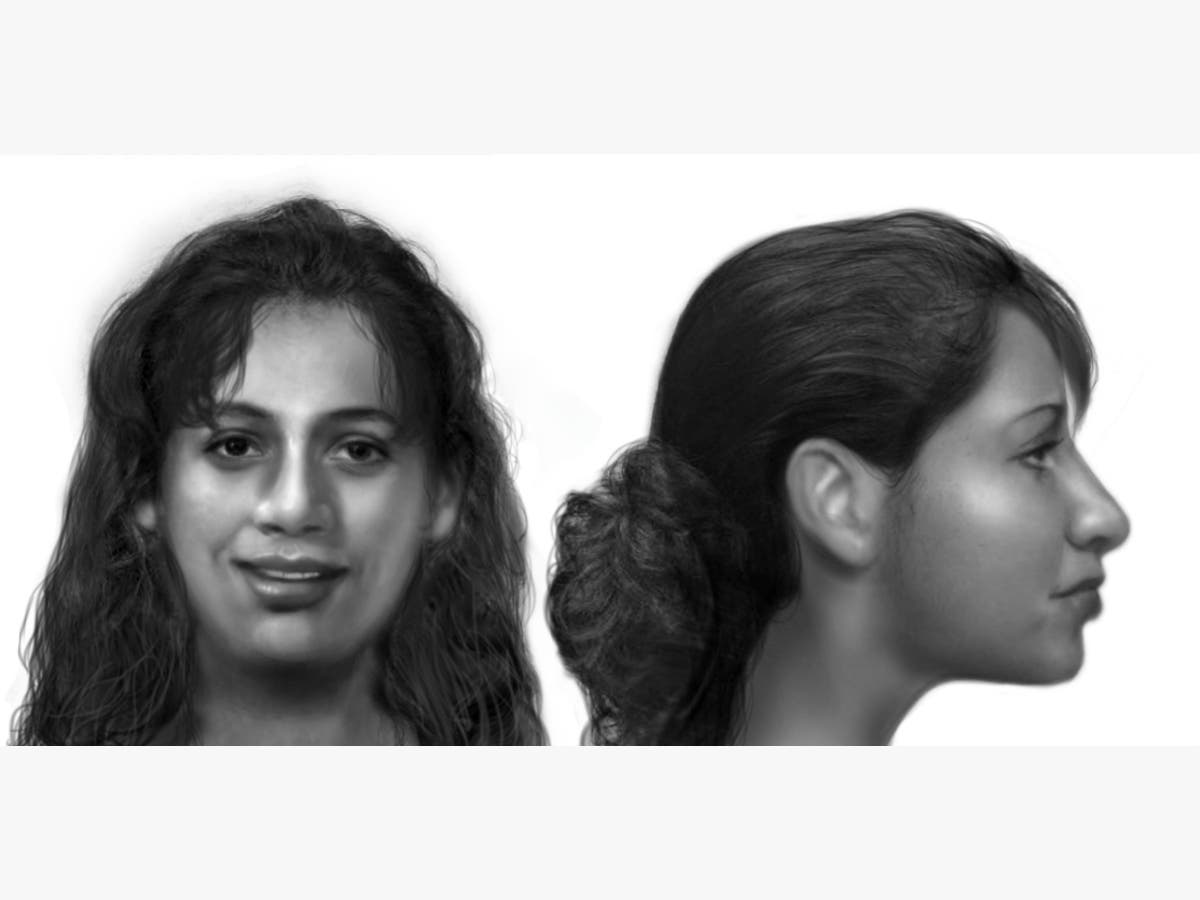
FORT WORTH, TX — DNA taken from the a woman's skeleton found in a shallow grave in 2013 is leading investigators ever-closer to answers about her untimely death.
Although the Tarrant County Medical Examiner's office has not yet identified the woman, clues taken from her DNA hint at who she was.
According to a press release from the Fort Worth Police Department, the woman was a Latina female between 21- and 35-years-old.
Find out what's happening in Dallasfor free with the latest updates from Patch.
Standing only 4-foot-9, the small-framed woman had long, wavy brown hair and a fixed, three-bridge unit in her dental history.
Investigators now believe she died between October 2012 and early 2013. Police say a food wrapper was found in the grave on Oct. 11, 2012, which narrows the window to Fall of that year.
Find out what's happening in Dallasfor free with the latest updates from Patch.
In June 2013, investigators created a clay reconstruction of her face in hopes of identifying the woman.

DNA phenotyping from Paraben NanoLabs lets detectives see a realistic rendering believed to depict the victim.
According to Paraben NanoLab's website, the facial reconstruction service "produces the most fully informed recreations of antemortem appearance ever produced from skeletal remains."
The service takes uses DNA samples to determine certain characteristics of a person including country of origin, facial shape, skin color, eye color, hair color and freckles.
In Fort Worth's 2012 cold case, the DNA tells the story of a woman with fair-to-brown skin, very dark eyes, brunette hair and few to no freckles.
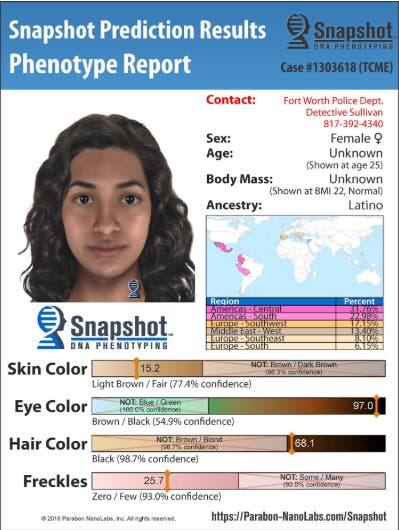
The characteristics found in the DNA samples are first analyzed by a forensic artist and later reconstructed on paper. During this process, markers are placed on the deceased's skull to determine face shape.
A final composite is made by blending the artist's sketch with the skull's actual shape.
The website states facial reconstruction is beneficial because it gives a deeper look into the person's ancestry.
In addition, reconstruction allows investigators to visualize skulls with jawbones, which are often removed by predators, scavengers and and decomposition.
As recently as 2016, another North Texas cold case was solved with help from Parabon NanoLabs.
When 25-year-old Rhonda "Chantay" Blankinship went missing on May 13, 2016, friends and family searched for two days to find the woman.
She was finally found in an isolated and dilapidated house some five miles from her own grandfather's house. Investigators believe she was bludgeoned to death with a lawnmower blade.
The Tarrant County Medical Examiner's Office determined Blankinship had been raped.
The Medical Examiner collected male DNA from Blankinship's body and crime scene, but it did not match any data within the CODIS database.
Nearly a year-and-a-half later, the male data was sent to Parabon NanoLabs for phenotyping.
A profile was created, and an image of a white male with brown hair, blue/green eyes and some freckles was released to the public.
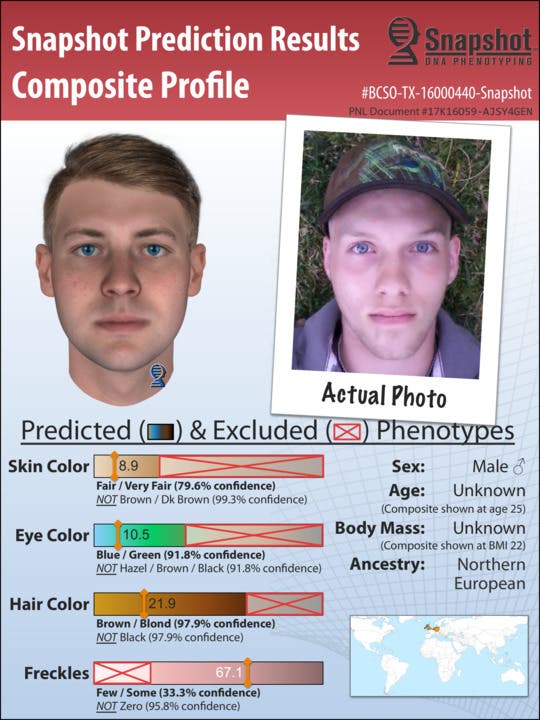
Within hours, tips about the man's identity began to pour in.
Investigators eventually honed in on Ryan Derek Riggs, who was a reported acquaintance of Blankinship.
Riggs confessed to the murder in front of his church congregation only six days later. By that evening, he was in police custody.
Fort Worth's Jane Doe is not alone as far as unidentified remains go. Several DNA phenotypes can be found on Parabon's website, including those of unidentified remains, identified suspects and persons of interest.
Anyone who recognizes the Jane Does is asked to call Fort Worth police at 817-392-4340.
Images via Parabon NanoLabs and Fort Worth Police Department
Get more local news delivered straight to your inbox. Sign up for free Patch newsletters and alerts.