Politics & Government
Advocates Meet With Texas Lawmakers On Behalf Of Refugees
Faith leaders and others from cities across the state spoke to lawmakers about the positive impact refugees have made in Texas.


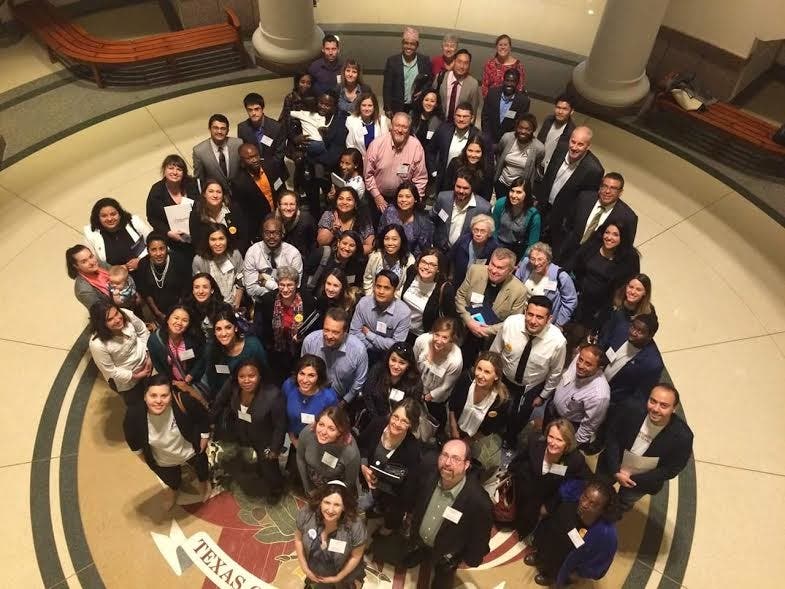
AUSTIN, TX — More than 150 advocates from across Texas gathered at the state Capitol on for the first-ever Texas Refugee Advocacy Day in conveying to lawmakers the positive impact made by migrants amid a political climate marked by a backlash against the diaspora.
Faith leaders, representatives from refugee-serving organizations and volunteers from cities across the state—Abilene, Austin, Dallas, Fort Worth and San Antonio—descended to the Legislative Conference Center at the Capitol Wednesday in meeting with various lawmakers. They were joined by rabbis partnering with HIAS (founded as the Hebrew Immigrant Aid Society) which has as its mission the principle "Welcome the stranger. Protect the refugee."
Guided by a the state's proud history of refugee resettlement, officials noted migrants' leading role in shaping Texas into the strong and vibrant state it is today. With that sentiment as their guide, advocates urged Texas lawmakers to support policies promoting hospitality and to continue honoring the tradition of welcoming refugees.
Find out what's happening in Austinfor free with the latest updates from Patch.
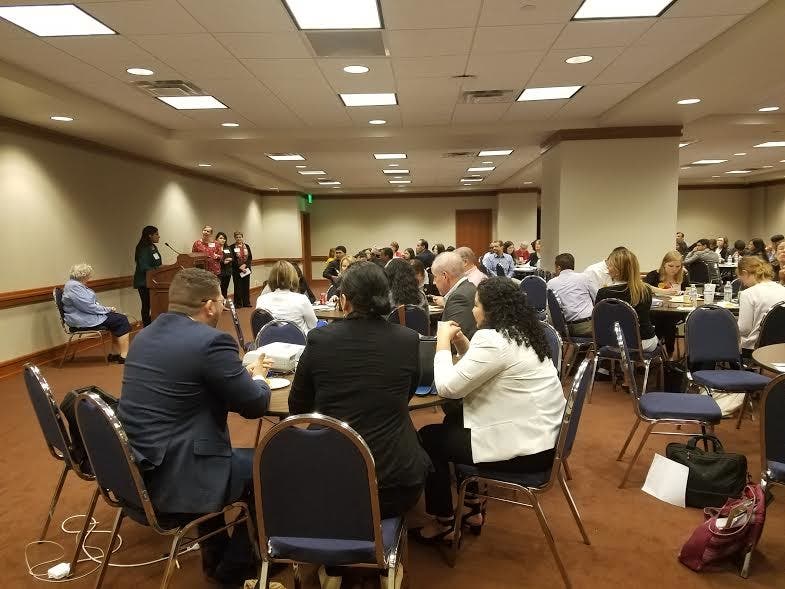
Gislaine Williams, the Texas grassroots organizer for Washington, D.C.-based Refugee Council USA, hailed the event as a success.
It is a challenge, but I think we also understand the reality there is a lot of support for refugees in the community, and an outpouring of volunteers," Williams told Patch during a telephone interview. "The goal today was to showcase that and let elected officials know that."
Find out what's happening in Austinfor free with the latest updates from Patch.
The effort was an interfaith one, with Catholics joining Jews and advocates practicing other religions. "In general, there's a moral obligation to welcome the stranger," Williams said of the shared goal among various segments on behalf of refugees.
The array of refugees is as diverse as the the group of advocates supporting them. Represented are Vietnamese refugees that came from decades past to more recent ones in the past five years arriving from such countries as Bosnia, Burma, Darfur, Rwanda and Ukraine, Williams said.
While Williams was diplomatic when asked to describe the inherent challenges of her work in Texas, recent actions by lawmakers illustrate the uphill climb in reversing preconceived notions as it relates to refugees. Last September, Gov. Greg Abbott pulled the state out of the long-adhered U.S. Refugee Resettlement Program in his attempts to block refugees from taking refuge in Texas—despite horrific images of Syrian children injured or killed amid the bloody civil war in Syria, and in spite of documented assurances by government officials of the rigorous vetting process refugees must first undergo.
“Texas has repeatedly requested that the director of the Federal Bureau of Investigation and the director of National Intelligence provide assurances that refugees resettled in Texas will not pose a security threat, and that the number of refugees resettled in Texas would not exceed the state’s original allocation in fiscal year 2016, both of which have been denied by the federal government,” Abbott said at the time.
Officials refuted the claim, sending copies of correspondence they had previously sent to Abbott exhaustively detailing the vetting process and safeguards taken when screening would-be refugees wanting to settle in Texas. For more on Abbott's action, see "Texas Withdraws From National Refugee Resettlement Program," from Sept. 30.
The governor took the step even after the collective plea of some 70 rabbis from across Texas for Abbott to reconsider his stance (See: "More Than 40 Texas Rabbis Sign Letter Decrying Governor's Stance On Refugee Resettlement," Sept. 24.
“Texas is a big state with a big heart and a history of welcoming refugees,” Mark Hetfield, president and CEO of HIAS, said at the time. “For HIAS, this history goes back to the late 1800s and the Galveston Movement, when Texas welcomed Jews who fled ethnic cleansing in czarist Russia."
More recently, Abbott signed a bill into law that criminalizes law enforcement officials deemed as being less-than-zealous partners with federal U.S. Immigration and Customs Enforcement (ICE) agents in deporting residents discovered to be undocumented. The law allows for fines of up to $25,000 per day and even jail time for law enforcement officials deemed not to be be strident participants with ICE's deportation mission.
Abbott made the pursuit of Senate Bill 4 passage and its effective end to so-called "sanctuary cities" a top priority. His aggressive endorsement of the law took many by surprise given that his wife of more than 30 years happens to be the granddaughter of Mexican immigrants and also because his embrace of federal officials operating in local jurisdictions runs counter to his long-held aversion to U.S. government interference in the affairs of the what he's suggested is sacrosanct state sovereignty.
Related story: Texas Governor Signs Far-Reaching Anti-Immigration Law On Facebook Live
>>> Photos courtesy of Texas Impact
Get more local news delivered straight to your inbox. Sign up for free Patch newsletters and alerts.