Politics & Government
Texas Governor Signs Far-Reaching Anti-Immigration Law On Facebook Live
SB4 forces local cooperation with federal immigration officials, threatening jail time and fines for those deemed non-compliant.


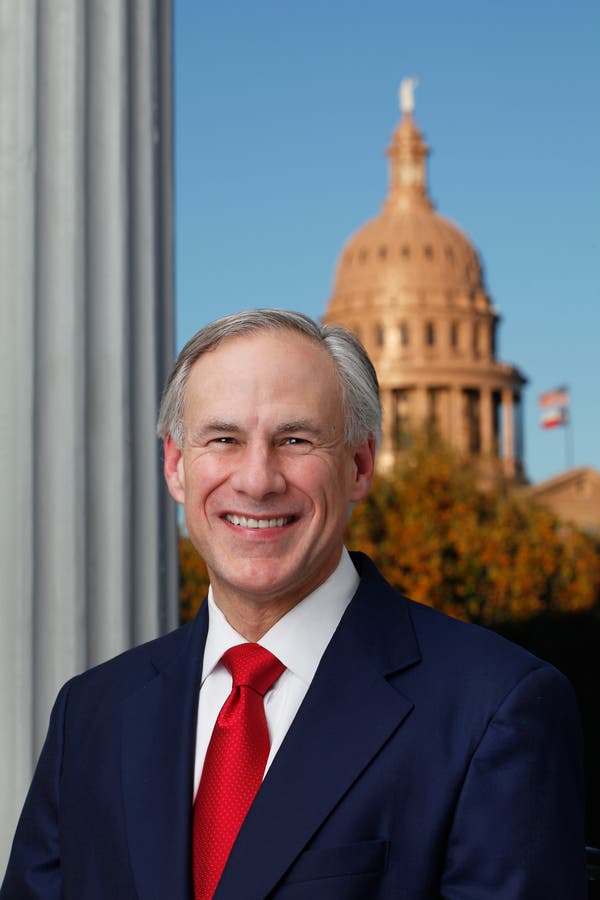
AUSTIN, TX — After long hours of emotional testimony, some tearful, from within the Capitol during hearings by those opposing the anti-immigrant Senate Bill 4 measure banning "sanctuary cities"—discussion largely hidden from the public at large—the governor signed the measure into law utilizing the most public of forums: Facebook Live.
On Sunday evening, Gov. Greg Abbott made good on his vow to ban so-called "sanctuary cities," which he made a top priority of his agenda. The law is a crackdown on cities that Abbott views as being too soft on immigration, particularly aimed at law enforcement officials he views as not fully cooperative with U.S. Immigration and Customs Enforcement (ICE) officials rooting out undocumented immigrants.
Some law enforcement officials prefer a more nuanced approach to enforcement that focuses on the hardened criminal element among the undocumented—felons, sexual assault suspects, human traffickers and the like—for deportation rather than targeting even those with no criminal records. The reason for the more softened approach Abbott vehemently opposes has to do with community policing: Building trust in marginalized communities, not creating a climate of fear within those communities that discourages the reporting of crimes to police.
Find out what's happening in Austinfor free with the latest updates from Patch.
See related story: Texas Attorney General Files Suit To Deter Sanctuary Cities Law Challenges
In the end, none of those arguments seemed to make an impact. The Republican majorities in both the House and Senate previously approved the measure, enabling SB4 to to land on Abbott's desk for his signature. Despite thoughtful arguments against the measure predicated on the chilling effect it will have on law enforcement and entire population swaths now pushed further into the shadows, SB4 is now the law of the land, due to take effect in September.
Find out what's happening in Austinfor free with the latest updates from Patch.
“Now let's be clear about something: We all support legal immigration; it helped build America and Texas," Abbott said as hie signed the law on Facebook Live, normally reserved as a forum for users to post celebratory announcements or images of music concerts they're attending. "But legal immigration is different from harboring people who have committed dangerous crimes. This law cracks down on policies like the Travis County sheriff who declared that she would not detain known criminals accused of violent crimes.”
The Travis County reference was something of a final dig against Travis County Sheriff Sally Hernandez, who earned his ire in the months preceding the law signing with her more nuanced approach to immigration policy. Hernandez stood her ground in resisting Abbott's directives calling for mass deportations—regardless of people's criminal backgrounds or lack thereof—much to the Abbott's chagrin. Moreover, Hernandez has countered Abbott's claim that she helped harbor criminals, and posted all ICE detainer requests honored by her office as a matter of course.

Abbott later turned to conservative commentators to promote his new law further, including calling into a show hosted by Glenn Beck.
Hernandez and other like-minded sheriffs are now, in effect, forced to honor all ICE detainers allowing for 48-hour holds on people detained on suspicion of being undocumented to give federal agents plenty of time to fetch them for processing. Critics argued those holds sometimes exceed 48 hours if detainees are ensnared on weekends or holidays and run counter to the Constitutional protections of due process.
But with SB4 now law, arguments against it are now moot. And the law's got teeth to it: Those law enforcement officials deemed as not cooperating fully with it will now will face fines (up to $25,000 per day) and even jail time. The law gives permission to police inquiring about a person's documentation status during traffic stops or other interactions, a scenario critics say is tantamount to a "papers, please" measure associated more with Arizona, arguably the most stringent as it relates to immigration enforcment (at least until Sunday, when Texas joined its ranks).
In keeping with the largely celebratory purpose of the Facebook Live portal, Abbott, too, struck a festive note: "Texas has now banned sanctuary cities," he said right after signing the far-reaching bill with palpable pride while broadcasting incongruously on a forum largely used by pubescent youth, models and people sharing pictures of their families to their relatives.
The use of Facebook Live to telegraph the signing of such a serious law is just the latest surprise among those baffled by Abbott's aggressive pursuit of banning so-called "sanctuary cities" and jurisdictions in one of the nation's most culturally diverse states.
After all, critics contend, studies have shown that immigrants are far less likely to commit crimes than the mainstream population; Abbott's wife of more than 30 years is herself the granddaughter of Mexican immigrants; bustling construction re-shaping the skyline of Austin is largely being accomplished by hard-working Latinos, as even the most cursory of glances on a walk downtown will attest; anecdotal evidence suggests immigrants' aversion to report crimes for fear of having their status exposed and targeting them for deportation has grown since he made SB4 his pet cause.
In the end, such arguments seemingly made no dent in the ideology of those intent to pass the law. Neither did spirited sit-in protests against the measure in the day's before the governor's signature that resulted in the arrests of some expressing civil disobedience, including Austin City Council member Greg Casar.
This is the scene of the protest at the State Insurance Building #sb4 #txlege pic.twitter.com/ud3WuB3yAb
— Elena Mejia Lutz (@elenamejialutz) May 1, 2017
It's too early to tell how chilling of an effect it the measure will have not only in Travis County and Austin but statewide. For now, the din of opposing voices has passed, arguments against the law largely muted—at least for the time being until the inevitability of legal challenges as occurred in Arizona against punitive measures signed into law there.
In Austin, interim Police Chief Brian Manley sough to assure minority communities even while directing legal advisers to study the language of the new law in order to establish local policing protocol.
“The Austin Police Department legal advisers are reviewing the approved language of SB 4," Manley said in a prepared statement. "We will have a better understanding of the impact to our operations and any necessary changes to policy or procedure once this review has been completed.”
Then, his efforts to assuage immigrant communities in the wake of SB4's passage: “The Austin Police Department has worked hard to build and maintain trust, communication and stronger relationships with our communities through outreach programs and community policing. This effort and engagement will continue. With the passage of this law, we want our minority community to maintain their trust in us, if you see or are a victim of a criminal act we want you to call us and report it."
In a prepared statement, the Travis County sheriff whose opposition commanded national headlines, struck a tone of resignation while suggesting she would follow the newly minted law.
"It is unfortunate that fear and misinformation enabled SB4 to pass, the sheriff said. "It should be obvious that my implementation of a policy, meant to meet our community’s need, did not violate any law. Otherwise, the Texas Legislature wouldn’t have felt compelled to make a new one."
Like many of her counterparts—most prominently San Antonio Police Chief William McManus and Houston Police Chief Art Acevedo—she alluded to the erosion of trust in police the law will have among entire swaths of the population in the wake of Abbott's law. For his part, Acevedo, formerly Austin's police chief, recently revealed a 42% decrease in the number of Hispanic victims reporting rape to his department amid the SB4 backdrop.
But among the tones of resignation and acquiescence, vows of legal challenge have already emerged. State Rep. Eddie Rodriguez, a Democrat from Austin, threw down the gauntlet on Monday.
“Texas has its own ‘show me your papers’ law, thanks to Governor Greg Abbott," Abbott said in a prepared statement. “SB 4 will be challenged in court— you can take that to the bank. When Gov. Abbott signed SB 4 tonight [Sunday], he also signed a blank check on the taxpayer's’ behalf to protect yet another blatantly discriminatory law."
Ahead of the law officially taking effect Sept. 1, Rodriguez called for opponents to raise awareness of what he views as a measure predicated on racial profiling.
“My colleagues and I in the Mexican American Legislative Caucus will not stop fighting against this law," Rodriguez vowed. "We are the oldest and largest Latino caucus in the nation, and we will oppose SB 4 long after many of those who voted for its passage lose their seats in the Texas Legislature.”
For now, Hernandez is left to voice her disappointment.
"I am disappointed, because this is not in the best interest of public safety," Hernandez said. "It ties the hands of our law enforcement agency and pushes victims of crime into the shadows. While I hate seeing a state law like this come to pass, I have always followed the law and that will not change."
But until legal challenges emerge in earnest, there appears to be a new sheriff in town. That new sheriff is not corporal but fleshed out of political ideology, and its name is SB4.
>>> Photo of Greg Abbott via State of Texas, photo of Travis County Sheriff Sally Hernandez via Travis County Sheriff's Office
Get more local news delivered straight to your inbox. Sign up for free Patch newsletters and alerts.