Business & Tech
Austin Is Nation's Second Fastest Growing Major Metro
The local economy grew by 7 percent in 2017, behind San Jose, Calif. and ahead of San Antonio, San Francisco and Nashville in top five.


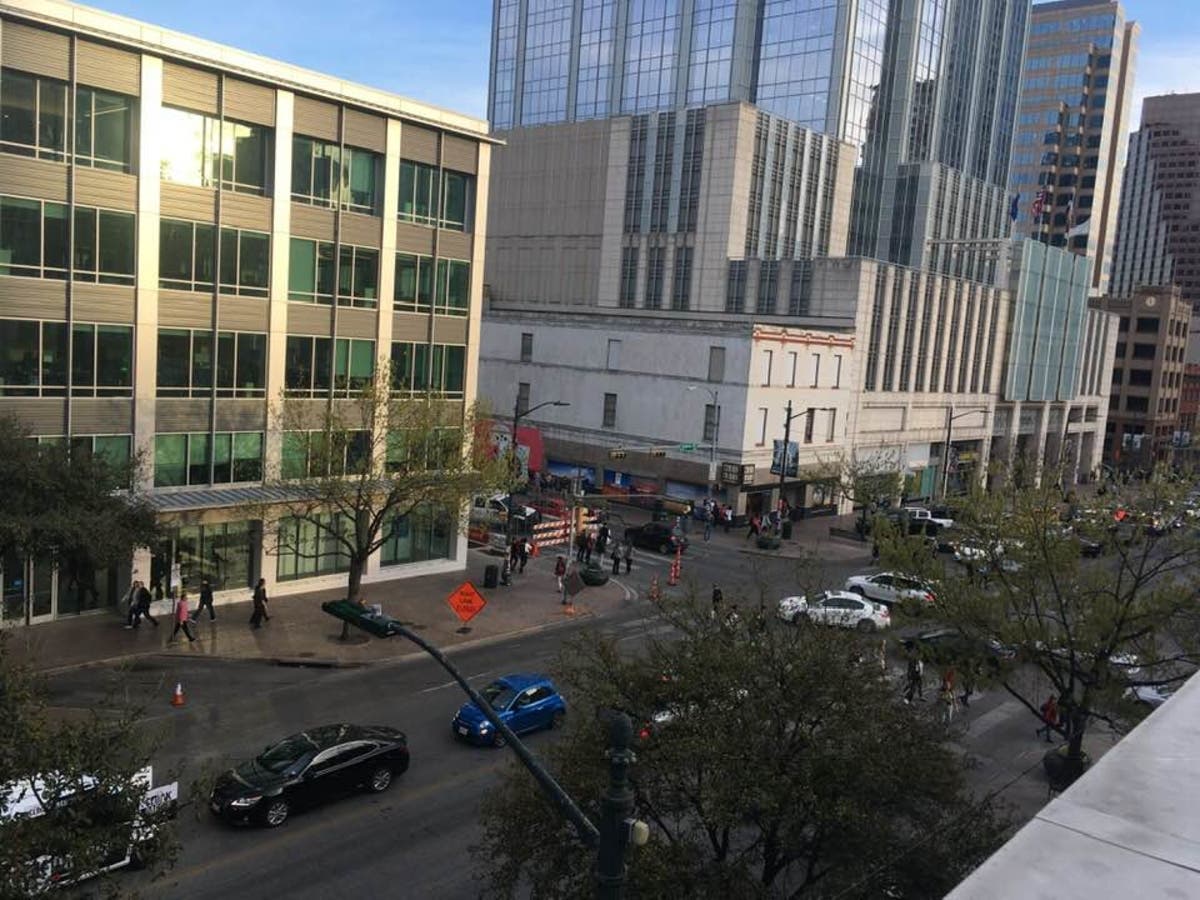
AUSTIN, TEXAS — Living in Austin, one witnesses the growth — in the number of cranes high up in the air as sky-rises are built; traffic congestion that seems to get worse each drive; myriad new restaurants popping up catering to a dizzying array of tastes; in the number of help wanted ads as companies look to fill vacancies to serve growing clienteles.
Yet it's when one studies the numbers, the statistics, that one grasps the breadth of the capital city's brisk growth, as a newly released study by the Greater Austin Chamber of Commerce attests. The centerpiece of the statistics-laden report: An impressive growth of the local economy of nearly 7 percent last year, making Austin the second-fastest growing major metro.
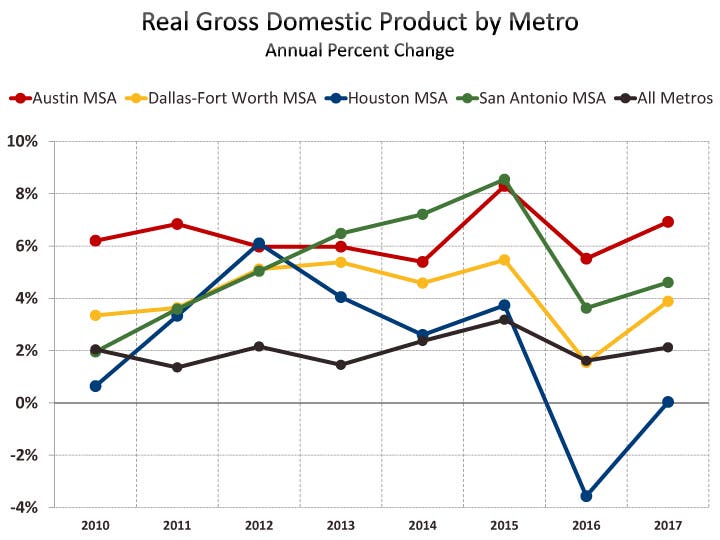
In its recently released study of gross domestic product (GDP) by metro area, the chamber found Austin had a 6.9 percent growth in 2017 — bested only by San Jose, Calif. and ahead of San Antonio, Texas; San Francisco; and Nashville in rounding out the top 5, in descending order. The GDP was derived from statistics compiled by the U.S. Bureau of Economic Analysis.
Find out what's happening in Austinfor free with the latest updates from Patch.
Natural resources and mining was the most significant driver of Austin’s GDP growth in 2017, chamber researchers found, but wholesale trade and financial activities also figured prominently. Real per capita GDP is up 4.1%, making Austin the second-best performing major metro, according to the report.
This makes the local economy the nation's 24th largest overall, even while Austin ranks as the 31st-largest metro based on population. Growth for 2016, which was previously stated as 4.9 percent, has been revised to 5.5 percent, researchers noted. These growth rates are real, inflation-adjusted, rates, with this year’s 6.9 percent growth faster than any post-recession year except 2015, according to the report.
Find out what's happening in Austinfor free with the latest updates from Patch.
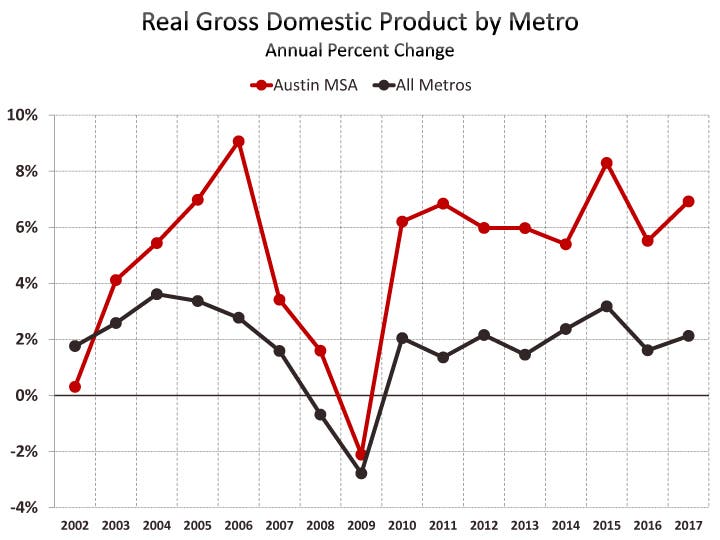
Economic growth in 2017 across U.S. metropolitan areas was widespread, researchers found. Of 383 metros, 82 percent saw real gains, compared to 77 percent in 2016. Aggregate growth for all U.S. metros rose to 2.1 percent last year after growing by 1.6 percent in 2016, according to the report.
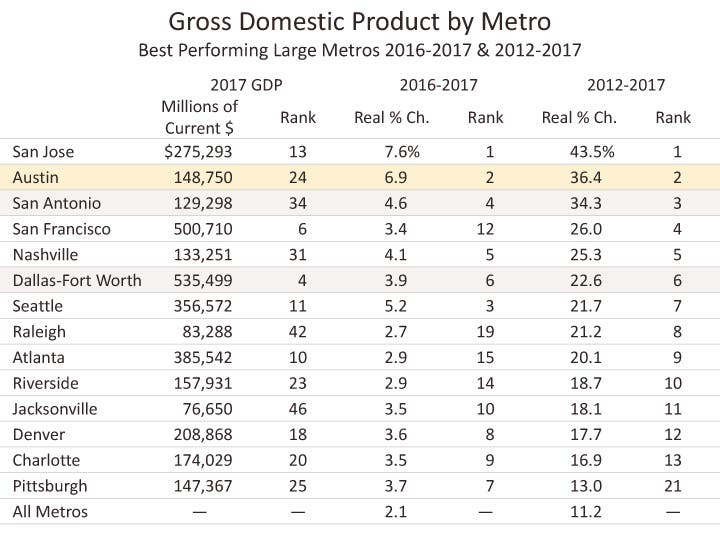
In terms of GDP, Austin’s 6.9 percent was less than San Jose's which grew by 7.6 percent but better than that of San Antonio (4.6 percent) Dallas-Fort Worth’s 3.9 percent. Houston’s economy, which had negative growth of 3.6 percent in 2016, was effectively unchanged with a negligible 0.03 percent last year, ranking 48th in the country among large metros.
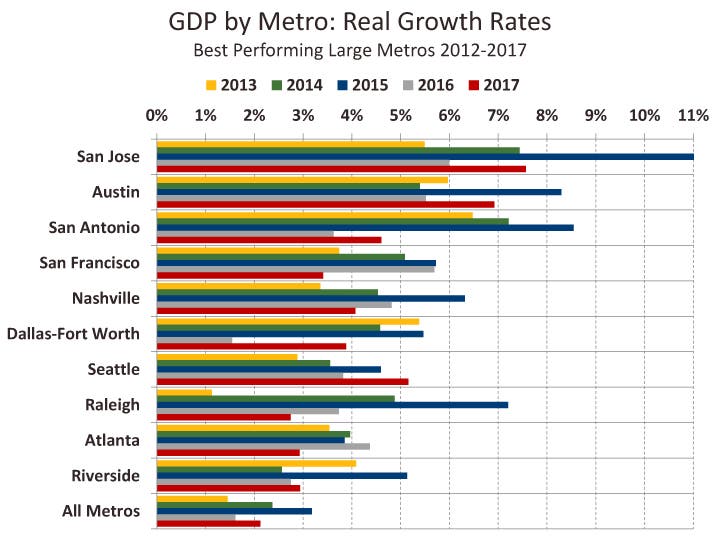
For the metropolitan portion of the U.S. as a whole, and for Austin, 2009 is the recession low-point for real GDP and positive growth resumes in 2010, chamber researchers reported. Over the last five years, real GDP is up 11.2 percent in the metropolitan portion of the U.S. In Austin, real GDP has grown 36.4 percent since 2012, making it the second fastest growing major economy—behind only San Jose. San Antonio (up 34.3 percent), Dallas-Fort Worth (up 22.6 percent), and Houston (up 6.8 percent) rank as the third, sixth and 39th fastest growing large metros for 2012-2017, according to the report.

Austin’s current dollar GDP totals $149 billion in 2017, making it the 24th largest U.S. metropolitan economy the report found. At the time of last year’s release of this data, Austin ranked 27th, analysts noted. On the basis of population in 2017, the Austin metro ranks 31st, researchers learned.
While 82 percent of all metropolitan economies grew in real terms in 2017, 96 percent of the 50 largest metros grew (only New Orleans and Bridgeport, Conn. had negative growth in 2017), according to the report. In aggregate, their growth was 2.4 percent, researchers found, slightly greater than the 2.1 percent real gain for the entire metropolitan portion of the U.S. The 50 largest metros account for 73 percent of U.S. metropolitan area GDP, according to the study.
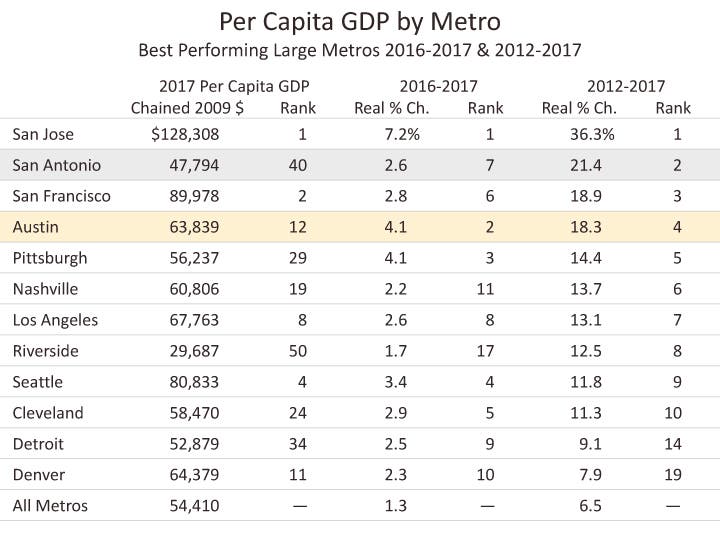
Per Capita GDP
"Austin’s real GDP on a per capita basis performed well relative to other large metros over both 2016-2017 and 2012-2017," researchers wrote. "Austin ranks second with 4.1 percent real growth in per capita GDP in 2017, while the growth for all metros was 1.3 percent." Stated another way: Since 2012, real per capita GDP is up 18.3 percent in Austin, making it the fourth best-performing large metro, the report found. Across all metros, 2012-2017 growth was 6.5 percent. Gains in real GDP on a per capita basis reflect improvement in an area’s standard of living, analysts explained
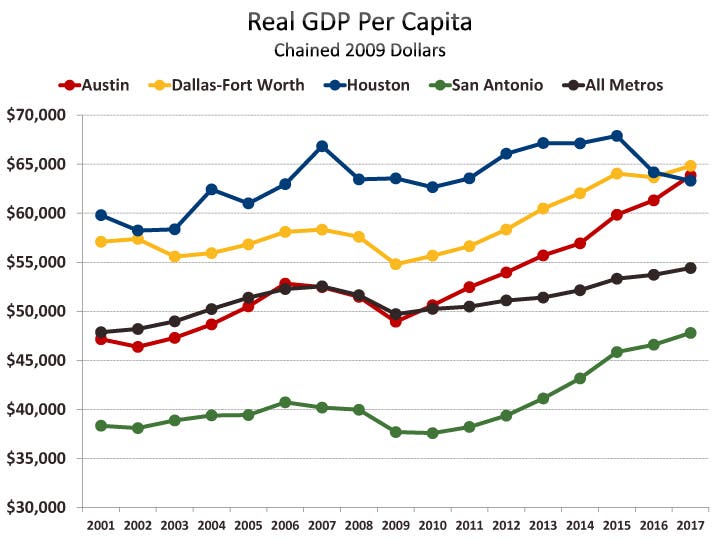
The pre-recession peak for real per capita GDP across all metros was 2007, according to the report. For the metropolitan portion of the U.S., 2017 per capita GDP just surpasses 2007 by 3.6 percent. "Of the 50 largest metros, 18 still have real per capita GDP that is lower than what it was in 2007," researchers wrote. The upshot: San Jose (up 44.0 percent), Pittsburgh (up 22.9 percent), and Austin (up 21.7 percent) lead all major metros for real per capita gains since 2007. :Five large metros have real per capita GDP in 2017 that is more than 10% below the level of 2007: Las Vegas, New Orleans, Bridgeport, Phoenix, and Orlando," analysts wrote.
To read the full report, click here.
Get Patch's Daily Newsletters and Real Time Alerts
>>> Downtown scene taken from the Austin Convention Center during SXSW in March 2018 by Tony Cantú/Patch staff
Get more local news delivered straight to your inbox. Sign up for free Patch newsletters and alerts.