Community Corner
Austin Tree Lighting Ceremony Tonight At Zilker Park
Annual tradition now in its 52nd year kicks off Sunday, Nov. 25, 5:30 p.m. at Zilker Metropolitan Park, 2100 Barton Springs Rd.


AUSTIN, TEXAS — If you're looking to get into the holiday spirit in earnest, tonight's the night folks: The 52nd annual Zilker Holiday Tree Lighting ceremony is scheduled Sunday evening.
The ceremony kicks off at 5:30 p.m. tonight (Sunday, Nov. 25) with pre-event music followed at 6 p.m. with the tree lighting accented with local entertainment, food, novelties and live music. Scheduled to perform is the The Austin Civic Wind Ensemble conducted by Robert Laguna, the Barton Hills Choir (Gavin Tabone, director, Kati Achtermann, principal and The Vintage 15, a modern big band.
The focal point of this gathering — the official local kickoff to the holiday season — is the Zilker Tree itself. Not a real tree but majestic nonetheless, it stands at a staggering 155 feet with a 380-foot circumference and 120-foot diameter composed of 39 streamers, each holding 81 multicolored, 25-watt bulbs. All told, the tree has 3,309 lights, according to city officials.
Find out what's happening in Austinfor free with the latest updates from Patch.
That time of year again, annual "tree" lighting in Zilker Park tonight. The tree is actually one of Austin's moon towers. These 164ft structures were erected in 1894 to help illuminate the city. pic.twitter.com/WmtpdKWlXM
— Michael (@redclaypines) November 26, 2018
A municipal website details that the base of the tree is made up of 19 utility poles, each 14 feet tall, arranged in a circle around the Moonlight Tower. The first tree was lighted on Dec. 10, 1967, by Mayor Pro Tem Mrs. Emma Long. In subsequent years, the honor is bestowed to the young winner of a city-wide tree art contest.
Free and open to the public, the "tree" lighting serves as precursor for the Trail of Lights — Austin's largest holiday tradition running from Dec. 10-23 that lures some 400,000 visitors annually — for which an admission fee is charged. But thanks to the Trail of Lights Foundation, that event also can be enjoyed for free for at least half of the nights during its run "...to make sure that anyone who wants to be part of the experience has a way to do so," organizers wrote on the event website.
Find out what's happening in Austinfor free with the latest updates from Patch.
Awaiting the Zilker Tree Lighting! #ATX @austintexasgov @AustinCityParks pic.twitter.com/LeCnliT5a8
— Council Member Alter (@ALTERforATX) November 26, 2018
Those not able to make it out for the tree lighting ceremony should be aware area roads will be closed to accommodate the Trail of Lights from Nov. 26 to Jan. 1 that operates from 6 p.m. to midnight. "If you are planning to visit the Holiday Tree itself, make sure to plan around those nights," city officials advise.
They're not kidding either. There will be pre-permitted parking only at the park during Trail of Lights nights, and motorists will not be allowed to wait and pay on site for parking. Moreover, extensive neighborhood parking restrictions will be in effect. "Shuttle or bicycle arrival is the best option," city officials advise. "PLAN YOUR TRIP!"
Tonight is the 52nd annual Zilker Holiday Tree Lighting! shawn.spradling pic.twitter.com/G49sZAToAF
— ATX Trail of Lights (@ATXLights) November 25, 2018
Zilker Metropolitan Park is located at 2100 Barton Springs Rd. The tree will be on display nightly from 6 p.m. to midnight through Jan. 1, 2019.
Zilker Holiday Tree Lighting History: A Crash Course
For the uninitiated, the tree lighting at Zilker Park now in its 52nd year has a rich tradition steeped in local history. Given that past, we wanted to add a bit of background for younger generations or those among the legions of a year-round influx of new residents moving to Austin.
Who was Emma Long?
The first person given the honor of throwing the switch to light the Zilker holiday tree was Emma Jackson Long, a pioneering woman who served as mayor pro tem of Austin from 1967-69 — the first woman to hold that position. A true trailblazer, Long worked with the Army Security and Intelligence Agency prior to that municipal appointment, and was later named as an adviser to the United Nations, according to a biography at the website Austin's Influential Women.
Born near the town of Pampa in the Texas Panhandle on Feb. 29, 1912, Long attended the University of Texas at Austin where she majored in history, with a minor in government. In doing research, Patch especially liked learning that she dabbled in journalism courses during her university years.
From an early age, Long's parents instilled in her a sense of altruism born of sudden financial windfall. Her parents, Bob and Lillie Mae Jackson, struck oil on their property, ensuring their financial stability. That reversal of fortune also sparked an interest to help others and be charitable — a worldview illustrated when the family provided a home for a widowed mother of eight children and the offering of an apartment above their store to an orphan and his homeless grandmother and aunt, according to the website.
But Long was no pushover. The first woman ever to serve on the Austin City Council, she recalled an argument with the mayor at the time who became so frustrated arguing with her that he finally blurted out wanting to continue the dialogue with her husband instead: "Send Stuart in here," the mayor bellowed, Long recalled in an interview. "I'll fight with him!" Without missing a beat, Long replied: "I'll fight my own battles!"
And she did. Despite an outspoken and determined nature that made her unpopular with local businessmen (they regarded this attitude as "controversial" and "un-ladylike"), she persevered and triumphed. Instead of compromising her political career, that devotion to her causes won her subsequent elections, notwithstanding her detractors.
In what is arguably the highest honor given to a resident in any city, Austin in 1984 renamed City Park on Lake Austin to Emma Long Metropolitan Park. The large municipal park in Northwest Austin, on the shores of Lake Austin at 1600 City Park Rd., is open seven days a week, 365 days a year from 7 a.m. to 10 p.m. Complete with camping grounds and a dog-friendly trail, the expansive park offers three miles of bucolic scenery from the Turkey Creek trail.
Long's namesake park is the ideal place to spend a romantic night under the stars, named in honor of a woman who once acknowledged to be in the throes of a "love affair" with the city she long served. Long passed away in January 2011 at the age of 98, and was buried at the Texas State Cemetery next to her husband, Stuart Morrison Long.
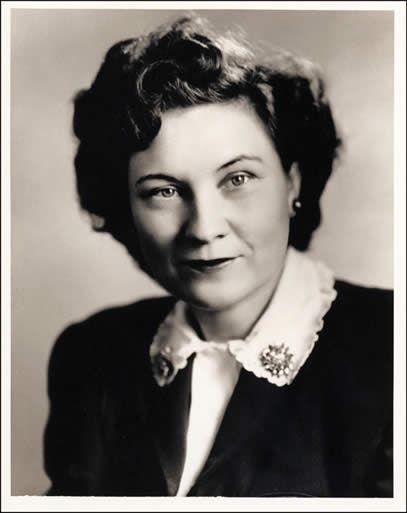
Emma Long, City of Austin, Austin History Center
What is a moonlight tower?
The structure that essentially serves as scaffolding for the thousands of holiday lights to be lighted on Sunday is called a moonlight tower or "moon tower,"a lighting structure designed to illuminate areas of a city at night. These towers were popular in the 19th century throughout the U.S. and Europe as an alternative to gas street lighting that was financially prohibitive at the time.
The City of Austin bought 31 of the contraptions in 1894 from the Fort Wayne Electric Co. in Detroit, ushering lofty predictions that the devices would only liberate residents from the tyranny of night, but transform Austin as "The Coming Great Manufacturer of the South," as recorded in the website Austinot.
Such ambitious predictions didn't come to pass. A belief their brightness would essentially rid the city of nighttime crime didn't materialize, and residents complained about the intensity of their illumination — so bright that many feared it would confuse crops into sprouting their time. There is a more tragic history associated with curious interlopers who chose to climb the towers, but we don't want to ruin the vibe of what's supposed to be a cheery holiday story. Read more about the Austin moon towers at Austinot.
Still, the city opted to preserve these 165-foot towers that are now the only known surviving ones in the world. In 1970, the towers were recognized as Texas State Landmarks and listed in the National Register of Historic Places.
The surviving towers — including the one serving as makeshift frame for the annual holiday lighting — still stand throughout the city. They are located at:
- Leland St. and Eastside Dr (NE corner).
- Monroe St. and S. 1st S (SW corner).
- West 9th and Guadalupe St (SE corner).
- W. 12th St. and Blanco St (SE corner).
- W. 12th St. and Rio Grande St (NW corner).
- W. 15th St. and San Antonio St (SW corner).
- W. 22nd St. and Nueces St (SW corner).
- W. 41st St. and Speedway St (SW corner).
- Zilker Park (used for Zilker Park Christmas Tree) (moved from Emma Long Metropolitan Park).
- Martin Luther King Jr. Blvd. and Chicon St (SE corner)
- E. 13th St. and Coleto St (NE corner).
- Pennsylvania Ave. and Leona St (NE corner).
- E. 11th St. and Trinity St (SE corner).
- E. 11th St. and Lydia St (SE corner).
- Canterbury St. and Lynn St. (NE corner).
About Zilker Park
Considered the crown jewel of the Austin parks system, Zilker Park is located just across Lady Bird Lake (formarly known as Town Lake) from Austin's skyline "...making it the perfect metropolitan park," city officials boasted on a municipal website. Locals and visitors alike enjoy the space encompassing more than 350 acres of land dedicated to running, jogging, biking, swimming, kayaking and other outdoor activities. There are trails here, along with gardens, volleyball courts, natural springs, swimming areas and more amenities. The park borders 416 acres of water space via Lady Bird Lake, making it a popular stop for aquatics lovers. More sedentary visitors enjoy its shaded hills that yield an ideal spot to relax by the cools spring-fed waters of Barton Springs Pool.
Get Patch's Daily Newsletters and Real Time Alerts
>>> Top photo via City of Austin
Get more local news delivered straight to your inbox. Sign up for free Patch newsletters and alerts.