Community Corner
Biting, Stinky Lady Bug Impostors Named 'Asian Lady Beetles' Invade Central Texas
Residents report seeing what they think are lady bugs congregating around buildings on cold days, but these are no lady bugs. Trust us.


AUSTIN, TX — That lady bug that landed on you the other day, much to your delight, might not have been a lady bug at all. And you're not going to like what's next.
According to Texas Parks and Wildlife officials, there's something of an invasion across Central Texas of something called the Asian Lady Beetle. These are, in effect, lady bug impostors who look like the insect purported to bring luck to those it lands on.
But they are decidedly not. The Asian Lady Beetle was first introduced to the U.S. and Europe in the 1960s as a natural form of pest control to curb aphid and scale insects populations. By the 90s, the Asian Lady Beetle numbers exploded.
Find out what's happening in Austinfor free with the latest updates from Patch.
Entomologists say the pesky critters tend to congregate around buildings during the winter time to stave off the cold. The lady bug seems more given to wanderlust, so this should provide a clue. If you find a multitude of what you think are lady bugs bringing you loads of luck, you might want to hold off on buying those lottery tickets.
You're out of luck, because they're probably Asian Lady Beetles.
Find out what's happening in Austinfor free with the latest updates from Patch.
Brace yourself, this is what an Asian Lady Beetle congregation looks like. It is, decidedly, not very lady bug like:
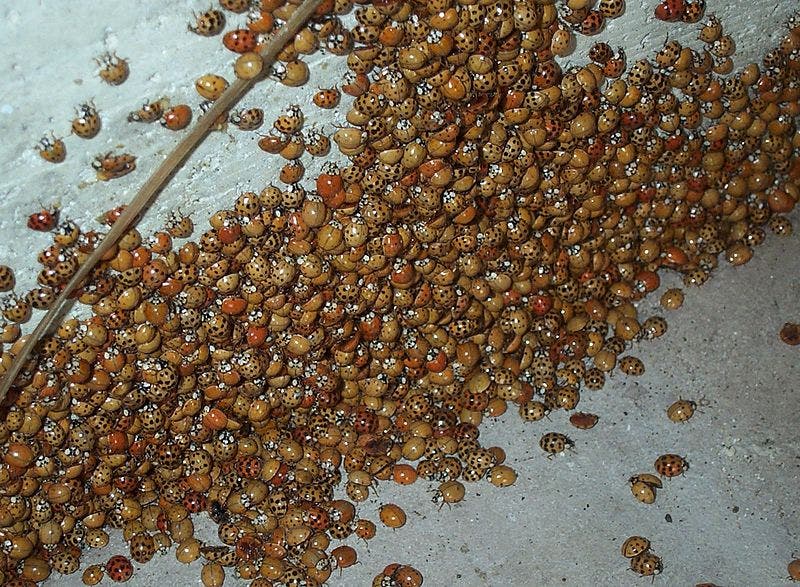
Oh, and they bite, which another thing the benign lady bug would never even think about doing. It's not a horrible bite, more like a pinch, but a bite nonetheless.
These pests should continue to thrive until the warmer months, when their numbers will likely dwindle. But until then, don't handle them. But don't kill the lady bugs thinking they're the bad ones either! While they look similar, there are differences. Both have black heads, but the white markings are considerably smaller on the benign lady bug. Conversely, their nasty impostors have two large white markings often referred to as "cheeks" given their ample size.
If you visit the diffen.com website, you will see pictures comparing the two creatures so you'll be able to spot the difference between them. The lady bug appears to be more vibrant in color than its Asian impostor.
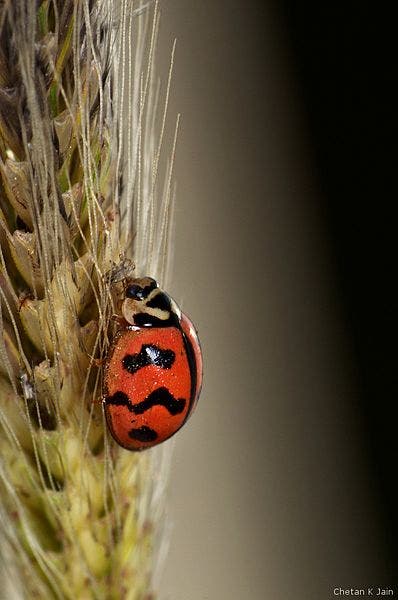
Here's a picture of an authentic lady bug:
There's some question as to the validity of this claim, but it might still be a good idea to check to make sure these pests haven't made a home of sorts on the roof of your dog's mouth. A telltale sign of this having occurred is if the dog is exhibiting excessive drooling.
We won't post the picture here, because it's gross and it may haunt your dreams. If you want to see a couple of them, check out the Snopes report on the claim's validity by clicking here. And then check on your doggie and hug it tight, even if you see no bugs inside its mouth. Because sometimes, a dog's life isn't all it's cracked up to be.
>>> Photo above of Asian Lady Beetle by gbohne via WikiMedia Common
Get more local news delivered straight to your inbox. Sign up for free Patch newsletters and alerts.