Neighbor News
Born at Seton, counselor returns to help Seton patients
Ascension Seton counselor proves the sky's the limit despite physical limitations
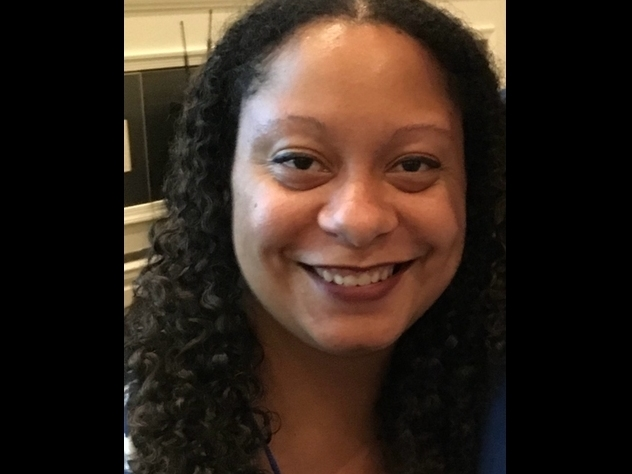

Licensed behavioral health counselor Sharizod Aboii, LMSW, who was born with a disability at Ascension Seton Medical Center Austin, has overcome obstacles to achieve her dream of returning to her birthplace to care for others.
“My first few months of life really were at [Ascension] Seton,” said Sharizod. “So my whole journey honestly has been trying to get back home to Seton. And that just recently happened with me completing my Master’s in Social Work.”
After graduating, Sharizod accepted a position in June as a licensed behavioral health counselor at Ascension Seton Behavioral Health. As part of her graduate program, she completed an internship at Ascension Seton Shoal Creek, working in the hospital’s intensive outpatient program.
Sharizod works with patients struggling with a variety of mental health diagnoses. Using dialectical behavioral therapy, she offers virtual evening group sessions to help patients become more effective in their daily life.
Find out what's happening in Austinfor free with the latest updates from Patch.
Two months early
Sharizod was born two months premature at Ascension Seton and diagnosed with a rare, congenital condition known as arthrogryposis. Her parents learned that Sharizod was born with the classic form of the disease called amyoplasia, a condition that occurs in one out of every 10,000 live births in which babies are born with muscle weakness and multiple stiff and contracted joints. This condition often affects the hands, wrists, elbows, shoulders, hips, feet and knees. Sharizod was affected in all areas and her parents were told that she would probably never be able to walk because her feet were clubbed. Conversations also included possible placement in an institution for people who are disabled, but her parents preferred that she experience and learn to thrive in a general education setting.
As a baby, Sharizod’s first method of getting around was rolling. As she grew, her parents began to hold Sharizod’s hands and walk with her. By age 2, Sharizod began taking steps. She fell a lot but kept trying.
Find out what's happening in Austinfor free with the latest updates from Patch.
“I had physical therapy until my therapist told my parents that there was not much more she could do and [that] it would be a matter of me finding my own ways to do things,” said Sharizod.
Because some of her muscles did not develop properly, Sharizod is unable to raise her hands higher than her shoulders. Her left arm is contracted, which she refers to as her “built-in cup holder.” Also, because her fingers did not fully develop, it was nearly impossible for her to hold a pencil like her fellow classmates.
“I still tried,” said Sharizod. “I couldn’t put pressure on the pencil, and I remember the teacher saying, ‘I can’t read what she’s writing because it is so light.’ I honestly can’t tell you how or what made me come up with the idea of using my chin to put pressure on the pencil. So, I don’t handwrite things – I chin-write things.”
“With my condition, and with others I have met, all of us are masterminds of coming up with our own ways of doing things.”
Along her path
Sharizod has met other individuals with the same condition. Shortly after graduating with her undergraduate degree in business administration from Texas A&M University in 2009, she began attending conventions.
“It was very interesting to see people like me,” said Sharizod. “I no longer felt special because I always thought my ways of doing things were special. I saw people doing things just like me and I just fit in.”
After graduation, Sharizod volunteered with Dell Children’s Medical Center’s Strictly Pediatrics Hematology Oncology clinic and soon landed a job with AT&T, honing customer service skills at a call center. She then transferred that expertise to the American Cancer Society, where she worked for six years in a variety of roles helping people across the United States understand cancer.
“I think that job opened the door to the possibility of social work because I truly enjoyed breaking down information for people to understand medical terms, letting them know they have options and a voice and that they can be their own advocate in their healthcare decisions,” said Sharizod. Because she wanted to work face to face with patients and help them along their journey, she took a position in a clinic offering hematology/oncology services with palliative care.
It was at the clinic that Sharizod witnessed the impact social workers had with patients, which confirmed her next move. She decided graduate school was the next step in her journey to serve others most effectively. She even elected to focus on making and/or bringing awareness about building accommodations for clinicians with limitations as part of her capstone project at Texas State University. Sharizod had long considered a career in the medical field.
Right fit
“She’s a really good therapist and a good fit for what we do here,” said Mark Fleming, LCSW-S, Clinical Program Manager. “A large portion of our patient population struggles with accommodations at work or school. Sharizod not only provides her knowledge as a counselor, she brings a similar lived experience.”
Sharizod is excited to join the team at Ascension Seton to serve her patients, and perhaps provide an example for future clinicians with limitations.
“When you think about the importance of diversity in your workforce [as it pertains to] different backgrounds, nationalities and culture, the same applies for people with different abilities,” said Sharizod. “I think it's just realizing that everybody has their own story, gifts and superpowers they can bring. Nobody has the perfect life and we all have our struggles. Mine is just more noticeable because it’s physical.”