Politics & Government
Energy Secretary Perry Cites Fundamental Economics Rule In Speech, Gets It Wrong
"Here's a little economics lesson," Perry tells crowd. "Supply and demand. You put the supply out there, and the demand will follow."


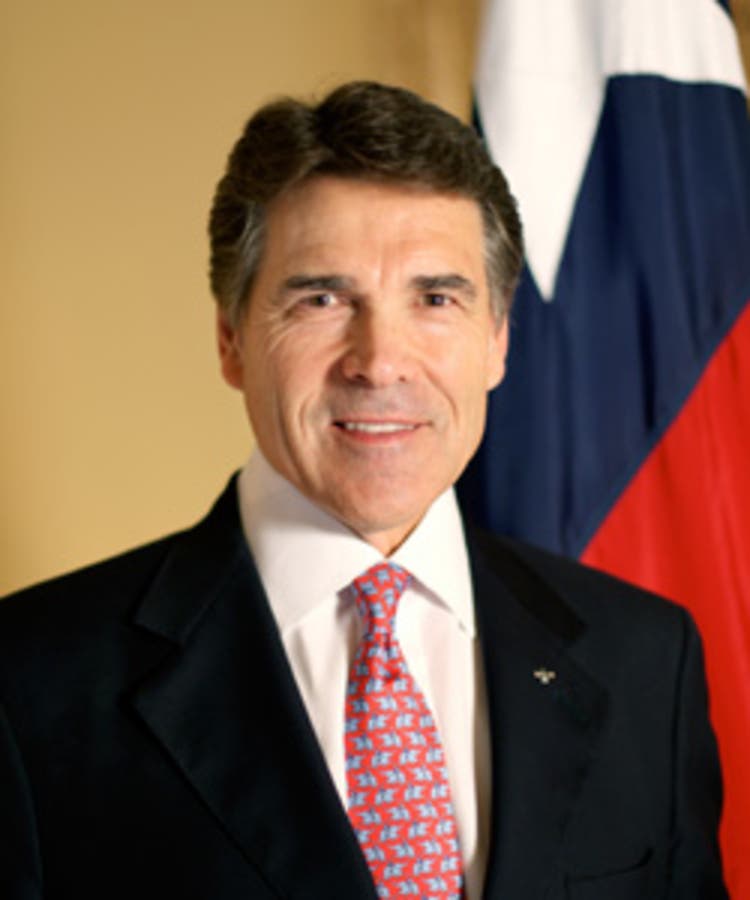
AUSTIN, TX — Secretary of Energy Rick Perry on Thursday was widely mocked on Twitter for his definition of supply-and-demand economics during a visit to a West Virginia coal-fired power plant.
"Here's a little economics lesson; supply and demand," Perry told the crowd, according to reports. "You put the supply out there, and the demand will follow."
Well, no. As those who know economics pointed out on Twitter, Perry's use of the term is defined as the law that "...an increase in supply will lower prices if not accompanied by increased demand, and an increase in demand will raise prices unless accompanied by increased supply."
Find out what's happening in Austinfor free with the latest updates from Patch.
Thank you to the dedicated coal workers at Longview Power Plant in West Virginia pic.twitter.com/5UxY5oJxt8
— Rick Perry (@SecretaryPerry) July 6, 2017
James Fallows, a correspondent for Atlantic magazine, said Perry was actually citing Say's Law of Markets, which states that production is the source of demand. "Sigh," Fallows wrote. "I think he means the much-controverted 'Say’s Law.'"
Sigh. I think he means the much-controverted "Say’s Law.”https://t.co/VkYGmf3U37 (Tell it to farmers in the 1930s, etc) https://t.co/6S0J2BF9m2
— James Fallows (@JamesFallows) July 6, 2017
Other Twitter users reminded that Perry got a D in economics at Texas A&M University. But for Ken Tremendous, it was Perry's palpable haughtiness that added to the annoyance factor: "The worst part of this, besides its 100 percent wrongness, is the condescending 'Here's a little economics lesson.' Like he's schooling us."
Find out what's happening in Austinfor free with the latest updates from Patch.
Daniel Dale conjectured as to the source of Perry's supply-and-demand knowledge: "Rick Perry appears to have obtained his economics knowledge from Field of Dreams," he opined.
It's not the first time Perry has been roundly mocked for his brand of logic. In April, he was ridiculed for commissioning a study to determine if renewable energy policies are driving the closure of "baseload" plants, essentially asking if wind and solar energy are killing conventional energy sources by hastening the demise of coal and nuclear, as Green Tech Media and others reported.
Bloomberg News quickly secured the memo to his chief of staff, which called for a 60-day study on whether efforts to promote clean energy (renewable portfolio standards, tax credits and other subsidies) "...are responsible for forcing the premature retirement of baseload power plants.”
Perry wrote further:
“We are blessed as a nation to have an abundance of domestic energy resources, such as coal, natural gas, nuclear and hydroelectric, all of which provide affordable baseload power and contribute to a stable, reliable and resilient grid. But in recent years, grid experts have highlighted the diminishing diversity of our nation’s electric generation mix and what that could mean for baseload power and grid resilience.”
The logic, too, was swiftly called into question in casting doubt on Perry's grasp of issues related to market forces.
“There is no power source that doesn’t benefit from federal and state incentives, so it’s highly unlikely that coal and nuclear are becoming uncompetitive due to incentives for renewable energy,” Abigail Ross Hopper, the president and chief executive of the Solar Energy Industries Association, told the Washington Post. “The reason they are becoming less competitive is that they cost more to build and operate.”
Tom Kiernan, chief executive of the American Wind Energy Association, said low natural gas prices are to blame primarily for the challenges facing traditional energy sources, not renewable energy.
“Most independent studies show that low natural gas prices are overwhelmingly responsible for the market challenges facing coal and nuclear plants,” Kiernan said, as quoted by the Washington Post. “This is confirmed by data from electricity market monitors, SEC disclosures by coal and nuclear plant owners, and the simple fact that the vast majority of coal and nuclear retirements are occurring in regions with the least wind generation.”
The former Texas governor's tendency to misspeak predates his ascendancy as energy secretary. During his 2011 presidential run, he came to have what is forever remembered as his "oops" moment, when he forgot the name of the federal agency he would abolish should he become president. As it happens, that third agency he vowed to abolish, ironically enough, was the one he now heads.
Arguably his most viewed misstep came not in the political arena but one centered on the politics of dancing. Perry competed in the television program "Dancing With the Stars" but was roundly mocked for his, let's say creative, dance moves.
>>> Official photo of Rick Perry via State of Texas
Get more local news delivered straight to your inbox. Sign up for free Patch newsletters and alerts.