Schools
FBI Director James Comey Addresses Agency Challenges During Austin Stop
In his first public appearance since testimony to Congress, Comey declines answering questions about Clinton, Trump investigations.


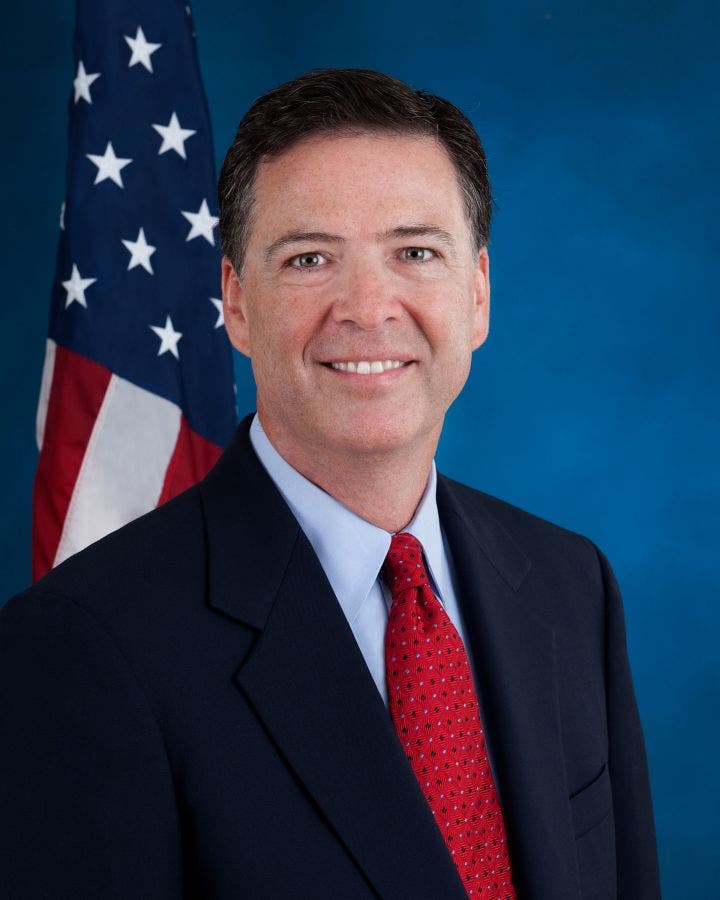
AUSTIN, TX — In his first public appearance since his Congressional testimony, FBI Director James Comey spoke at the University of Texas at Austin on a range of issues related to counterintelligence, but stopped short of commenting about his agency's probes into both Hillary Clinton and Donald Trump.
After his remarks as part of the Intelligence Studies Project at UT-Austin, a doctoral student asked Comey if his agency's protocol had changed after his announcement in October about the FBI probe into Clinton's use of a private email server — an unusual move for an agency that typically doesn't comment on ongoing investigation that some observers believe cost Clinton the election. On Monday during a Congressional hearing, Comey acknowledged the FBI is investigating ties between Trump's political team and Russia during the election.
"I'm not going to talk about it," Comey said cheerfully as audience members burst into spontaneous laughter. "If you didn't get enough of me on Monday...." he added in reference to the earlier hearing before Congress.
Find out what's happening in Austinfor free with the latest updates from Patch.
Comey kept his remarks to a general overview of key national security challenges facing the U.S. intelligence community and law enforcement agencies in detecting and disrupting terror attacks inside the U.S.
Those hoping he'd address the ongoing probe into Trump's alleged Russia ties or an explanation about why he chose to disclose his agency's probe of Clinton's emails shortly before the general election were left disappointed. Comey also didn't expound on Trump's false claim that President Barack Obama wiretapped his office in the Trump Tower, having already debunked the assertion during the Congressional hearing.
Find out what's happening in Austinfor free with the latest updates from Patch.
In Austin, Comey said the FBI is investigating roughly 1,000 cases of potential terrorists living in the U.S., a revelation coming a day after a terrorist attack in London that killed three people. While hoping nothing bad occurs within the U.S., he said the likelihood for domestic attacks lingers and categorized that reality as "the thing that keeps me up at night that fuels the charge of “How do we spot them and stop them as they flow out, bent on continuing the global jihad."
Despite his charge to root out terrorist plots, Comey spoke about the need for restraint in an age where privacy has become a touchstone issue. He thanked those who represent "a pain in the neck" to his agency for providing necessary oversight in agency machinations.
"I care deeply about constraint and oversight," Comey said, noting his own penchant for privacy. As an example, he alluded to his Instagram account that has a mere nine followers, the most recent addition being his daughter's boyfriend recently added because the relationship has been deemed a serious one, he joked.
To illustrate the importance of oversight, Comey alluded to the October 1963 application by his predecessor, FBI Director J. Edgar Hoover, to "bug and wiretap" Martin Luther King, Jr. that was approved by then-Attorney General Robert F. Kennedy. "I'm not bashing Hoover or Kennedy," Comey said, but offered the approved application for surveillance as a cautionary tale against such overreach.
Comey said he keeps that application on the right corner of his glass-surfaced desk as a daily reminder of the slippery slope of overzealous surveillance. Under glass, the application occupies the part of his desk where he places stacks of applications to a special court when electronic surveillance is required, the first part of an arduous process to gain approval for such tactics under the Foreign Intelligence Surveillance Act that Congress passed in the aftermath of Hoover's spying of the civil rights leader.
"The thickness of those FISA applications represents in living color what that constraint looks like," Comey said. "We need to be constrained. We have awesome power to do good in the FBI, but if we fall in love with our own virtue, we can go sideways."
He posited the thickness of those FISA request stacks to the thin application from more than half a century ago as a sign of progress, drawing a contrast to the restraints under which he performs his work today.
The "Intelligence in Defense of the Homeland" symposium organized by the Etter-Harbin Alumni Center came at a time when Trump has voiced distrust of the intelligence community.
Comey's appearance was a do-over of sorts for the director, who was scheduled to speak at last week's SXSW conference before dropping out. During a discussion moderated by Clements Center for National Security executive director William Inboden that followed his formal remarks, Comey joked that he directed his last-minute replacement at SXSW, FBI general counsel James Baker, to be "criminally bland."
>>> Photo of FBI Director James Comey courtesy of SXSW
Get more local news delivered straight to your inbox. Sign up for free Patch newsletters and alerts.