Miracle care
In early April 2022, Ritha Cain had a doctor's appointment at Ascension Seton Medical Center Austin’s Medical Park Tower. Ritha was going in for a routine cardiology visit, and she was joined by her son and daughter-in-law. For Ritha, it was just a normal day.
A nurse came in to take her blood pressure. It was also normal. However, while waiting for the doctor, Ritha noticed a change in her body. The room started spinning, she smelled something foul, began having trouble seeing out of one eye, and the right side of her face was drooping. She couldn’t get out any words.
The doctor was called and immediately entered the room. He determined she was having a stroke and called 911.
Luckily, she was right next door to Ascension Seton Medical Center Austin, a Comprehensive Level 1 Stroke Center. In less than 20 minutes, Ritha was in surgery for her stroke. Immediately after surgery, Ritha said she was back to herself and feeling fine. She went home five days later.
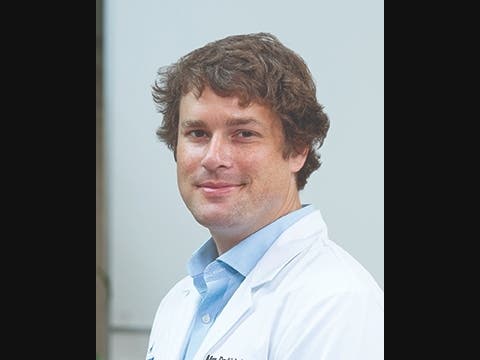
“Ritha was experiencing a major brainstem stroke with a very important blood vessel, the basilar artery, blocked by a blood clot,” said Dr. Matthew Padrick. “Luckily we were able to safely and effectively treat her in a timely manner with both the clot busting medication and a special procedure to mechanically remove the clot.”
“It was a miracle that I was able to get care so quickly,” said Ritha. And doctors agree.
“There are few treatments in medicine that can have such dramatic, immediate effects as we see with well orchestrated acute stroke care. Ritha's speech on arrival was nearly unintelligible, her eyes were looking in different directions, and she was having difficulty moving her arms and legs. A few hours later, she was back to her normal self as if nothing had happened,” said Dr. Padrick.
Time is brain
Research shows that accelerated care for stroke is associated with better outcomes for the patient. The faster doctors get 'clot busting' medication to the patient, the greater chance they have to reduce the burden of stroke and help patients return to their regular daily activities.
Ritha’s case is considered the “gold standard.” She received stroke care in less than thirty minutes, at approximately 14 minutes. This is a result of consistent process improvement at Ascension Seton Medical Center Austin, drilling down on every part of the process of the patient’s stroke care.
Ascension Seton Medical Center Austin Hospital in Austin, Texas, is a full-service hospital with 24/7 emergency care and Comprehensive Level 1 Stroke Center. ASMCA has also been awarded the Gold Plus Level Performance Award from the American Heart Association – Get with the Guidelines Program for providing advanced stroke care.
More information about stroke:
Find out what's happening in Austinfor free with the latest updates from Patch.
- Each year approximately 795,000 people experience a new or recurrent stroke. Each year more females than males have a stroke.
- In 2019 stroke accounted for approximately 1 in 19 deaths in the United States.
- In 2019 someone died of a stroke every 3 minutes in the United States.
Know the signs and symptoms of stroke:
BE FAST is a simple phrase to help quickly identify the warning signs and symptoms of a stroke.
Balance - Sudden dizziness, loss of balance or coordination
Eyes - Sudden change in vision
Face - Facial drooping or weakness on one side, uneven smile
Arm - Sudden arm or leg weakness or numbness, typically on one side of the body
Speech - Sudden slurred speech, trouble speaking or trouble understanding speech
Time to call 9-1-1 if the person shows any of the symptoms outlined above. Even if the symptoms improve or resolve, it is still important to call 9-1-1 to get to a hospital immediately. Time is brain. The faster a stroke is diagnosed and treated, the greater likelihood of a positive outcome.
Find out what's happening in Austinfor free with the latest updates from Patch.
Additional symptoms of stroke may include: sudden confusion or sudden severe headache with no known cause.