Politics & Government
Hundreds In Austin Cram Hearing On Proposed Senate Bill 4 Seeking To Ban 'Sanctuary Cities'
Conservative lawmakers are aggressively seeking to deport undocumented immigrants while many call for a more humane approach to the issue.


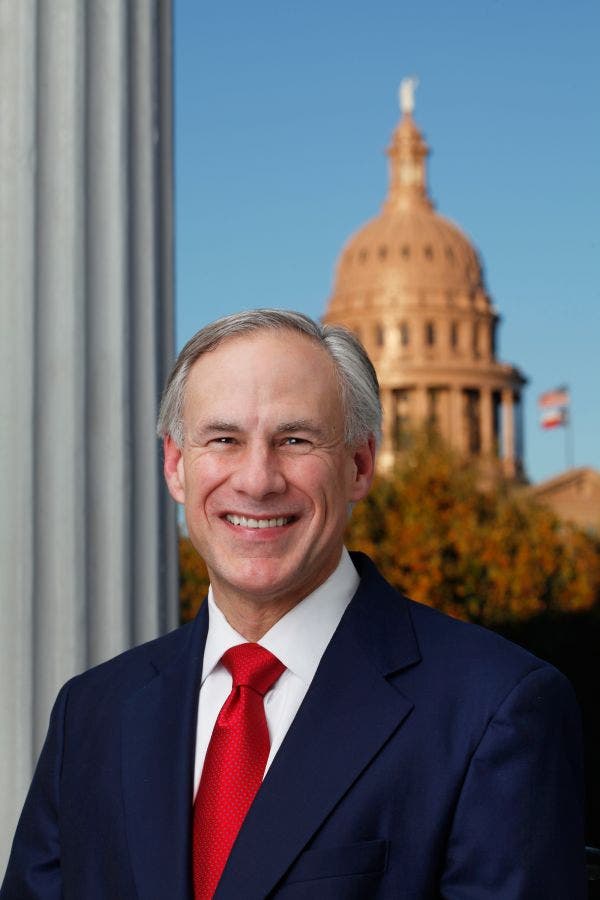
AUSTIN, TX — Thanks largely to GOP Gov. Greg Abbott's strident opposition to the idea of undocumented immigrants living in Texas, immigration has become a polarizing issue in the state. One need only to see attendance levels at the State Affairs Committee hearing on Senate Bill 4 — where more than 450 have crammed into the chamber after signing up to air their view on the matter — to gauge the polarizing nature of the debate.
SB 4 seeks to ban so-called "sanctuary cities" in Texas, areas deemed by lawmakers as offering a refuge of sorts to the undocumented by not forcefully pursuing their deportation. Abbott has called for local law enforcement agencies to essentially work in tandem with federal Immigration, Customs and Enforcement officials in helping deport residents without legal papers to live in the state.
To accomplish this, participating cities honor detainer requests from ICE, holding people who have been arrested for up to 48 hours without the need for warrants if they're suspected of being in the country illegally. If caught on weekends or holidays, such detentions are for 72 hours or more to give enough time for immigration officials to come to town and fetch the detained and begin deportation proceedings.
Find out what's happening in Austinfor free with the latest updates from Patch.
Former sheriff Greg Hamilton was an enthusiastic supporter of the joint effort with ICE, vaulting the county as one of the most prolific de facto immigration agencies. But new Sheriff Sally Hernandez has come under the crosshairs of the governor, who this week cut off county $1.5 million in grants funding — affecting myriad agencies with work unrelated to law enforcement — as a punitive measure against the sheriff and her more nuanced approach to local immigration policy enforcement.
Travis County Judge Sarah Eckhardt wrote to Abbott in a quest to persuade him on rethinking his threat to cut off grant funding countywide in response to his disagreement with Hernandez, detailing the impact the blocked monies would have on county functions. Her concerns went unheeded, as the governor directed an underling to write back disputing the judge's assertions.
Find out what's happening in Austinfor free with the latest updates from Patch.
SB 2 has now emerged as further cudgel aimed at compelling enforcement, its force fueled by Abbott's strict stance. By some measures, the proposed bill is further strengthened by the tone of the Trump administration, whose president also have voiced intention to crack down on immigration — particularly his recently enacted ban on travel into the U.S. by those from countries of largely Muslim populations and his intentions to build a physical wall along the U.S. southern border with Mexico.
The debate has pitted those intent on mass deportations against others seeking a more humane approach to dealing with families living in their midst lacking proper documentation. Examples of the latter group were seen this week as hundreds flowed into the First English Lutheran Church in central Austin in urging less forceful methods of enforcement against a group many point to as the backbone of the local economy, given a willingness among many immigrants to take on jobs (construction, housekeeping and the like) native residents are averse to performing.
Abbott — whose wife of more than 30 years is herself the granddaughter of Mexican immigrants — has never been shy about tinging his policies aimed at a woman's right to choose with a religious brush. Tweets and other missives from the governor and his allies often contain Biblical passages as part of their stated aim toward legislation.
At his "state of the state" address this week for example, the governor brought along Cardinal Daniel DiNardo, president of the United States Conference of Catholic Bishops. The bishop was there to illustrate Abbott's mission of forcing through legislation the burial or cremation of fetal remains as an offshoot of his "sanctity of life" political agenda in calling for support on an unrelated proposed law.
"Your Eminence, I commend your commitment to protecting the unborn," Abbott said as part of his address. Thanks to you and the bishops of Texas for showing respect for the unborn by offering to bury fetal remains at no cost. It demonstrates the dignity and reverence that every child’s life deserves."
Ironically, immigrant advocates are also now using similar themes in calling for a more welcoming environment for those who happen to be living here undocumented. By luck of the draw, the very first speaker signed up to speak before the State Affairs Committee hearing on SB 4 symbolizes the approach by those at odds with the governor's stance. Bishop Joe Vásquez of the Catholic Diocese of Austin took to the lectern to address the crowd as the first of a very long line of speakers.
“Immigration law should be enforced in a way that’s targeted, proportional, humane. … Federal agents should focus upon those who are truly threatening to public society,” he said, as quoted by the Austin American-Statesman. “Each of you has responded to God’s call to serve his people. … We answer this same call as we work with immigrants who show us the face of Christ.”
Given the religious prism utilized by both sides depending on the issue at hand, the latest skirmish in the culture wars has taken on characteristics of a holy war. Only time will tell which ideal will emerge as the template for local immigration enforcement. But for now — as evidenced by the long queue of people waiting to air their views at the local hearing — it appears it's going to be a long, divisive fight.
>>> Official photo of Gov. Greg Abbott above
Get more local news delivered straight to your inbox. Sign up for free Patch newsletters and alerts.