Politics & Government
Judge Blocks Austin Plastic Gun Maker From Publishing Blueprints
Citing the threat to public safety, U.S. District Judge in Seattle deals a blow to Texas-based Defense Distributed seeking to publish plans.


AUSTIN, TEXAS — A federal judge on Monday blocked an agreement by the U.S. State Department allowing an Austin-based company to publish blueprints online teaching others how to make plastic guns with 3-D printers.
Citing potential danger the the public, U.S. District Judge Robert Lasnick noted in his order that wide availability of the 3D-printed gun blueprints online would jeopardize the “...peace and security of the communities where these guns proliferate," as Vox and other reported. The ban is to stay in place until the matter ultimately is resolved in court.
The judge added: “A gun made from plastic is virtually undetectable in metal detectors and other security equipment intended to promote public safety at airports, sporting events, courthouses, music venues and government buildings.”
Find out what's happening in Austinfor free with the latest updates from Patch.
The ruling is seen as a victory for the 19 states that argued the blueprints' publication yielded a danger to the public and national security. The order extends a July 31 temporary restraining order the judge had issued to block release of the plans.
Cody Wilson, owner of the company Defense Distributed, has fought to have his blueprints published while framing objections as a violation of free speech. He remained defiant in the wake of Monday's ruling, telling the Austin American-Statesman the judge's decision contained "farcical elements" ripe for exploitation.
Find out what's happening in Austinfor free with the latest updates from Patch.
Wilson vowed to appeal the ruling. Late Monday, he announced via Twitter of his plans to stage a press conference detailing his response to the court ruling, an effort he's dubbed "Operation Integral Accident." The event is scheduled on Tuesday at the Fairmont Hotel in downtown Austin, 101 Red River St.
I am hosting a press conference at the Austin Fairmont at 11am CDT tomorrow. The subject is Operation Integral Accident.
— (@Radomysisky)Aug 27 2018
“It just demonstrates how the slippery the slope is here," Wilson told the newspaper, referencing the freedom-of-speech nuance to publishing the blueprints. He added the ruling is "... really (about) my motivations, what I want to accomplish, which are the reasons why I’m permitted to be silenced.”
The judge noted the free-speech limitations innate to his ruling, but suggested they were trumped over the potential harm publishing the blueprints might bring.
“The court finds that the irreparable burdens on the (Wilson’s) First Amendment rights are dwarfed by the irreparable harms the states are likely to suffer if the existing restrictions are withdrawn,” Lasnik wrote in his order.
Moreover, the judge noted the widespread availability of technical data to make the plastic guns could put firearms in the hands of those prohibited from owning or using traditional weapons. What's more, the lack of serial numbers on the 3-D guns — identifiers required of traditional gun makers — could frustrate police investigations of crimes committed with their use given their untraceable nature.
“Guns that have no identifying information, guns that are undetectable and guns that thwart the use of standard forensic techniques to link a particular projectile to a particular weapon will hamper law enforcement efforts to prevent and/or investigate crime,” Lasnik wrote.
Get Patch's Daily Newsletters and Real Time Alerts
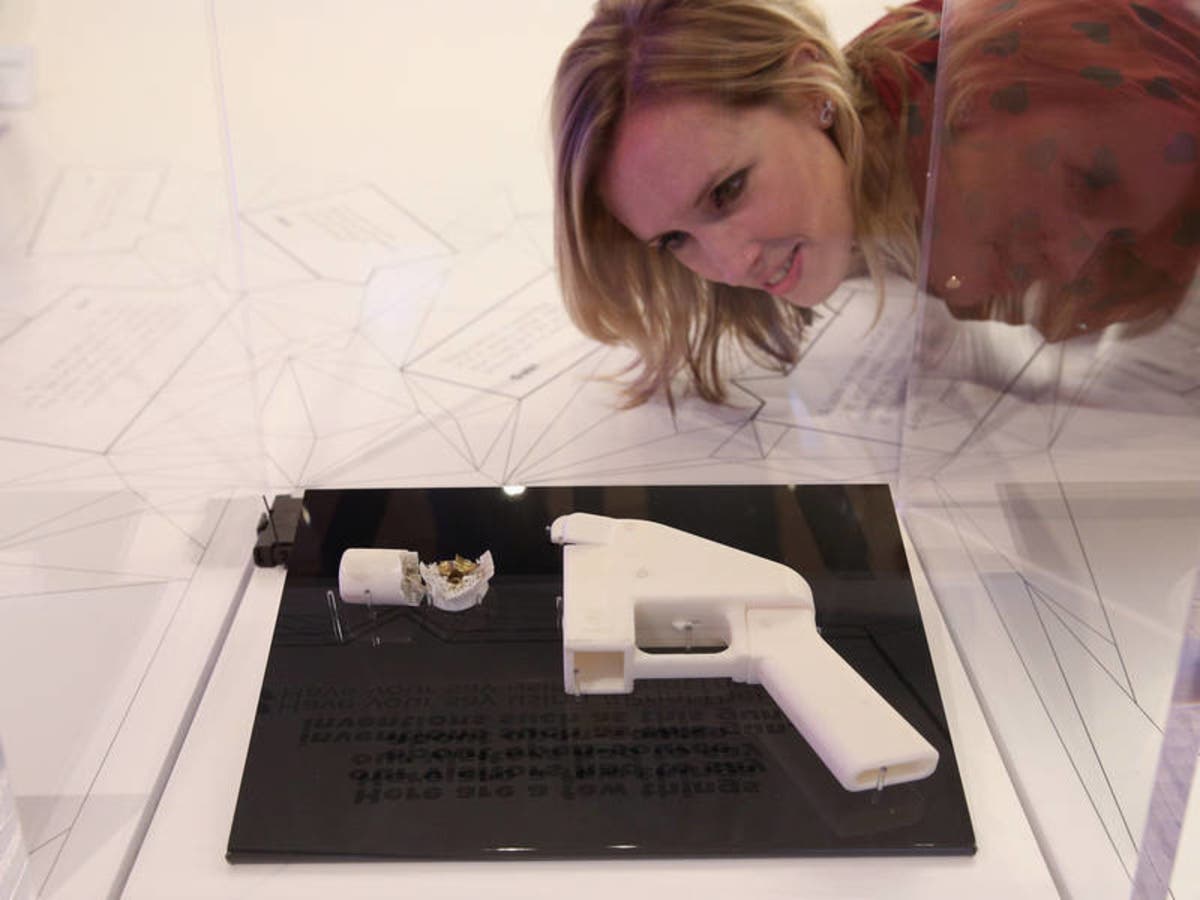
>>> Top image: A woman admires a 3D printed handgun created by Finnish journalist Ville Vaarne that was displayed in the exhibition '3D: printing the future' at the Science Museum on Oct. 8, 2013, in London, England. Photo by Oli Scarff/Getty Images
Get more local news delivered straight to your inbox. Sign up for free Patch newsletters and alerts.