Crime & Safety
'Open Carry' Laws Under Scrutiny After Dallas, Baton Rouge Police Killings
In Dallas, people toting rifles to express 2nd Amendment rights added chaos, confusion to scene; after Baton Rouge, law's perils showcased.


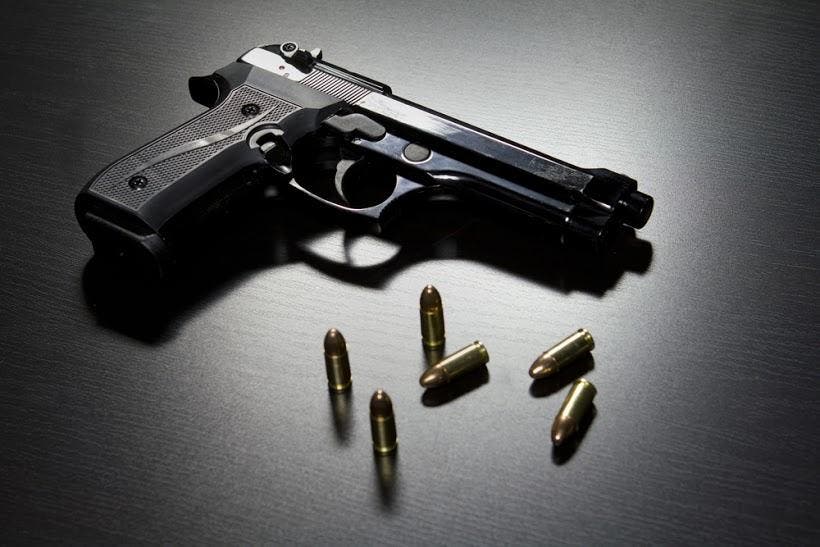
Austin, TX — The July 7 shooting deaths of five policemen by a gunman in Dallas gave rise to criticism of the state's "open carry" law enacted this year, which allows licensed gun owners to openly display their weapons as a show of their Second Amendment rights. With the latest killing of three more cops in Baton Rouge, Louisiana, on Sunday, such criticism has intensified.
The massacre of police in Dallas prompted that city's mayor, Mike Rawlings, to publicly question the "open carry" law in Texas that went into effect Jan. 1. Despite mounting opposition to the idea of allowing gun owners to walk around with their firearms, the law championed by GOP lawmakers went into effect at the stroke of midnight the first day of 2016.
"It's logical to say that in a shooting situation, open carry can be detrimental to the safety of individuals," Rawlings said after the July 7 shooting, as quoted in the Dallas Morning News. At the time of the Texas shootings that took the lives of five officers, police were protecting a crowd that was, ironically enough, protesting a string of killings by police of black suspects throughout the country.
Find out what's happening in Austinfor free with the latest updates from Patch.
Some of those protesters carried firearms per "open carry" in a dramatic display of their right to bear arms. But reports have surfaced that police initially were confused as to where the shots were coming from given the presence of gun-toting protesters.
Some 20 individuals in "ammo gear and protective equipment and rifles slung over their shoulder" participated in the Black Lives Matter rally turned deadly, Rawlings told the Dallas Morning News. When the shooting began, officers immediately trained their sights on those gun-carrying protesters, who were subsequently detained and questioned as the shooting incident unfolded.
Find out what's happening in Austinfor free with the latest updates from Patch.
"When the shooting started, at different angles, they started running," Rawlings said. "We started catching."
The detention of "open carry" practitioners at the scene proved to add confusion to an already chaotic scene, Rawlings suggested. In the end, the cop killings were the work of a single gunman not affiliated with the BLM movement.
Dallas police Maj. Max Geron buttressed the mayor's assertions of confusion created from the presence of weapons-donning protesters availing themselves of "open carry" to show off their weapons.
"There was also the challenge of sorting out witnesses from potential suspects," Geron told the Dallas Morning News. "Texas is an open carry state, and there were a number of armed demonstrators taking part. There was confusion on the radio about the description of the suspects and whether or not one or more was in custody."
President Barack Obama alluded to the perils of "open carry" in his remarks immediately following the Dallas ambush of police. He cut his trip to Poland — where he was attending a NATO conference — to prepare for his trip to Texas to meet with officials and visit with family members of the fallen officers.
"If you care about the safety of police officers, then you can't set aside the gun issue and pretend that's irrelevant," Obama said from Poland.
Later, at a memorial for the fallen Dallas officers, the president praised the restraint of police in quelling the shooting despite the presence of armed protesters that could have been confused as shooters.
"When the bullets started flying, the men and women of the Dallas Police Department did not flinch and did not react recklessly," the president said. "They showed incredible restraint, and saved more lives than we will ever know. We mourn fewer people today because of your brave actions."
GOP lawmakers in Texas pushed aggressively for passage of the "open carry" law. In the months leading up to the law, Republican Gov. Greg Abbott urged more Texans to buy guns as a show of their Second Amendment rights, noting California was ahead of Texas in gun acquisitions.
I'm EMBARRASSED: Texas #2 in nation for new gun purchases, behind CALIFORNIA. Let's pick up the pace Texans. @NRA https://t.co/Ry2GInbS1g
— Greg Abbott (@GregAbbott_TX) October 28, 2015
But the "open carry" provision once so enthusiastically championed is attracting greater scrutiny and criticism in light of the latest police shooting in Baton Rouge. This Sunday, after the killing of three more police officers in Louisiana — another "open carry" state — the potential perils of the gun-carry law are being spotlighted with heightened urgency.
Coming the day before the Republican National Convention in Cleveland, the latest police massacre has prompted some to ask the governor to temporarily suspend Ohio's "open carry" provisions there. RNC officials have invited attendees to bring their guns as a show of their 2nd Amendment rights.
"We are sending a letter to Gov. Kasich requesting assistance from him," Stephen Loomis, president of Cleveland Police Patrolmen's Association, told CNN on Sunday. "He could very easily do some kind of executive order or something — I don't care if it's constitutional or not at this point. They can fight about it after the RNC or they can lift it after the RNC, but I want him to absolutely outlaw open carry in Cuyahoga County until this RNC is over."
Ohio Gov. John Kasich subsequently rejected the request.
In an appearance on "Face the Nation," Rawlings later expounded on his assertion that an abundance of "open carry" practitioners at the downtown rally on July 7 added a layer of unneeded confusion to the mix as police tried to assess the situation at hand.
“You know, in dealing with the law of gun holding, you can carry a rifle legally, and when you have gunfire going on, you usually go with the person that’s got a gun," Rawlings said. "And so our police grabbed some of those individuals, took them to police headquarters, and worked it out and figured out that they were not the shooters.
“But that is one of the real issues with the gun right issues that we face, that in the middle of a firefight, it’s hard to pick out the good guys and the bad guys.”
Dallas may have proved a testing ground — a grim one, but a testing site nonetheless — for the idea espoused by "open carry" proponents predicating their support of having the presence of a "good guy with a gun" in the midst of a shooter intent on nefarious actions.
Sadly, no "good guy with a gun" emerged in Dallas to save the day, even with their weapons at the ready in an "open carry" environment. Ultimately, police had to deploy a bomb-affixed robotic device to take the gunman out in the building to which he retreated.
Now, members of the "good guy with a gun" crowd seem to be putting aside that mantra in light of recent shooting events in "open carry" states. C.J. Grisham, president of Open Carry Texas, has altered such messaging given that a "good guy with a gun" scenario he and his followers all but promised would emerge in times of danger didn't materialize — either in in Texas or Louisiana.
"If you can't identify a threat, you shouldn't be wearing a uniform," he told the Dallas Morning News, referring to police at each scene. "It's not that difficult to tell the difference between a bad actor and a good actor. The good guys are going to obey commands, the bad guys are not."
Get more local news delivered straight to your inbox. Sign up for free Patch newsletters and alerts.