Crime & Safety
President Obama Honors Fallen Dallas Officers at Memorial Service [UPDATED]
"If we cannot even talk about these things honestly and openly...we will never break this dangerous cycle," Obama said.


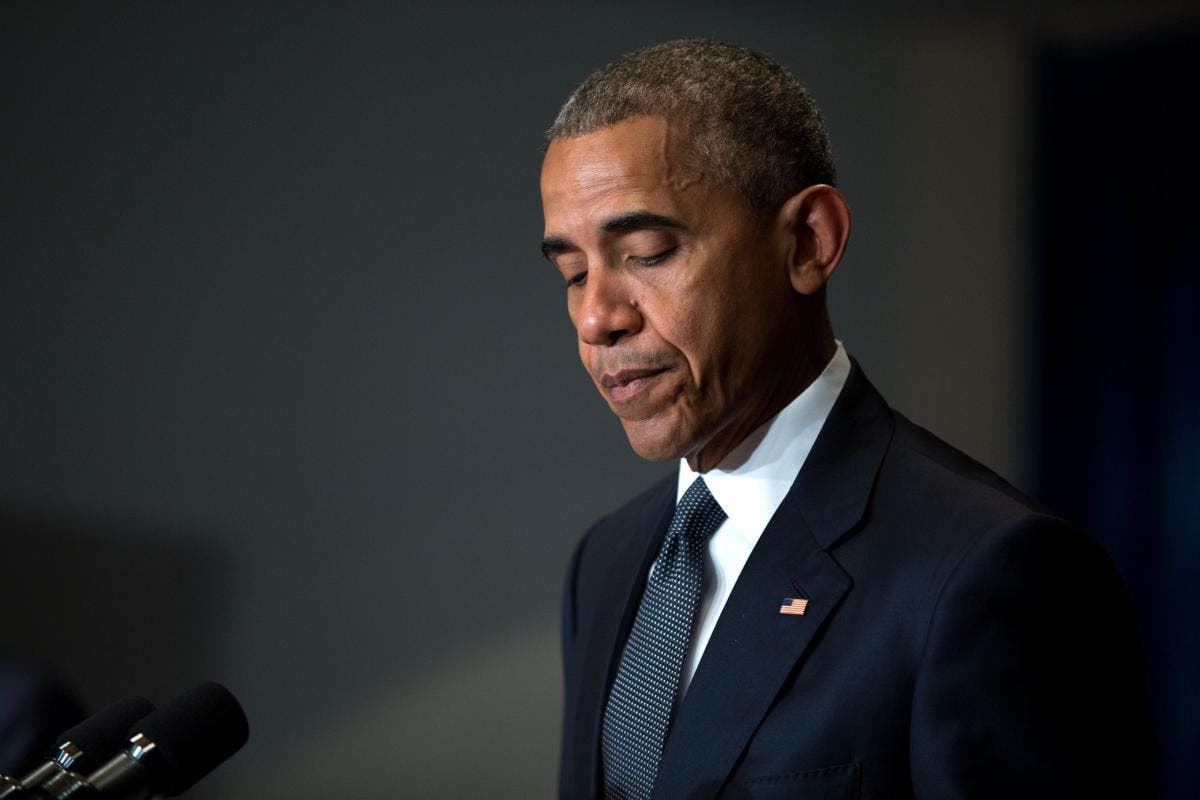
Dallas, TX — President Barack Obama on Tuesday addressed a gathering at an interfaith memorial service in Dallas for the five officers killed last week in the line of duty at the hands of a gunman.
In honoring the Dallas officers killed — Brent Thompson, Lorne Ahrens, Patrick Zamarripa, Michael J. Smith and Michael Krol — he shared poignant stories of each one.
"The day before he died, he bought dinner for a homeless man," the president said of Ahrens. "And the next night, his wife had to tell their children that their dad was gone. They don't get it, their grandma said; they don't know what to do quite yet."
Find out what's happening in Across Americafor free with the latest updates from Patch.
He praised the officers for the manner in which they protected the crowds in Dallas that had taken to the streets in protest — protecting them even while knowing the throngs were rallying against perceived police overreach in the killings of black men.
"These men and their families shared a commitment to something larger than themselves," he said.
Find out what's happening in Across Americafor free with the latest updates from Patch.
Obama also marveled at the restraint of the officers ultimately able to isolate and neutralize the gunman without inadvertently causing further loss of life in the exchange of gunfire. "When the bullets started flying, the men and women of the Dallas Police Department did not flinch and did not react recklessly," the president said. "They showed incredible restraint, and saved more lives than we will ever know. We mourn fewer people today because of your brave actions."
Obama alluded to the chaos of that day in Dallas, heightening his admiration for the police officers' actions in protecting the crowds. Dallas Mayor Mike Rawlings has publicly stated the abundance of people toting weapons in expressing their 2nd Amendment rights — which they are able to do since the advent of the state's "Open Carry" legislation enacted on Jan. 1 — added confusion to the mix as police initially struggled to identify who was shooting.
In his remarks, Obama deftly struck a tone between hope and despair, between grief and accountability on both sides of a social spectrum that often pins the public against the police. Yet even in a crowd largely comprising members of law enforcement and their families, his remarks were interrupted several times with spontaneous bursts of applause and standing ovations even in the midst of confronting hard truths.
"All of it has left us wounded, and angry, and hurt," he said of the July 7 shootings in Dallas. "It’s as if the deepest fault lines of our democracy have been exposed."
Yet even in light of the seemingly intractable divisions, Obama effectively called for wisdom to be mined from the grief felt on both sides of the equation.
"I believe our sorrow can make us a better country," he said. "I believe our righteous anger can be transformed into more justice and more peace."
He pointed to the city of Dallas as a beacon shedding light on the virtues of strength and perseverance amid tragedy that yields a model for all. "I’m here to say we must reject such despair," he told those gathered. "I’m here to insist that we are not as divided as we seem.”
While honoring the fallen officers, the president didn't shy away from addressing the recent deaths of two black men by police that are thought to have sparked the gunman's attack. In his social media posts, the officer's killer, Micah Xavier Johnson, alluded to the shootings of black men in Louisiana and Minnesota as among the sources of his rage.
“For even those who dislike the phrase Black Lives Matter should be able to hear the pain of Alton Sterling’s family," he said, referring to fatal shooting of a black man in Baton Rouge, Louisiana, while selling CDs outside a convenience store.
He also referenced Philando Castille in Minnesota, killed by a cop while he was reaching for his back pocket for the requested ID. Obama noted the dead young man was known as a "Mr. Rogers with dreadlocks," given his gentle nature.
Obama also touched on the ease of obtaining weapons that result in such tragedies as that of the fallen officers, alluding to a gunman who was able to secure military-style weaponry and tactical gear that enabled his carnage despite red flags in his background.
"We flood communities with so many guns that it is easier for a teenager to by a Glock than to get his hands on a computer," he said.
In light of distrust on both sides of the equation, each must exercise empathy for the other, he said. "Can we see in each other a common humanity, a shared dignity, and recognize how our different experiences have shaped us?
“Can we do this? Can we find the character, as Americans, to open our hearts to each other?”
He went further in his calls for empathy and understanding, evoking the imagery of each side of the growing division between police and some members of the African American community.
“Maybe the police officer sees his own son in that teenager with a hoodie who’s kinda goofing off, but not dangerous,” the president said. “And maybe the teenager will see in the police officer the same words and values and authority as his parents.”
The president was joined at the interfaith service by First Lady Michelle Obama and Vice President Joe Biden and his wife, Jill Biden. His predecessor, George W. Bush, also was in attendance with his wife, Laura Bush.
The White House also announced on Tuesday it would live stream Obama's remarks. To watch the full video of the president's remarks in Dallas, click here.
Today, @POTUS and @VP met with law enforcement leaders ahead of their trip to Dallas: https://t.co/ZBlNBFfMln pic.twitter.com/WVfUBmcTBy
— The White House (@WhiteHouse) July 11, 2016
The Dallas memorial service marks the 11th time Obama has had to assuage grief in the wake of a mass shooting — his unofficial role of consoler-in-chief becoming all too painfully common. He last addressed a mass shooting last month, a massacre coming a month to the day from his remarks today, when 49 innocents were killed by a gunman at an Orlando nightclub.
He called for unity in the midst of prevailing — and deepening — divisions: "Can we see in each other a common humanity, a shared dignity, and recognize how our different experiences have shaped us?"
Since 2009, there have been at least 17 mass shootings while Obama has been in office. After most of those tragedies, the president has had to step up to help ameliorate grief and anxiety by offering remarks to an anxious public.
“Another community torn apart; more hearts broken; more questions about what caused, and what might prevent, another such tragedy," Obama said.
"I've had to speak at too many memorials since my presidency," he said. "I've hugged too many families who've lost a loved one to violence."
Excluding the aforementioned Dallas and Orlando, here is a partial list of mass shootings that have occurred since Obama took office, after which he's made public remarks 11 times since:
- Newtown, Connecticut, 27 dead (including gunman), Dec. 14, 2012
- Minneapolis, Minnesota, 7 dead (including the gunman), 2 injured, Sept. 27, 2012
- Oak Creek, Wisconsin, 7 dead (including gunman), 4 injured, Aug. 5, 2012
- Aurora, Colorado, 12 dead, 59 injured, July 20, 2012
- Seattle, Washington, 6 dead, May 31, 2012
- Oakland, California, 7 dead, April 2, 2012
- Norcross, Georgia, 5 dead (including gunman), Norcross, Ga.
- Seal Beach, California, 8 dead, 1 injured, Oct. 12, 2011
- Tucson, Arizona, 6 dead, 14 injured, Jan. 8, 2011
- Manchester, Connecticut, 9 dead (including gunman), Aug. 3, 2010
- Parkland, Washington, 5 dead (including gunman), Nov. 29, 2009
- Fort Hood, Texas, 13 dead, 30 injured (including gunman), Nov. 5, 2009
- Binghamton, New York, 14 dead (including gunman), 14 dead, 4 injured, April 3, 2009
- Geneva County, Alabama, 11 dead (including gunman), 6 injured, March 10, 2009
- Carthage, North Carolina, 8 dead, 3 injured (including gunman), March 29, 2009
After the president's remarks, a choir offered a moving rendition of the Battle Hymn of the Republic as Obama and the others on the dais — including Joe and Jill Biden, George and Laura Bush, Obama and the First Lady, the police chief, the city's mayor and others — linked hands as the singers' voices filled their air inside the Morton H. Myerson Symphony Center that served as the site of the memorial service.
Their voices soaring throughout the cavernous symphony hall, members of the Interfaith Choir joined the Dallas Police Choir in song: "I have seen Him in the watch fires of a hundred circling camps/They have builded Him an altar in the evening dews and damps/I can read his righteous sentence in the dim and daring lamps/His day is marching on."
Rawlings delivered remarks ahead of Obama, as did Dallas Police Department Chief David Brown, who introduced the president. Other dignitaries attending included: Fort Worth Mayor Betsey Price (R-TX); Congresswoman Eddie Bernice Johnson (D-TX); Dallas Area Rapid Transit Police Chief J.D. Spiller; Dr. Sheron Patterson; Rabbi Andrew Paley; Imam Omal Suleiman; Sen. John Cornyn (R-TX); Sen. Ted Cruz (R-TX).
Prayers from interfaith leaders came from Patterson of the United Methodist Church of North Texas; Suleiman, resident scholar at the Valley Ranch Islamic Center and founding member of Faith Forward Dallas; and Paley, senior rabbi of Temple Shalom Dallas.
For all the visiting dignitaries present, the ceremony itself was a family affair comprising members of the Dallas community — with about 1,000 officers gathered with parishioners of various churches. Bush — who lives with his family just outside Dallas since leaving the presidency — buttressed that sense of community in his his remarks.
"Today, the nation grieves, but those of us who love Dallas and call it home have had five deaths in the family," Bush said. "Laura and I see members of law enforcement every day. We count them as our friends. And we know, like for every other American, that their courage is our protection and shield."
Like his successor, Bush, too, expressed awe at the officers' actions: "Most of us imagine if the moment called for, that we would risk our lives to protect a spouse or a child. Those wearing the uniform assume that risk for the safety of strangers. They and their families share the unspoken knowledge that each new day can bring new dangers."
Extending that sense of community, the service was attended by members of various parishes, including the Concord Church of Dallas; St. John Baptist Church; Grand Prairies Park Cities Baptist Church; First Presbyterian Church of Dallas; Royal Lane Baptist Church; and Park United Methodist Church.
Image Credit: Official White House Photo by Pete Souza
*****************************************************************************
Full text of President Obama's speech in Dallas, July 12, 2016, below:
Mr. President and Mrs. Bush; my friend, the Vice President, and Dr. Biden; Mayor Rawlings; Chief Spiller; clergy; members of Congress; Chief Brown .
I’m so glad I met Michelle first, because she loves Stevie Wonder -- (laughter and applause) -- but most of all, to the families and friends and colleagues and fellow officers:Scripture tells us that in our sufferings there is glory, because we know that suffering produces perseverance; perseverance, character; and character, hope. Sometimes the truths of these words are hard to see.
Right now, those words test us. Because the people of Dallas, people across the country, are suffering.We’re here to honor the memory, and mourn the loss, of five fellow Americans -- to grieve with their loved ones, to support this community, to pray for the wounded, and to try and find some meaning amidst our sorrow.
For the men and women who protect and serve the people of Dallas, last Thursday began like any other day. Like most Americans each day, you get up, probably have too quick a breakfast, kiss your family goodbye, and you head to work.
But your work, and the work of police officers across the country, is like no other. For the moment you put on that uniform, you have answered a call that at any moment, even in the briefest interaction, may put your life in harm’s way.Lorne Ahrens, he answered that call.
So did his wife, Katrina -- not only because she was the spouse of a police officer, but because she’s a detective on the force. They have two kids. And Lorne took them fishing, and used to proudly go to their school in uniform. And the night before he died, he bought dinner for a homeless man. And the next night, Katrina had to tell their children that their dad was gone. “They don’t get it yet,” their grandma said. “They don’t know what to do quite yet.”
Michael Krol answered that call. His mother said, “He knew the dangers of the job, but he never shied away from his duty.” He came a thousand miles from his home state of Michigan to be a cop in Dallas, telling his family, “This is something I wanted to do.”
Last year, he brought his girlfriend back to Detroit for Thanksgiving, and it was the last time he’d see his family.Michael Smith answered that call -- in the Army, and over almost 30 years working for the Dallas Police Association, which gave him the appropriately named “Cops Cop” award.
A man of deep faith, when he was off duty, he could be found at church or playing softball with his two girls. Today, his girls have lost their dad, for God has called Michael home.
Patrick Zamarripa, he answered that call. Just 32, a former altar boy who served in the Navy and dreamed of being a cop. He liked to post videos of himself and his kids on social media. And on Thursday night, while Patrick went to work, his partner Kristy posted a photo of her and their daughter at a Texas Rangers game, and tagged her partner so that he could see it while on duty.
Brent Thompson answered that call. He served his country as a Marine. And years later, as a contractor, he spent time in some of the most dangerous parts of Iraq and Afghanistan. And then a few years ago, he settled down here in Dallas for a new life of service as a transit cop. And just about two weeks ago, he married a fellow officer, their whole life together waiting before them.
Like police officers across the country, these men and their families shared a commitment to something larger than themselves. They weren’t looking for their names to be up in lights. They’d tell you the pay was decent but wouldn’t make you rich. They could have told you about the stress and long shifts, and they’d probably agree with Chief Brown when he said that cops don’t expect to hear the words "thank you" very often, especially from those who need them the most.
No, the reward comes in knowing that our entire way of life in America depends on the rule of law; that the maintenance of that law is a hard and daily labor; that in this country, we don’t have soldiers in the streets or militias setting the rules.
Instead, we have public servants -- police officers -- like the men who were taken away from us.And that’s what these five were doing last Thursday when they were assigned to protect and keep orderly a peaceful protest in response to the killing of Alton Sterling of Baton Rouge and Philando Castile of Minnesota. They were upholding the constitutional rights of this country.
For a while, the protest went on without incident. And despite the fact that police conduct was the subject of the protest, despite the fact that there must have been signs or slogans or chants with which they profoundly disagreed, these men and this department did their jobs like the professionals that they were. In fact, the police had been part of the protest’s planning. Dallas PD even posted photos on their Twitter feeds of their own officers standing among the protesters. Two officers, black and white, smiled next to a man with a sign that read, “No Justice, No Peace.”And then, around nine o’clock, the gunfire came. Another community torn apart. More hearts broken. More questions about what caused, and what might prevent, another such tragedy.I know that Americans are struggling right now with what we’ve witnessed over the past week. First, the shootings in Minnesota and Baton Rouge, and the protests, then the targeting of police by the shooter here -- an act not just of demented violence but of racial hatred.
All of it has left us wounded, and angry, and hurt. It’s as if the deepest fault lines of our democracy have suddenly been exposed, perhaps even widened. And although we know that such divisions are not new -- though they have surely been worse in even the recent past -- that offers us little comfort.Faced with this violence, we wonder if the divides of race in America can ever be bridged.
We wonder if an African-American community that feels unfairly targeted by police, and police departments that feel unfairly maligned for doing their jobs, can ever understand each other’s experience. We turn on the TV or surf the Internet, and we can watch positions harden and lines drawn, and people retreat to their respective corners, and politicians calculate how to grab attention or avoid the fallout.
We see all this, and it’s hard not to think sometimes that the center won't hold and that things might get worse.I understand. I understand how Americans are feeling. But, Dallas, I’m here to say we must reject such despair. I’m here to insist that we are not as divided as we seem.
And I know that because I know America. I know how far we’ve come against impossible odds. (Applause.) I know we’ll make it because of what I’ve experienced in my own life, what I’ve seen of this country and its people -- their goodness and decency --as President of the United States.
And I know it because of what we’ve seen here in Dallas -- how all of you, out of great suffering, have shown us the meaning of perseverance and character, and hope.
When the bullets started flying, the men and women of the Dallas police, they did not flinch and they did not react recklessly. They showed incredible restraint. Helped in some cases by protesters, they evacuated the injured, isolated the shooter, and saved more lives than we will ever know. (Applause.)
We mourn fewer people today because of your brave actions. (Applause.) “Everyone was helping each other,” one witness said. “It wasn’t about black or white. Everyone was picking each other up and moving them away.”
See, that’s the America I know.The police helped Shetamia Taylor as she was shot trying to shield her four sons. She said she wanted her boys to join her to protest the incidents of black men being killed. She also said to the Dallas PD, “Thank you for being heroes.” And today, her 12-year-old son wants to be a cop when he grows up. That’s the America I know. (Applause.)
In the aftermath of the shooting, we’ve seen Mayor Rawlings and Chief Brown, a white man and a black man with different backgrounds, working not just to restore order and support a shaken city, a shaken department, but working together to unify a city with strength and grace and wisdom. (Applause.) And in the process, we've been reminded that the Dallas Police Department has been at the forefront of improving relations between police and the community. (Applause.)
The murder rate here has fallen. Complaints of excessive force have been cut by 64 percent. The Dallas Police Department has been doing it the right way. (Applause.) And so, Mayor Rawlings and Chief Brown, on behalf of the American people, thank you for your steady leadership, thank you for your powerful example. We could not be prouder of you. (Applause.)
These men, this department -- this is the America I know. And today, in this audience, I see people who have protested on behalf of criminal justice reform grieving alongside police officers. I see people who mourn for the five officers we lost but also weep for the families of Alton Sterling and Philando Castile.
In this audience, I see what’s possible -- (applause) -- I see what's possible when we recognize that we are one American family, all deserving of equal treatment, all deserving of equal respect, all children of God. That’s the America that I know.
Now, I'm not naïve. I have spoken at too many memorials during the course of this presidency. I’ve hugged too many families who have lost a loved one to senseless violence. And I've seen how a spirit of unity, born of tragedy, can gradually dissipate, overtaken by the return to business as usual, by inertia and old habits and expediency.
I see how easily we slip back into our old notions, because they’re comfortable, we’re used to them. I’ve seen how inadequate words can be in bringing about lasting change. I’ve seen how inadequate my own words have been. And so I’m reminded of a passage in *John’s Gospel [First John]: Let us love not with words or speech, but with actions and in truth.
If we’re to sustain the unity we need to get through these difficult times, if we are to honor these five outstanding officers who we’ve lost, then we will need to act on the truths that we know. And that’s not easy. It makes us uncomfortable. But we’re going to have to be honest with each other and ourselves.
We know that the overwhelming majority of police officers do an incredibly hard and dangerous job fairly and professionally. They are deserving of our respect and not our scorn. (Applause.) And when anyone, no matter how good their intentions may be, paints all police as biased or bigoted, we undermine those officers we depend on for our safety.
And as for those who use rhetoric suggesting harm to police, even if they don’t act on it themselves -- well, they not only make the jobs of police officers even more dangerous, but they do a disservice to the very cause of justice that they claim to promote. (Applause.)
We also know that centuries of racial discrimination -- of slavery, and subjugation, and Jim Crow -- they didn’t simply vanish with the end of lawful segregation. They didn’t just stop when Dr. King made a speech, or the Voting Rights Act and the Civil Rights Act were signed. Race relations have improved dramatically in my lifetime. Those who deny it are dishonoring the struggles that helped us achieve that progress. (Applause.)
But we know -- but, America, we know that bias remains. We know it. Whether you are black or white or Hispanic or Asian or Native American or of Middle Eastern descent, we have all seen this bigotry in our own lives at some point. We’ve heard it at times in our own homes. If we’re honest, perhaps we’ve heard prejudice in our own heads and felt it in our own hearts. We know that.
And while some suffer far more under racism’s burden, some feel to a far greater extent discrimination’s sting. Although most of us do our best to guard against it and teach our children better, none of us is entirely innocent. No institution is entirely immune.
And that includes our police departments. We know this.And so when African Americans from all walks of life, from different communities across the country, voice a growing despair over what they perceive to be unequal treatment; when study after study shows that whites and people of color experience the criminal justice system differently, so that if you’re black you’re more likely to be pulled over or searched or arrested, more likely to get longer sentences, more likely to get the death penalty for the same crime; when mothers and fathers raise their kids right and have “the talk” about how to respond if stopped by a police officer -- “yes, sir,” “no, sir” -- but still fear that something terrible may happen when their child walks out the door, still fear that kids being stupid and not quite doing things right might end in tragedy -- when all this takes place more than 50 years after the passage of the Civil Rights Act, we cannot simply turn away and dismiss those in peaceful protest as troublemakers or paranoid. (Applause.)
We can’t simply dismiss it as a symptom of political correctness or reverse racism. To have your experience denied like that, dismissed by those in authority, dismissed perhaps even by your white friends and coworkers and fellow church members again and again and again -- it hurts. Surely we can see that, all of us.
We also know what Chief Brown has said is true: That so much of the tensions between police departments and minority communities that they serve is because we ask the police to do too much and we ask too little of ourselves. (Applause.) As a society, we choose to underinvest in decent schools.
We allow poverty to fester so that entire neighborhoods offer no prospect for gainful employment. (Applause.) We refuse to fund drug treatment and mental health programs. (Applause.) We flood communities with so many guns that it is easier for a teenager to buy a Glock than get his hands on a computer or even a book -- (applause) -- and then we tell the police “you’re a social worker, you’re the parent, you’re the teacher, you’re the drug counselor.”
We tell them to keep those neighborhoods in check at all costs, and do so without causing any political blowback or inconvenience. Don’t make a mistake that might disturb our own peace of mind. And then we feign surprise when, periodically, the tensions boil over.We know these things to be true. They’ve been true for a long time. We know it. Police, you know it. Protestors, you know it. You know how dangerous some of the communities where these police officers serve are, and you pretend as if there’s no context.
These things we know to be true. And if we cannot even talk about these things -- if we cannot talk honestly and openly not just in the comfort of our own circles, but with those who look different than us or bring a different perspective, then we will never break this dangerous cycle.In the end, it's not about finding policies that work; it’s about forging consensus, and fighting cynicism, and finding the will to make change.
Can we do this? Can we find the character, as Americans, to open our hearts to each other? Can we see in each other a common humanity and a shared dignity, and recognize how our different experiences have shaped us? And it doesn’t make anybody perfectly good or perfectly bad, it just makes us human. I don’t know.
I confess that sometimes I, too, experience doubt. I've been to too many of these things. I've seen too many families go through this. But then I am reminded of what the Lord tells Ezekiel: I will give you a new heart, the Lord says, and put a new spirit in you. I will remove from you your heart of stone and give you a heart of flesh.That’s what we must pray for, each of us: a new heart. Not a heart of stone, but a heart open to the fears and hopes and challenges of our fellow citizens.
That’s what we’ve seen in Dallas these past few days. That’s what we must sustain.Because with an open heart, we can learn to stand in each other’s shoes and look at the world through each other’s eyes, so that maybe the police officer sees his own son in that teenager with a hoodie who's kind of goofing off but not dangerous -- (applause) -- and the teenager -- maybe the teenager will see in the police officer the same words and values and authority of his parents. (Applause.)
With an open heart, we can abandon the overheated rhetoric and the oversimplification that reduces whole categories of our fellow Americans not just to opponents, but to enemies.With an open heart, those protesting for change will guard against reckless language going forward, look at the model set by the five officers we mourn today, acknowledge the progress brought about by the sincere efforts of police departments like this one in Dallas, and embark on the hard but necessary work of negotiation, the pursuit of reconciliation.
With an open heart, police departments will acknowledge that, just like the rest of us, they are not perfect; that insisting we do better to root out racial bias is not an attack on cops, but an effort to live up to our highest ideals. (Applause.)
And I understand these protests -- I see them, they can be messy. Sometimes they can be hijacked by an irresponsible few. Police can get hurt. Protestors can get hurt. They can be frustrating.But even those who dislike the phrase “Black Lives Matter,” surely we should be able to hear the pain of Alton Sterling’s family. (Applause.)
We should -- when we hear a friend describe him by saying that “Whatever he cooked, he cooked enough for everybody,” that should sound familiar to us, that maybe he wasn’t so different than us, so that we can, yes, insist that his life matters. Just as we should hear the students and coworkers describe their affection for Philando Castile as a gentle soul -- “Mr. Rogers with dreadlocks,” they called him -- and know that his life mattered to a whole lot of people of all races, of all ages, and that we have to do what we can, without putting officers' lives at risk, but do better to prevent another life like his from being lost.
With an open heart, we can worry less about which side has been wronged, and worry more about joining sides to do right. (Applause.) Because the vicious killer of these police officers, they won’t be the last person who tries to make us turn on one other. The killer in Orlando wasn’t, nor was the killer in Charleston. We know there is evil in this world. That's why we need police departments. (Applause.) But as Americans, we can decide that people like this killer will ultimately fail. They will not drive us apart.
We can decide to come together and make our country reflect the good inside us, the hopes and simple dreams we share. We also glory in our sufferings, because we know that suffering produces perseverance; perseverance, character; and character, hope.For all of us, life presents challenges and suffering -- accidents, illnesses, the loss of loved ones.
There are times when we are overwhelmed by sudden calamity, natural or manmade. All of us, we make mistakes. And at times we are lost. And as we get older, we learn we don’t always have control of things -- not even a President does. But we do have control over how we respond to the world. We do have control over how we treat one another. America does not ask us to be perfect. Precisely because of our individual imperfections, our founders gave us institutions to guard against tyranny and ensure no one is above the law; a democracy that gives us the space to work through our differences and debate them peacefully, to make things better, even if it doesn’t always happen as fast as we’d like. America gives us the capacity to change.
But as the men we mourn today -- these five heroes -- knew better than most, we cannot take the blessings of this nation for granted. Only by working together can we preserve those institutions of family and community, rights and responsibilities, law and self-government that is the hallmark of this nation.
For, it turns out, we do not persevere alone. Our character is not found in isolation. Hope does not arise by putting our fellow man down; it is found by lifting others up. (Applause.) And that’s what I take away from the lives of these outstanding men.
The pain we feel may not soon pass, but my faith tells me that they did not die in vain. I believe our sorrow can make us a better country. I believe our righteous anger can be transformed into more justice and more peace. Weeping may endure for a night, but I’m convinced joy comes in the morning. (Applause.)
We cannot match the sacrifices made by Officers Zamarripa and Ahrens, Krol, Smith, and Thompson, but surely we can try to match their sense of service. We cannot match their courage, but we can strive to match their devotion.May God bless their memory. May God bless this country that we love. (Applause.)
Get more local news delivered straight to your inbox. Sign up for free Patch newsletters and alerts.