Crime & Safety
Suspect In University Of Texas Student's Murder Had Been In State Foster Care
The minor was transported to an emergency homeless shelter by police just days before he would emerge as a murder suspect.


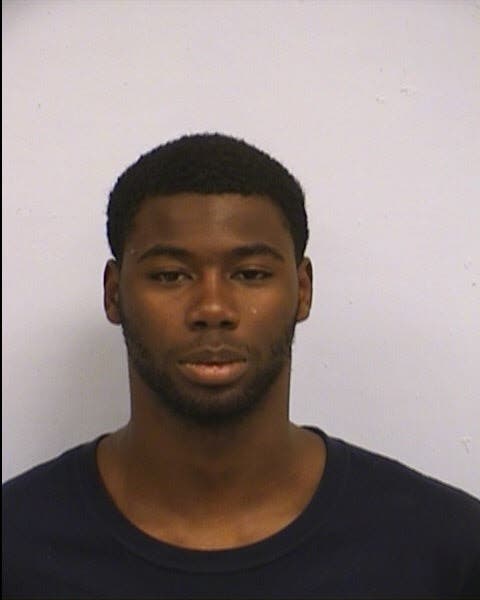

AUSTIN, TX -- Austin police had been in contact with the 17-year-old homeless youth now charged with the murder of a University of Texas-Austin student prior to being charged with the crime -- transporting him to an emergency shelter on Monday after he was placed under state foster care, Patch has learned.
Meechaiel Criner, 17, was arrested late Thursday in connection with the homicide of Haruka Weiser, an 18-year-old freshman from Portland, Ore., who was majoring in dance. Police confirmed Criner had been arrested for the crime during a Friday morning press conference at the UT-Austin campus.
Given the timeline of events police have provided, the crime was committed sometime after 9:30 p.m. on Sunday. That would mean that police had contact with the young man now facing a murder charge just hours after he allegedly killed the student.
Find out what's happening in Austinfor free with the latest updates from Patch.
Firefighters who responded to a trash fire allegedly started by Criner on Monday later recognized him as the person in a surveillance video released by campus police later that week. He was subsequently taken to a homeless shelter after the fire incident, Austin Police Department Chief Art Acevedo said..
During the Friday press briefing announcing the arrest, Acevedo responded to reporters' questions related to the city's homeless population around campus, given that the suspect was identified as living at the shelter given his period of homelessness.
Find out what's happening in Austinfor free with the latest updates from Patch.
University of Texas Police Department Chief David Carter also indulged reporters' questions in following up with the homeless angle Acevedo had introduced into the discussion as it relates to the crime.
One television reporter's question during Friday's press conference naming Criner as the murder suspect prompted law enforcement officials to expound on the issue of homelessness in context to the broader issue of crime on and around campus.
"If this individual is homeless living on campus, is there a problem with homeless people on campus?" the television reporter asked Carter. "Have you identified places where they may hang out or even in buildings where they have access to?"
In response, Carter said the problem of homeless people on or near campus wasn't widespread. On the few occasions a homeless person ventures onto campus, he or she is escorted off the premises, he said.
"That's why we're doing those joint patrols with APD and focusing on those types of issues," he said.
"In terms of is there a large population of homeless on campus: No. we do not believe that. However, we are in close proximity...we're in the middle of a major metropolitan area with a somewhat significant homeless population, especially west of campus."
But the truth as it relates to the suspect now in custody for the UT-Austin student's murder is more nuanced. And given that LifeWorks doesn't have a shelter near campus but in South Austin, the inference that the murder suspect is somehow linked to the broader problem of homelessness around campus seems to be a conflation of issues.
In a telephone interview with Patch, LifeWorks spokeswoman Susan McDowell said police brought Criner into their facility on Monday morning -- hours before he would emerge as a suspect in the murder -- as a runaway case.
"I can confirm that on Monday morning we responded to an Austin Police Department request to take in a runaway into our emergency shelter," McDowell told Patch. "APD brought the youth to us late Monday. Prior to Monday, we didn't know the youth."
She said LifeWorks often collaborates with police in dealing with homeless youth and victims of violence.
"It's often the case we're asked to care for a runaway," McDowell said. "It's a pretty common occurrence for us to work with APD. He was in our care Monday morning through Thursday," she said. "We had no real time with him prior to Monday morning."
Police have previously placed the time of the homicide as having taken place sometime after 9:30 p.m. on Sunday, with Criner's arrest coming on Thursday at around 4 p.m. Acevedo said firefighers who had reported to a trash fire on Monday at the 2900 block of Medical Arts Street later recognized him as the person seen on surveillance footage released by university police.
At Friday's press conference naming him as the murder suspect, Acevedo said it was later determined that Criner was attempting to burn items -- Weiser's personal effects and belongings -- in a trash can on Monday in an attempt to discard of evidence in the crime.
Ironically, the suspect in UT murder was once profiled in a publication as a beacon of hope -- not in overcoming homelessness, but foster care -- in a school publication.
Told of law enforcement's inference that Criner was part of a larger homeless population around campus, McDowell noted LifeWorks doesn't operate a homeless shelter near the school. Rather, the emergency shelter is located in South Austin.
The agency does operate a center near campus for support services, she noted. But that center does not function as a shelter of any kind, she said.
"We do have a center near campus," she said. "We do have a small office near campus that offers daytime support services for youth. But we have not served him (Criner) in that capacity."
McDowell was not able to provide further details given the suspect's minor status. However, she confirmed that the suspect was placed in foster care prior to his arrival at LifeWorks via police officers.
She referred further questions on Criner's foster care to the Texas Department of Family and Protective Services, who had custody of the young man now being accused of murder prior to his arrival at LifeWorks.
In an outgoing message, agency spokesman Patrick Crimmins indicated he would be out of the office for the next few days. The media relations person indicated to be on duty during his absence, Julie Moody, didn't immediately return a call from Patch.
During his press conference, Acevedo stressed the campus is a safe one. This week's murder is the first homicide on the UT campus since 1966, he noted, presumably referring to the mass killing of students by a sniper who holed himself up in the campus tower while firing at people below.
"This is a safe campus, a safe community," Acevedo said. "We know that homelessness is an issue that impacts every major city in this country. It's not unique to Austin."
Indeed, homelessness is not unique to Austin. But to link the problem of homelessness as it relates to the suspect now in custody for the murder of a promising dance student seems to conflate two disparate issues.
With hope, in the coming days, more will be known about the suspect, what led him to commit such an horrific crime that has rocked the entire UT community and what role, if any, his brief period of homelessness may have played into the unspeakable act of which he now stands accused.
>>> Photo of suspect courtesy of Austin Police Department; Chief Acevedo announces arrest at press conference, photo by Tony Cantu
Get more local news delivered straight to your inbox. Sign up for free Patch newsletters and alerts.