Politics & Government
U.S. Circuit Court Of Appeals Agrees To Hear Texas' Voter ID Law Case
The court will examine whether the state's stringent requirements to vote have a discriminatory effect on blacks and Hispanics.


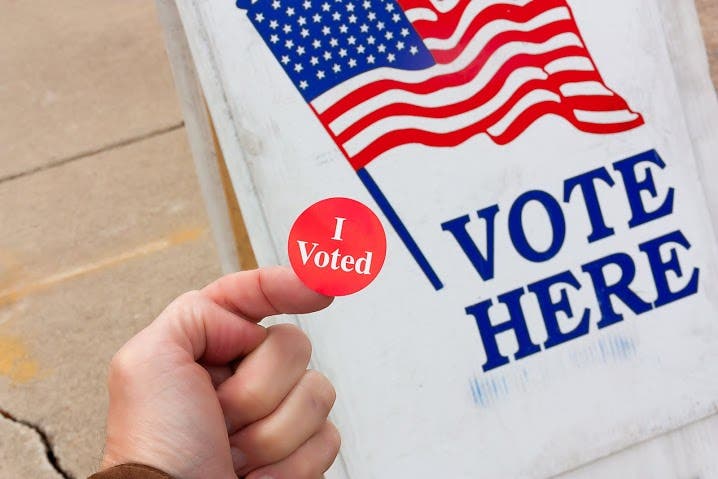
AUSTIN, TX -- The U.S. 5th Circuit Court of Appeals agreed on Wednesday to revisit the state’s controversial Texas ID law, charged with deciding whether the law contradicts safeguards outlined in the Voting Rights Act.
Painting its passage as a way of guarding against voter fraud, GOP lawmakers pushed hard for the Voter ID law. But community activists decried the law as a way of limiting voting access for a low-income -- and largely minority -- voting bloc who statistically possess state-mandated forms of identification at lesser rates that the mainstream population.
The fate of the law hinges on whether jurists determine it discriminates against Hispanic and African American voters. Enacted into law in 2011, Senate Bill 14 requires voters to show one of a handful of forms of allowable photo identification before casting ballots, as the Texas Tribune describes in a report.
Find out what's happening in Austinfor free with the latest updates from Patch.
Detractors of the law pointed to one of those allowable forms of ID -- a Texas gun license -- as evidence the law had less to do with safeguarding against voter fraud than it did about excluding the working poor and other marginalized groups.
Those same critics say the law is tantamount to a poll tax -- long barred under the U.S. Constitution -- arguing it has a net effect of being discriminatory against a wide swath of voters.
Find out what's happening in Austinfor free with the latest updates from Patch.
Last year, a federal appeals court panel unanimously agreed the law had a discriminatory effect on black and Latino voters, in violation of the 1965 Voting Rights Act. It was the first time a federal appeals court had ruled against such a law, as the New York Times noted.
Yet Texas Attorney General Ken Paxton didn’t seem worried over the latest attempt to scrutinize the legality of the legislation. In a prepared statement, he reiterated what his view is of the legislation -- a way to protect from voter fraud.
"Today’s decision is a strong step forward in our efforts to defend the state’s Voter ID laws," Paxton said in a statement. "Safeguarding the integrity of our elections is a primary function of state government and is essential to preserving our democratic process. We look forward to presenting our case before the full Fifth Circuit."
But by the state government’s own reckoning, incidences of legitimate voter fraud are negligible. A subsequent effort to root out voter fraud yielded four cases of proven voter fraud from 2000 to 2014. By that calculus, there were a handful of cases among 72 million votes, or one in 18 million.
One political observer took the findings as baseline to determine if there is a greater chance of being struck by lightning in Texas than finding instances of voter fraud.
There is.
An official from the National Weather Service confirmed that the possibility of being struck by lightning in Texas is slightly lower than the national average, right around 1 in 1.35 million. Statistically speaking, that means that the chances of being hit by lightning in Texas are, in fact, greater than finding a case of voter fraud.
The Texas Tribune piece on the circuit court taking up the Voter ID case comes the same week it explored the rate of voting in the state. Despite experiencing record turnout numbers in last week’s presidential primaries, Texas still had one of the lowest voting-age participation rates of the states that have held primaries -- near the bottom of the list.
No date has been scheduled for arguments in the case now set to be heard in the 5th Circuit Court of Appeals.
Get more local news delivered straight to your inbox. Sign up for free Patch newsletters and alerts.