Crime & Safety
UT-Austin Police Oppose City Steps To Decriminalize Homelessness
Council members were poised to strike down existing ordinances penalizing homeless activity, a move now on hold after campus police outcry.


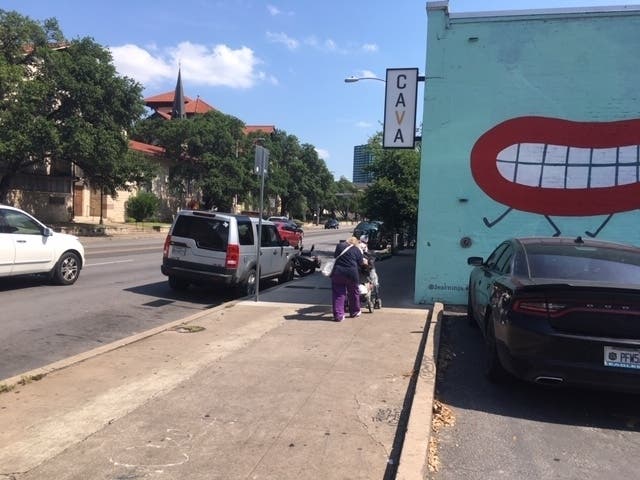
AUSTIN, TX — As city council members seek to decriminalize homelessness — striking down punitive ordinances and fines meant to discourage panhandling — University of Texas at Austin police have struck back, saying such measures will limit their abilities to protect students in near proximity of homeless people.
Gr0und zero of the debate is the Guadalupe Street corridor that fronts the campus, the artery that runs north-to-south dubbed "The Drag" in the local nomenclature. There, homeless people line the sidewalks asking for handouts from passersby — many of them students drawn to the retail and food merchants, along with a number of bars and music venues, lining the main thoroughfare.
Austin City Council members were poised to enact changes to how police deal with the homeless, re-considering existing panhandling and camping rules deemed overly punitive to the vulnerable population of people living on the streets. The changes would mean that police can only issue citations if homeless camps are obstructing sidewalks or those living on the streets are overly aggressive in their plea for money from passersby, rather than doling out tickets for panhandling or sitting and/or lying on the public walkways.
Find out what's happening in Austinfor free with the latest updates from Patch.
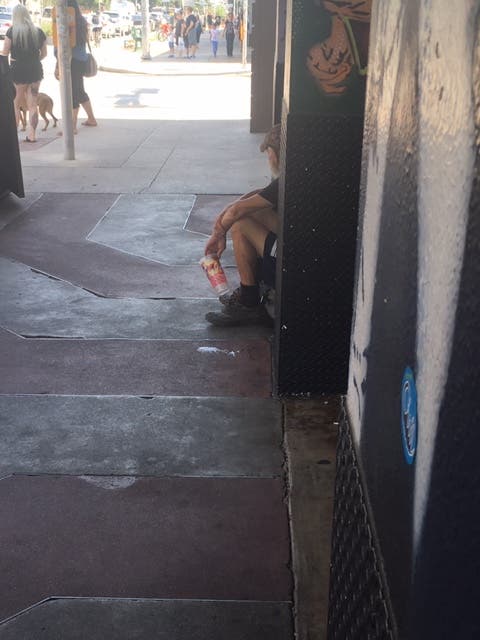
Homeless man finds shade while seeking donations from passersby along The Drag, Sunday, June 9, 2019. Photo by Tony Cantú/Patch staff.
But Chief David Carter said those changes would have a chilling effect on law enforcement's charge of safeguarding residents. He recently sent a letter to Mayor Steve Adler and council members outlining his concerns, which has had the effect of delaying the changes from taking place as city officials mull over his concerns.
Find out what's happening in Austinfor free with the latest updates from Patch.
Related stories:
"The homelessness crisis in Austin has a direct impact on the UT community," Carter wrote in his letter. "Students living in the areas west of campus are routinely confronted by aggressive panhandlers, and UTPD (UT Police Department) officers must frequently respond to reported assaults, robberies, thefts and exposures."
Carter argued the mulled changes to existing ordinances would curtail police efforts to protect students, as well as business owners bordering the campus. Removing those mechanisms would inhibit law enforcement's efforts at maintaining safety, he said.
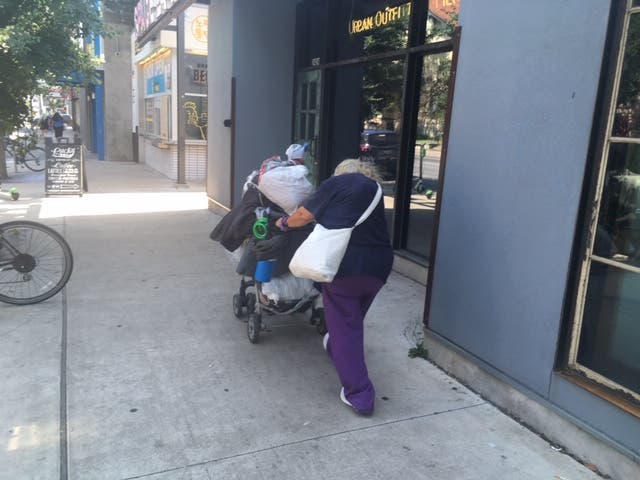
At one point in her trek across The Drag fronting UT-Austin, elderly woman checks for cash in bank repository only to find it empty. Photo by Tony Cantú/Patch staff.
Yet others view existing policies in dealing with the homeless as overly punitive and draconian. In a report released late last year, Grassroots Leadership and Gathering Ground Theater collaborated on a study of the city's homeless population, finding an average of 5.7 tickets issued on average to those surveyed over the course of a year preceding the data. Respondents received a collective 191 tickets for violating the city's "No Sit, No Lie" provision, 210 "no camping" citations and 39 more for solicitation.
The brisk pace of enforcement led to stress to already-taxed lives along with feelings of persecution, according to the report's findings. Moreover, researchers found such tactics often had the net effect of inhibiting efforts to emerge from homelessness, according to the report titled "Homes Not Handcuffs: How Austin Criminalizes Homelessness."
"The results demonstrate high levels of police harassment and avoidance of police among folks experiencing homelessness," the report reads in part. "Folks reported walking for hours and going without rest to avoid ticketing and arrest for sitting or lying. Furthermore, the vast majority of individuals who interacted with police due to these ordinances were not connected to social services or housing assistance as a result of ticketing and arrest."
While stressing in media interviews his aim is not mass arrests of homeless people in opposing the council's actions, Carter suggested city officials lack his ground-level perspective on the problem.
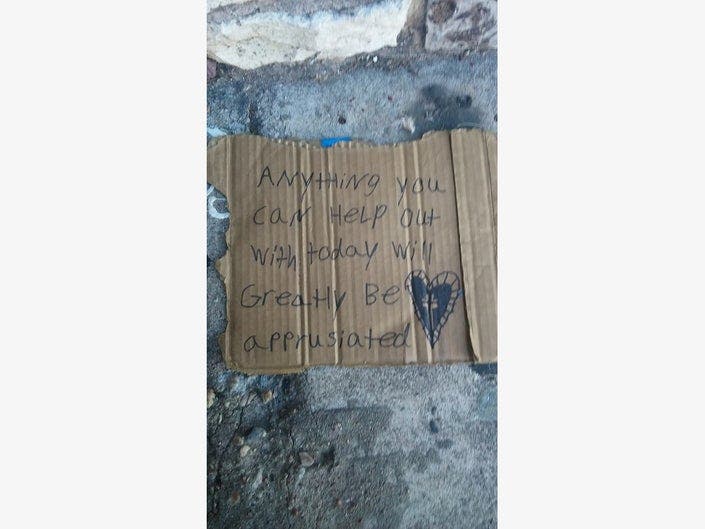
Cardboard placard seen on Austin street. Photo by Tony Cantú/Patch staff.
"We need to identify the homelessness issue for what it is — by and large, people suffering from mental illness and addiction," Carter wrote. "The city is to be commended for its efforts to find long-lasting solutions to care for this vulnerable population, but it must also acknowledge that aggressive panhandling — including in areas near ATMs and restaurants — must be addressed."
In tandem with municipal efforts to get a handle on the homeless problem, Carter wrote, accountability for aggressive offenders must remain intact. "The proposal to repeal city ordinances related to solicitation runs counter to this important safety need," Carter wrote.
Please see Chief Carter's open letter to the City of Austin mayor and council regarding changes to city panhandling ordinances. https://t.co/y2ukSFCc8P
— UT Austin Police (@UTAustinPolice) June 7, 2019
Carter's plea to council has had a measurable impact. What had been expected to be wholesale changes in the way law enforcement approaches the homeless now appear to be on indefinite hold.
Get more local news delivered straight to your inbox. Sign up for free Patch newsletters and alerts.